 Pete Forsyth / CC BY 4.0 via Wikimedia Commons
The Story
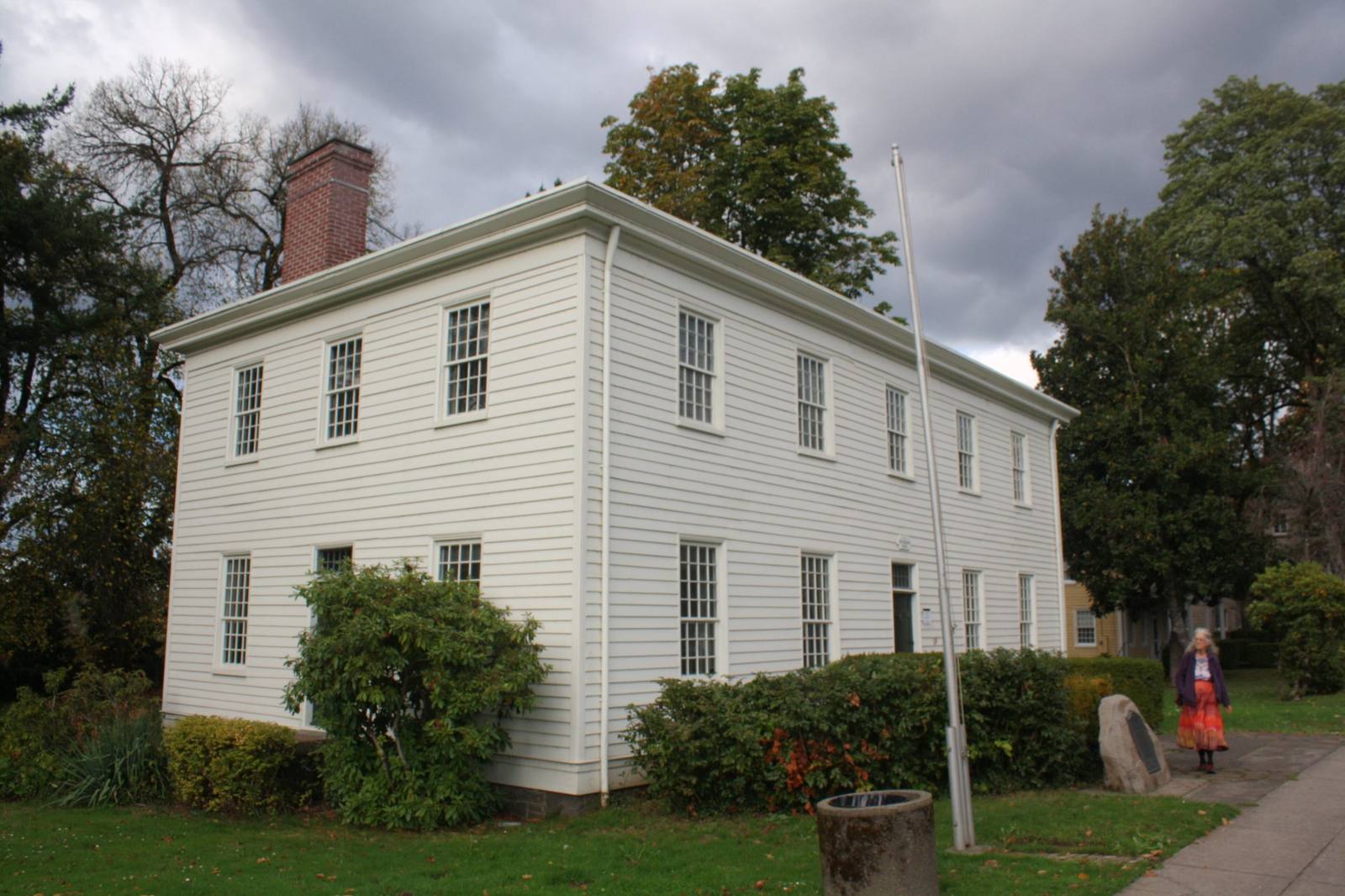
For twenty years John McLoughlin ran the Hudson's Bay Company's operations in the Northwest from Fort Vancouver, for a British fur company whose interest lay in keeping American settlers out. When the wagon trains began arriving in the early 1840s, worn out and short of food, he supplied them anyway and lent money to help them start farms and businesses. In 1845 he left the company. He settled at Willamette Falls, where he had staked a claim in the 1820s and laid out Oregon City, and built this house; he became an American citizen in 1851 and served as the town's mayor.
Plenty of his new neighbors held his British past and his Catholic faith against him, and rivals challenged his claim to the land at the falls, a fight that shadowed his last years. He died in 1857. His family lived on in the house for some years after; then it was sold and came down in the world, by one local history as far as a brothel.
In 1908 Hawley Pulp and Paper bought the lot, and the city announced the house would be demolished in April 1909. Residents formed the McLoughlin Memorial Association, got an injunction, and moved the house up Singer Hill to a park block McLoughlin himself had donated to the city in 1850. In 1941 it became a National Historic Site, the first in the West, and since 2003 it has been part of Fort Vancouver National Historic Site; visits start at the neighboring Barclay House.
Visitor Info
On the Map
Nearby
The closest stops worth working into your route
Historical markers nearby
Roadside plaques and monuments within a short detour