 Camera Art Studio / public domain via Wikimedia Commons
The Story
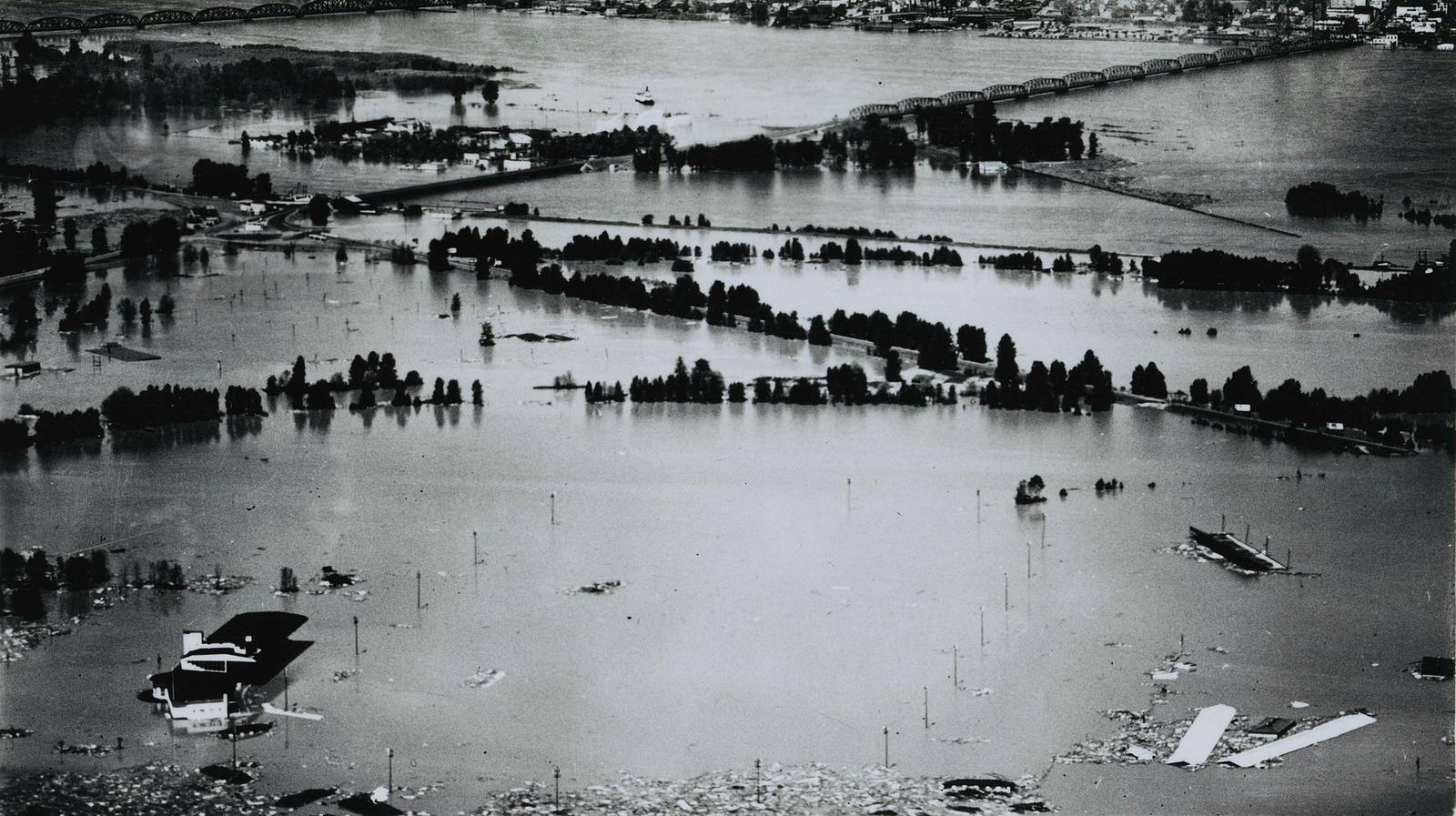
In August 1942, with Henry Kaiser's three Portland-area shipyards desperate for workers and Portland's housing authority slow to build for them, Kaiser built his own town on 650 acres of Columbia River floodplain between Portland and Vancouver, ringed by dikes. Vanport went up in about 110 days, rows of two-story apartment buildings on swampy ground, and at its peak held some forty thousand people, the second-largest city in Oregon and the largest wartime housing project in the country. Thousands of its residents were Black workers recruited from the South to a state whose constitution had once barred them, and Vanport was one of the few places in the Portland area where they could find housing at all. The housing was segregated; the schools were not.
After the war more than half the town left, and 18,500 people remained, about a third of them Black, along with a college for returning veterans. On Sunday, May 30, 1948, Memorial Day, the Columbia was in flood. Shortly after four in the afternoon a section of the railroad embankment on the town's western edge gave way, and by nightfall the town was gone. Fifteen people died. Many in the Black community believed the authorities had withheld warnings and that the real toll was higher. The displaced Black families were pushed into Albina, the only part of the city that would sell or rent to them in any numbers.
Vanport was never rebuilt. In 1961 the city council replaced its name with Delta Park, and the site now holds Portland International Raceway, a golf course, wetlands and the Expo Center; a concrete slab from the movie theater is about all that remains. The college survived and became Portland State University. Vanport Mosaic, which has gathered survivors' oral histories since 2014, holds a day of remembrance each Memorial Day weekend.
Visitor Info
On the Map
Nearby
The closest stops worth working into your route
Historical markers nearby
Roadside plaques and monuments within a short detour