The Story
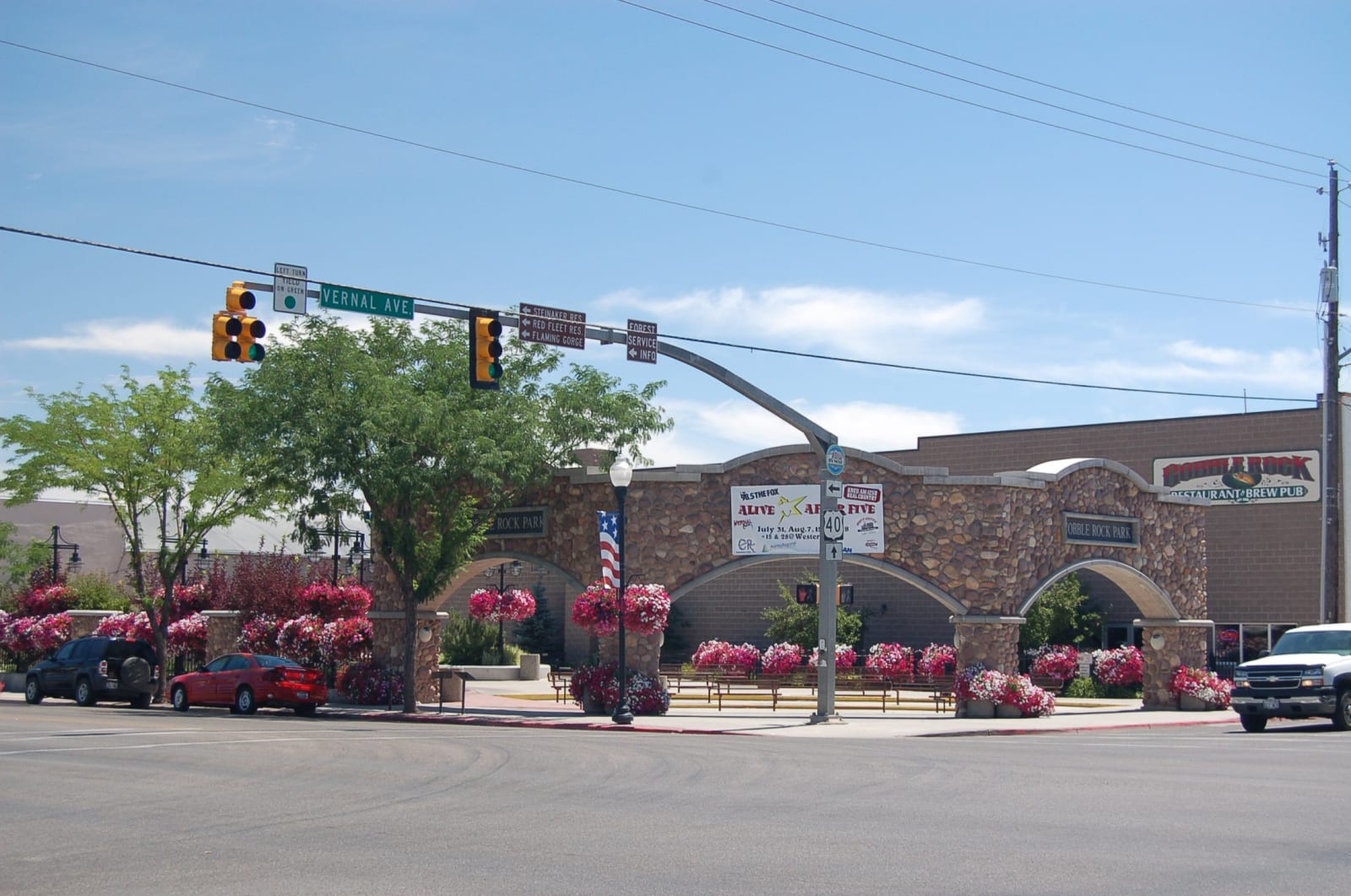
Vernal is the town that bet everything on dinosaurs and won. The self-proclaimed Dinosaur Capital of Utah greets arriving visitors with a pink Diplodocus statue on Main Street, sells dinosaur-themed merchandise in every gift shop, and houses one of the most important paleontological collections in the American West at the Utah Field House of Natural History — all because the geology beneath and around this small city in the Uinta Basin happens to contain one of the richest concentrations of Jurassic and Cretaceous fossils ever discovered. The basin's human past is etched here too: in Dry Fork Canyon northwest of town, the cliffs of McConkie Ranch hold some of the finest Fremont rock art in Utah.
The commitment to the dinosaur identity runs deep enough to be genuinely endearing. The city has embraced its prehistoric heritage with a wholehearted enthusiasm that more sophisticated destinations might find undignified, and the result is a town that feels like it was designed by a committee of excited eight-year-olds with a municipal budget. Dinosaur murals decorate building walls. Dinosaur sculptures populate parks and intersections. The local high school mascot is, inevitably, a dinosaur. The branding is relentless, and it works because it is sincere — Vernal really does sit at the center of some of the most significant dinosaur country on Earth.
Dinosaur National Monument is 20 miles to the east, with its famous quarry wall of 1,500 bones still embedded in the rock. The Cleveland-Lloyd Dinosaur Quarry, the densest concentration of Jurassic bones ever found, is about 90 miles to the southwest. And the formations surrounding Vernal — the Morrison Formation, the Mancos Shale, the Green River Formation — have produced fossils spanning hundreds of millions of years, from Jurassic giants to Eocene mammals to the ancient fish and insects preserved in the oil shales of the Uinta Basin.
The Utah Field House of Natural History State Park Museum, in the center of town, is the institution that anchors Vernal's paleontological credibility. The museum houses an excellent collection of regional fossils, including one of the most complete Utahraptor skeletons ever assembled — a fitting centerpiece for a museum in the state where Utahraptor was discovered. The Dinosaur Garden outside features over a dozen life-sized dinosaur replicas set among native plants, and children can walk right up to a towering Tyrannosaurus rex and experience the scale of these animals in a way that mounted skeletons behind glass barriers do not fully convey.
Beyond the dinosaurs, Vernal serves as the gateway to a region of northeastern Utah that is spectacularly scenic and chronically undervisited. Flaming Gorge National Recreation Area, with its turquoise reservoir and red canyon walls, is an hour to the north. The Uinta Mountains — the only major east-west trending range in the lower 48 — rise to the northwest. Fantasy Canyon, with its impossibly shaped erosional sculptures, is 45 minutes to the south. And the Ashley National Forest, which surrounds the town on three sides, offers hiking, fishing, and camping in mountain terrain that feels a world away from the desert basin below.
The town itself is the largest community in the Uinta Basin, with a population of roughly 10,000 and the services — hospitals, grocery stores, restaurants, hotels — that travelers in this remote corner of Utah depend on. The economy has historically been tied to the energy industry — oil, gas, and oil shale extraction have driven booms and busts for decades — and the tension between energy development and the natural landscapes that draw tourists is a constant undercurrent in local politics. The dinosaurs, diplomatically, take no sides.
Vernal's cultural identity is a mix of ranching heritage, energy industry pragmatism, and paleontological enthusiasm that creates a flavor distinct from the outdoor-recreation towns of southern Utah. This is not Moab. There are no climbing gyms or craft cocktail bars. The restaurants are steakhouses and diners, the lodging is clean and functional, and the attitude is friendly in the straightforward way of communities that work physically demanding jobs and do not overthink their leisure time.
The town sits at roughly 5,300 feet elevation, which gives it hot summers and cold winters — a climate that discourages the kind of year-round tourism that sustains communities further south. The prime visiting season runs from May through October, with summer being the busiest period at Dinosaur National Monument and the surrounding attractions.
Vernal is the proof that a small town can build an identity around a genuine asset — in this case, the fact that the ground beneath it is a graveyard of creatures that ruled the Earth for 160 million years — and sustain that identity through decades of economic ups and downs. The dinosaurs were here first, by a margin of roughly 150 million years, and they will be here long after the oil wells are capped and the last gift shop closes. Vernal has simply had the good sense to introduce itself to the neighbors and build a relationship that benefits everyone, including the eight-year-olds who stand in front of the pink Diplodocus on Main Street and feel, for the first time, the staggering scale of deep time.
Visitor Info
On the Map
A story featuring this place
Go deeper into the history and character of this stop
Nearby
The closest stops worth working into your route
Historical markers nearby
Roadside plaques and monuments within a short detour