 vicki watkins / CC BY 2.0
The Story
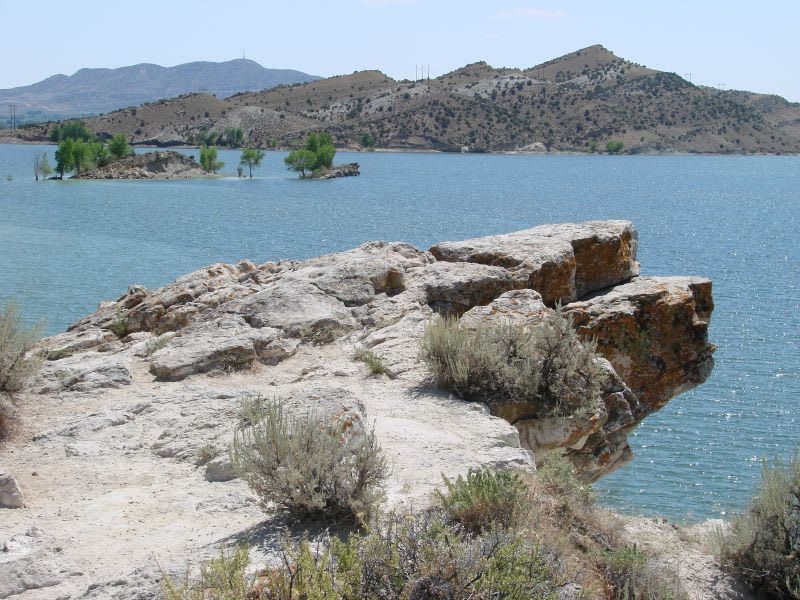
Steinaker State Park is the warm-water surprise in dinosaur country. Unlike most Utah reservoirs, which are snowmelt-cold and remain uncomfortable for swimming well into summer, Steinaker warms up enough for genuine, pleasurable swimming by early June — a rarity in a state where "swimmable" and "reservoir" are rarely used in the same sentence without qualification. The reservoir sits just north of Vernal in the Uinta Basin, surrounded by low desert hills and the distinctive gray-green sagebrush that defines this corner of Utah, and its warm water makes it a local favorite for families who want to cool off without the gasping, full-body shock that most mountain reservoirs deliver.
The warmth is a function of geography. Steinaker sits at a relatively low elevation — about 5,500 feet — in a basin that traps summer heat efficiently. The reservoir is shallow enough that solar radiation warms the entire water column, rather than just a thin surface layer, and the result is water temperatures that reach the mid-70s by midsummer. For a state where most accessible bodies of water hover in the teeth-chattering 50s and 60s, Steinaker's warmth feels almost tropical.
The park offers a campground, a boat launch, a sandy swimming beach, and enough shoreline to accommodate the weekend crowds that descend from Vernal and the surrounding communities when the temperature climbs. Water-skiing, wakeboarding, kayaking, and fishing — the reservoir is stocked with rainbow trout and largemouth bass — round out the recreational options. The facilities are well-maintained by the state park system, and the campground offers sites with enough shade and spacing to feel comfortable.
Steinaker's position near Vernal makes it a natural complement to the paleontological attractions of the region. A morning at Dinosaur National Monument followed by an afternoon swimming at Steinaker is a combination that works particularly well for families — the intellectual stimulation of 149-million-year-old fossils balanced by the physical pleasure of warm water and sandy beach. The dinosaurs came first, by a considerable margin, but the reservoir has carved out its own niche in the landscape.
Visitor Info
On the Map
Nearby
The closest stops worth working into your route
Historical markers nearby
Roadside plaques and monuments within a short detour