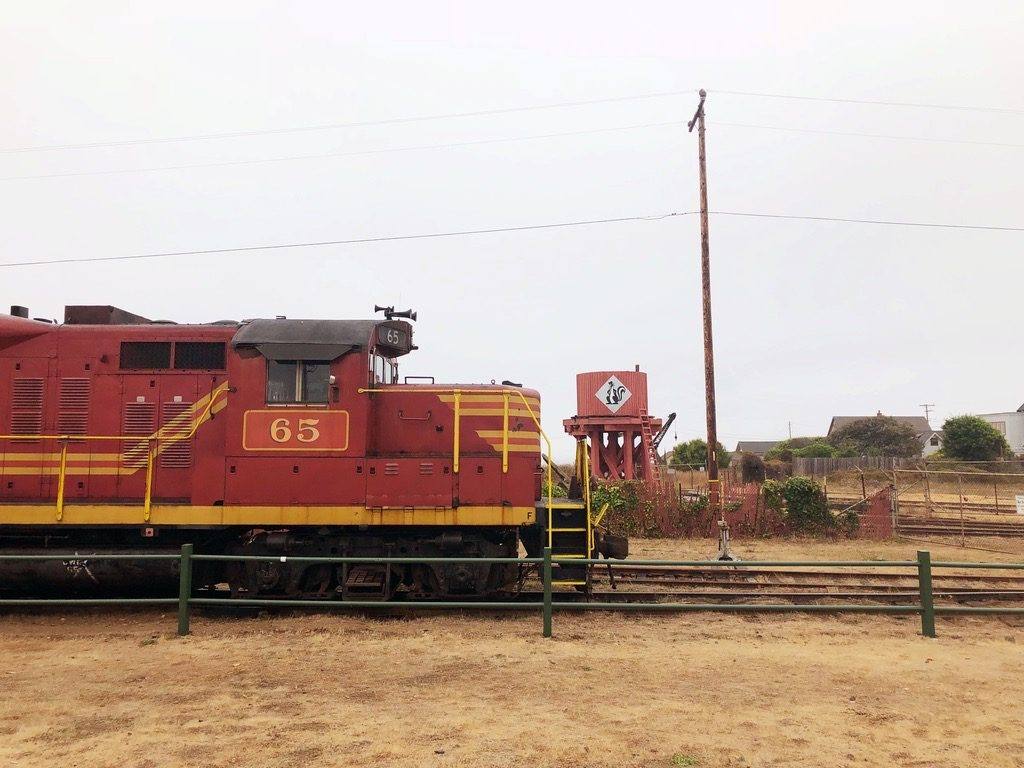
 Sarah Stierch / CC BY 4.0 via Wikimedia Commons
The Story
C. R. Johnson, a Wisconsin lumberman with a mill at Fort Bragg, incorporated the Fort Bragg Railroad in 1885 to bring redwood logs down to the saw. It began with a few miles of track up Pudding Creek. Not until December 1911, when the tunnel through the summit ridge was finished, did the line, by then the California Western, reach Willits and the Northwestern Pacific forty miles inland, and give Fort Bragg a railway to San Francisco.
The nickname came in 1925, when the railroad put self-propelled gasoline motorcars on the passenger run. They were heated by pot-bellied stoves burning crude oil, and between the engine and the stove people said you could smell one before you could see it. The line became the Skunk, and the name has outlived the cars that earned it.
Logs stopped moving by rail long ago, and the trains run now mostly for visitors. Some people with homes along the Noyo canyon have long relied on it to get in and out.
The tunnel nearest Fort Bragg collapsed in 2013 and again in 2015, and its long closure has split the line in two. Check which runs are operating, and from which end, before you plan around it.
Visitor Info
On the Map
Nearby
The closest stops worth working into your route
Historical markers nearby
Roadside plaques and monuments within a short detour