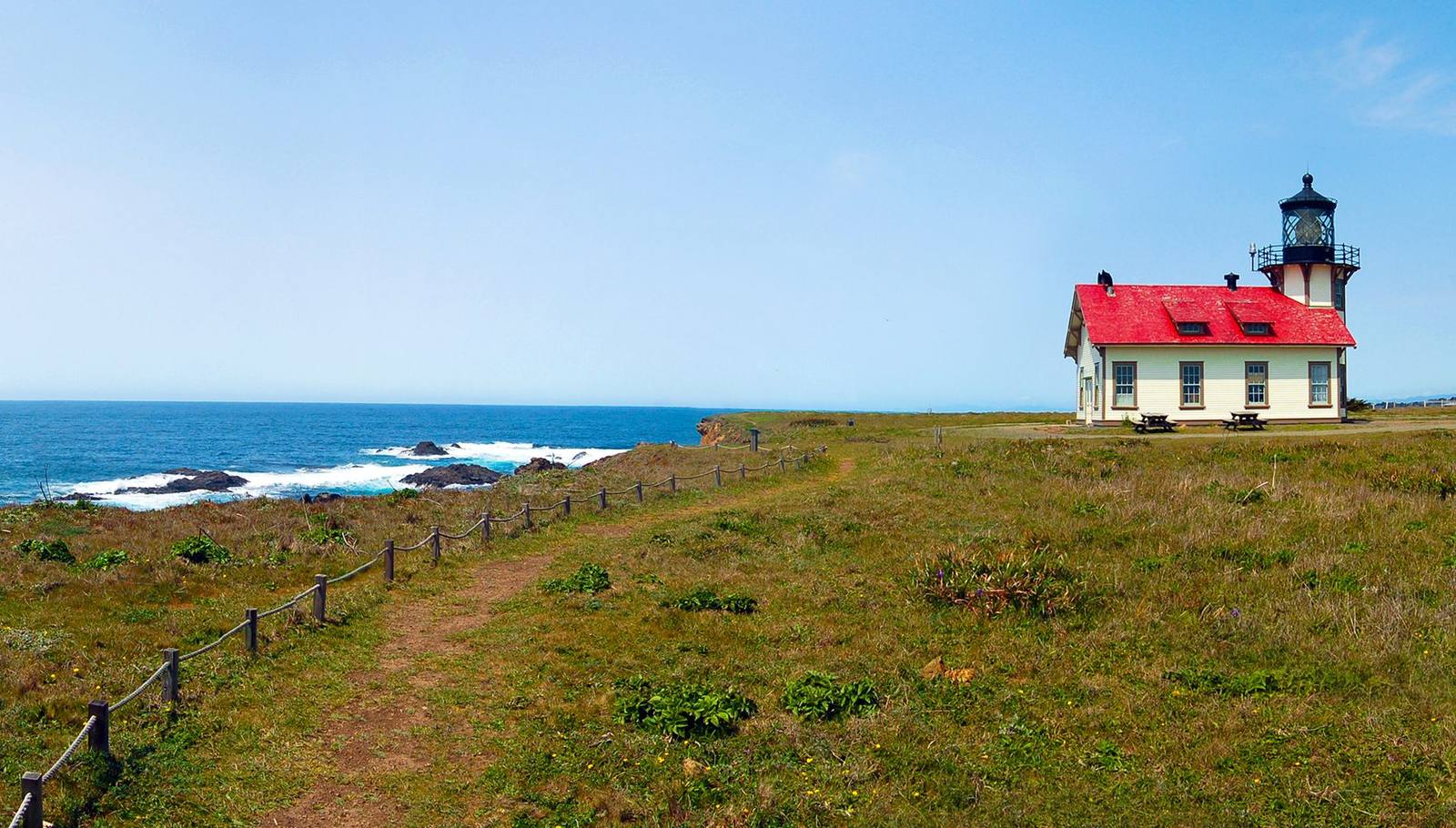
 R.P. Piper / CC BY 2.0 via Wikimedia Commons
The Story
On the night of July 25, 1850, the brig Frolic, a Baltimore-built clipper that had spent its working life in the opium trade, ran onto a reef just north of this point on its way from China to San Francisco with silk, porcelain and other goods for the gold-rush market. The crew got away in boats. The cargo did not stay long in the cove: the Pomo people whose shore it washed onto gathered up much of what came in.
In San Francisco, Henry Meiggs, who had a sawmill at Bodega, sent Jerome Ford up the coast to see what could be salvaged. Ford found nothing worth taking from the wreck and a great deal worth taking from the hills: redwood. Meiggs had a mill shipped north, and in 1852 the town of Mendocino began beside it. What is left of the Frolic still lies in the cove that carries its name.
The light came later, when lumber schooners were working the whole coast. It was first lit on June 10, 1909, and its third-order lens, made by Chance Brothers in England and shipped around Cape Horn, still turns in the lantern room. It is one of only three British-built lighthouse lenses operating in the United States. With twelve of its fifteen original buildings standing, the station is among the most complete in the country.
Leave the car at the upper lot and walk the paved road down to the light, about half a mile.
Visitor Info
On the Map
Nearby
The closest stops worth working into your route
Historical markers nearby
Roadside plaques and monuments within a short detour