 NPS / public domain via Wikimedia Commons
The Story
Sequoyah, also called George Guess or Gist, was probably born in the late 1770s at Tuskegee, a Cherokee town now under Tellico Lake in Tennessee. He fought in a Cherokee company against the Red Stick Creeks at Horseshoe Bend in 1814. Having seen white men put their thoughts on 'talking leaves,' he tried a symbol for every word, then settled on one for every sound in the language: eighty-six, later eighty-five. In 1821 he proved the system before the Cherokee Council with his daughter, Ahyokah, and in 1824 the Council gave him a medal for it.
That year he moved to the Cherokee lands in Arkansas, and when those were traded away in 1828 he was one of the Old Settler delegates who signed the treaty in Washington, where he sat for his only portrait, by Charles Bird King. He came to Indian Territory in 1829 and settled here. When the Cherokees under John Ross arrived on the Trail of Tears in 1838, he worked to unite them with the Old Settlers and signed the Act of Union and the constitution of 1839. In 1842 he went to find Cherokees who had moved to Mexico, and he died there the next year.
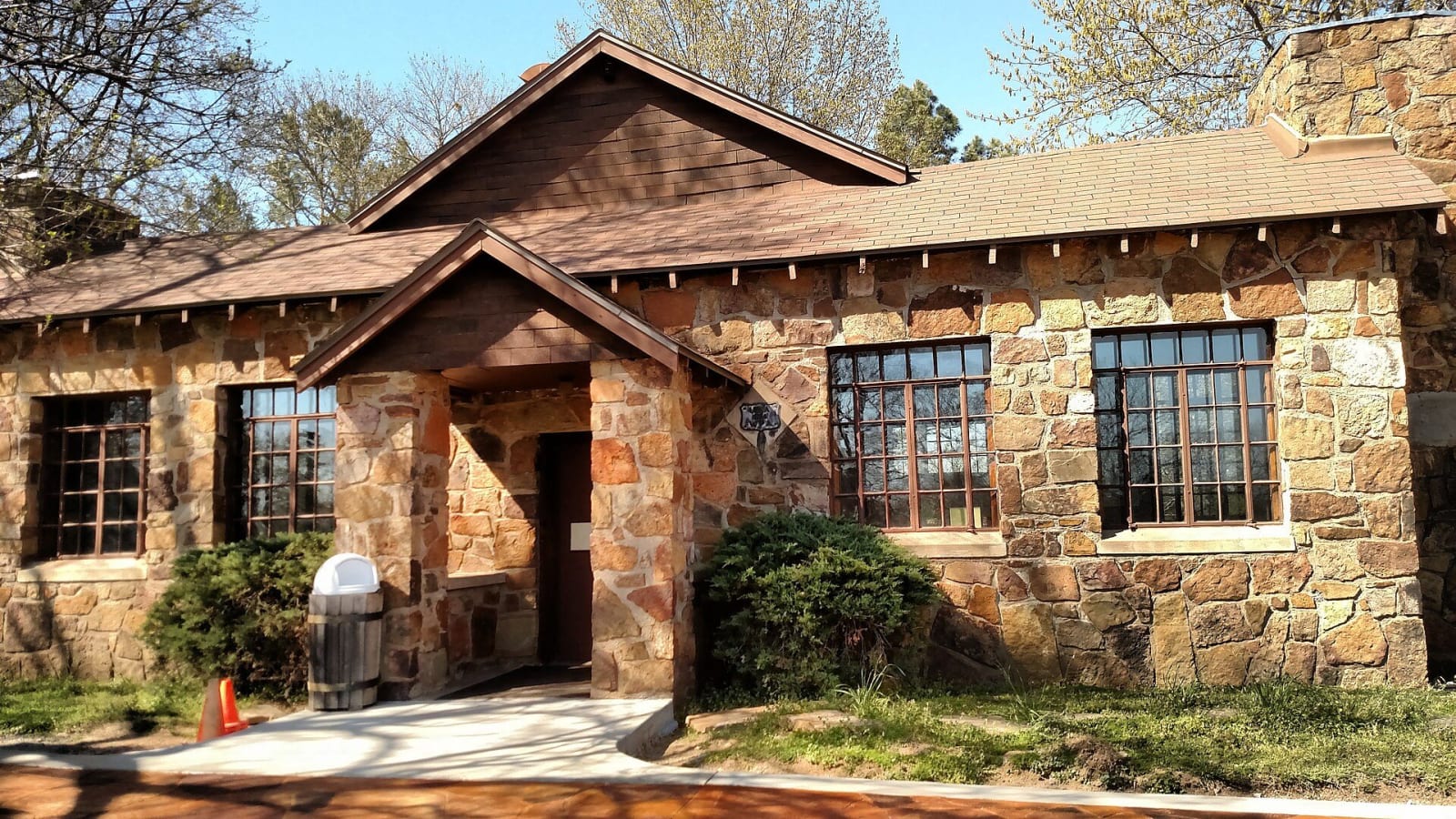
The Oklahoma Historical Society acquired the cabin in 1936, and the Works Progress Administration built the stone shelter over it the same year. It became a National Historic Landmark in 1965, and the Cherokee Nation bought it in 2016. The furnished cabin stands in a ten-acre park off OK-101.
Visitor Info
On the Map
A story featuring this place
Go deeper into the history and character of this stop
Nearby
The closest stops worth working into your route
Historical markers nearby
Roadside plaques and monuments within a short detour