 Caleb Long / CC BY-SA 2.5 via Wikimedia Commons
The Story
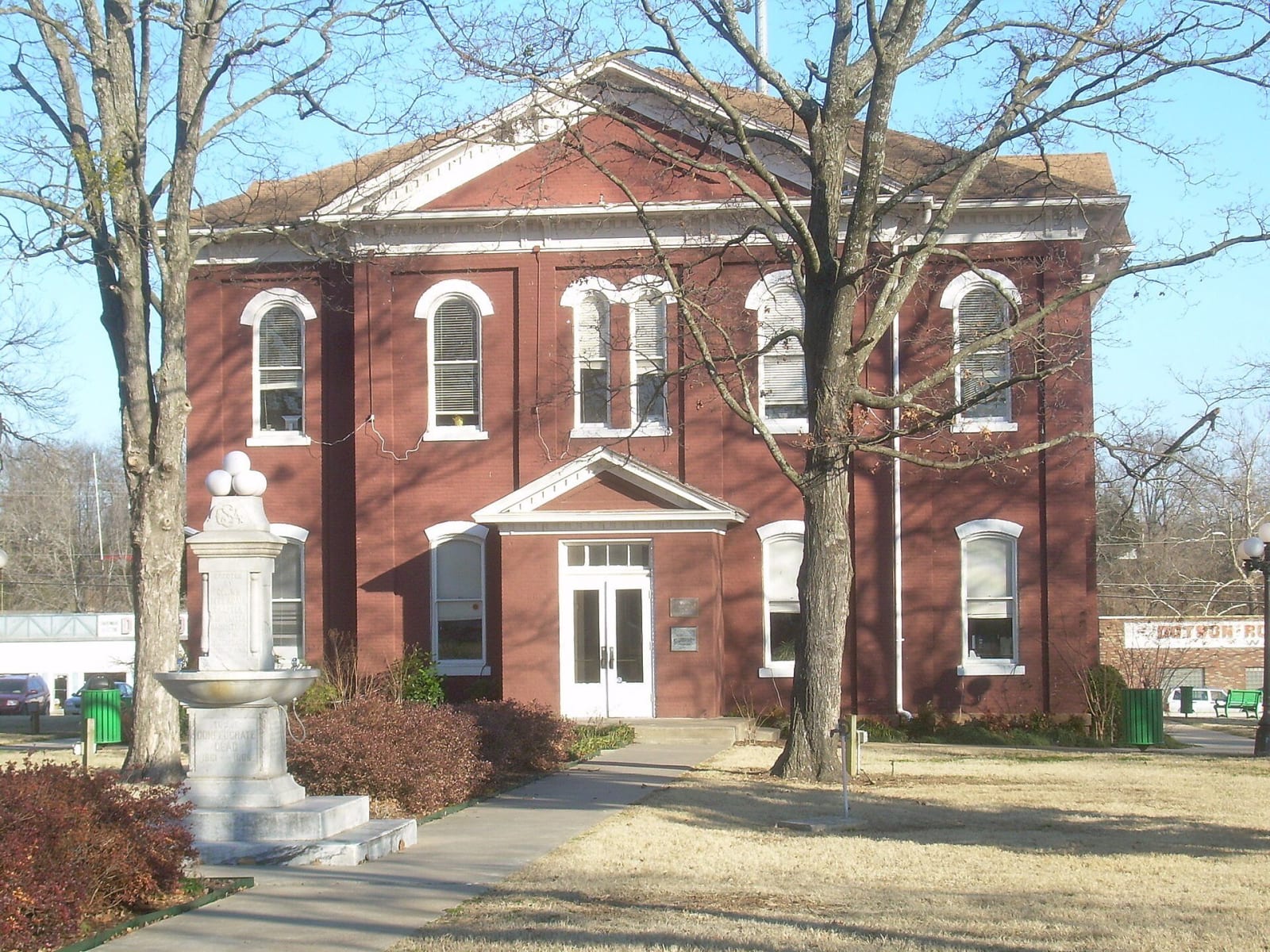
Tahlequah became the Cherokee Nation's capital in 1839, at the end of the Trail of Tears. In 1838 the army had rounded Cherokee families into camps and marched them west, and the Nation counts some 4,000 dead in the camps and on the trail, about a quarter of its people. Most of the square's first log and frame buildings were destroyed in the Civil War, when the Nation's old divisions opened again, and the brick capitol at its center went up after the war and was first occupied in 1870. After statehood in 1907 it served as the Cherokee County courthouse, and it came back to the Nation in 1970.
Since 2019 it has been the Cherokee National History Museum, more than 7,000 square feet run by the Nation. The galleries open with an origin story in which the Cherokee people lived on a southern island surrounded by salt water and follow the Nation through removal to the Modern Era Gallery, which carries it from statehood to the fight for sovereignty today.
The Cherokee Cultural Pathway, a landscaped walk lined with Cherokee art, leads to the Cherokee National Supreme Court Museum, built in 1844 and the oldest government building standing in Oklahoma, which keeps a press of the Cherokee Advocate, and to the National Prison of 1875. All three museums are free.
Visitor Info
On the Map
A story featuring this place
Go deeper into the history and character of this stop
Nearby
The closest stops worth working into your route
Historical markers nearby
Roadside plaques and monuments within a short detour