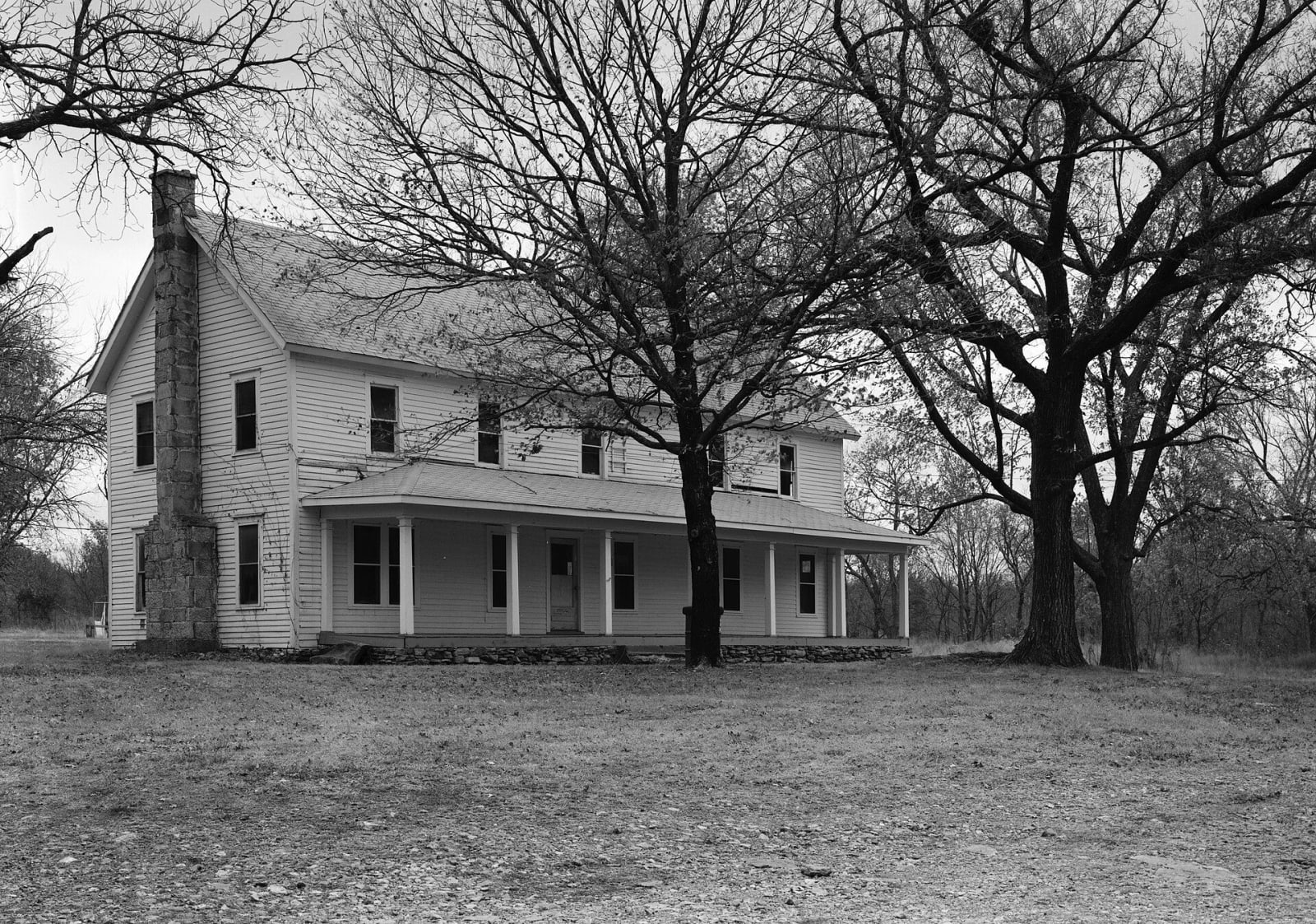
 Walter Smalling Jr., HABS / public domain via Wikimedia Commons
The Story
After removal the Cherokee Nation divided its country into eight districts under its 1839 constitution and added a ninth, Cooweescoowee, in 1856. Each district had its own court. The Saline district, named for the salt wells nearby, built this courthouse in 1884, and it is the only one of the nine still standing. It heard misdemeanors and civil suits and served for about fourteen years before the Curtis Act ended the Cherokee courts.
Then it was a house. Cherokee owners lived in it until the 1930s, when it was sold to a non-Native owner, and at some point the house was doubled in size; preservationists credit its residents with keeping it standing. The state parks department bought it in 1970 for a park that never came. It went on the National Register in 1976, and the Cherokee Nation reacquired it in 1988 in poor repair. A preservation association formed in 2003, the Nation declared the fourteen acres Saline National Park, its first, in 2005, and an EPA grant paid to remove the lead paint in 2009 and 2010. When the restoration was finished in 2019 the building opened as a museum.
It stands on a county road south of US-412 and southeast of Rose, with the old springhouse on the grounds. The exhibits rotate and cover Cherokee justice as well as art. The Nation holds its Watercress Fest here.
Visitor Info
On the Map
Nearby
The closest stops worth working into your route
Historical markers nearby
Roadside plaques and monuments within a short detour