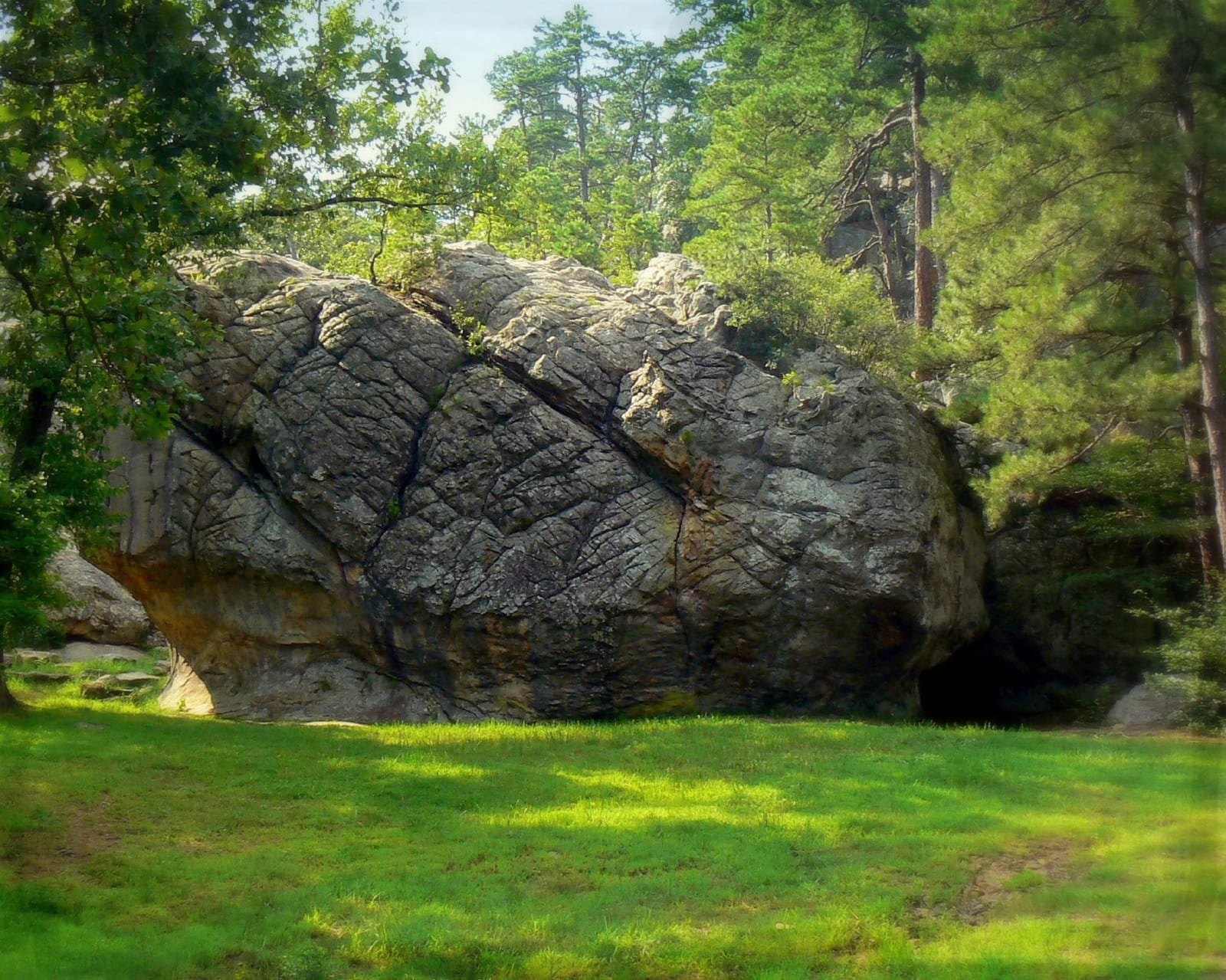
 Thomas and Dianne Jones / CC BY 2.0 via Wikimedia Commons
The Story
The cave is a cleft in the sandstone bluffs of the Sans Bois Mountains, four miles north of Wilburton, and its stories grew faster than the evidence. The Oklahoma Historical Society records the area as an Osage hunting ground and a goal of French exploration in the 1700s, and says Civil War deserters and outlaws reportedly hid in the cave, among them the Youngers, the Dalton Gang, the Rufus Buck Gang and Belle Starr, with a secret back exit for escapes. Reportedly is the word that matters.
What is certain is how the park was made. In 1929 Carlton Weaver, a Wilburton newspaper editor and state representative, gave 120 acres around the cave to the Boy Scouts, and John Newell, warden of the state penitentiary at McAlester, sent skilled inmates to build the camp's kitchen and troop buildings of local stone. Civilian Conservation Corps Company 1825 organized there on July 12, 1933, and from 1935 to 1941, under National Park Service supervision, built the bathhouse, cabins, trails, group camps, shelters and roads, again of native stone. In 1937, with the WPA, it dammed Fourche Maline Creek for Lake Carlton, named for Weaver. The park, first called Latimer State Park, took its present name in 1936, opened as one of Oklahoma's original seven state parks, and was listed in the National Register in 2002.
Today it covers more than eight thousand acres with three lakes, a lodge, an equestrian camp, yurts and the CCC's Old Circle campground, in pine, cedar and blackjack forest.
Visitor Info
On the Map
Nearby
The closest stops worth working into your route
Historical markers nearby
Roadside plaques and monuments within a short detour