 U.S. Department of Agriculture / public domain via Wikimedia Commons
The Story
In July 1863 Honey Springs, a watering place on the Texas Road, was a Confederate supply depot. Brig. Gen. Douglas H. Cooper had gathered his Indian Brigade there to wait for reinforcements and attack Fort Gibson. Maj. Gen. James G. Blunt struck first. He crossed the swollen Arkansas, marched all night and found Cooper's line hidden in the timber north of Elk Creek on the morning of the 17th. Federal reports set 2,800 Union troops against 6,000 Confederates, a figure later research cuts to 3,400 to 5,100. The Oklahoma Historical Society calls it the largest military clash ever fought in Oklahoma.
Who fought is the story. The Confederates were Texas cavalry and artillery with the 1st and 2nd Cherokee Mounted Rifles, the 1st and 2nd Creek Mounted Rifles and the 1st Choctaw and Chickasaw Regiment. The Union had Kansas, Colorado and Wisconsin troops, three Indian Home Guard regiments and the 1st Kansas Colored Infantry, which the OHS calls the first African American regiment in the Union army. It advanced to sixty paces of the hidden line and held while Texas cavalry charged into its fire. Five months earlier the Cherokee National Council had abolished slavery in the Nation by its own law. The Confederates fell back across Elk Creek, burned their depot and lost Indian Territory north of the Arkansas.
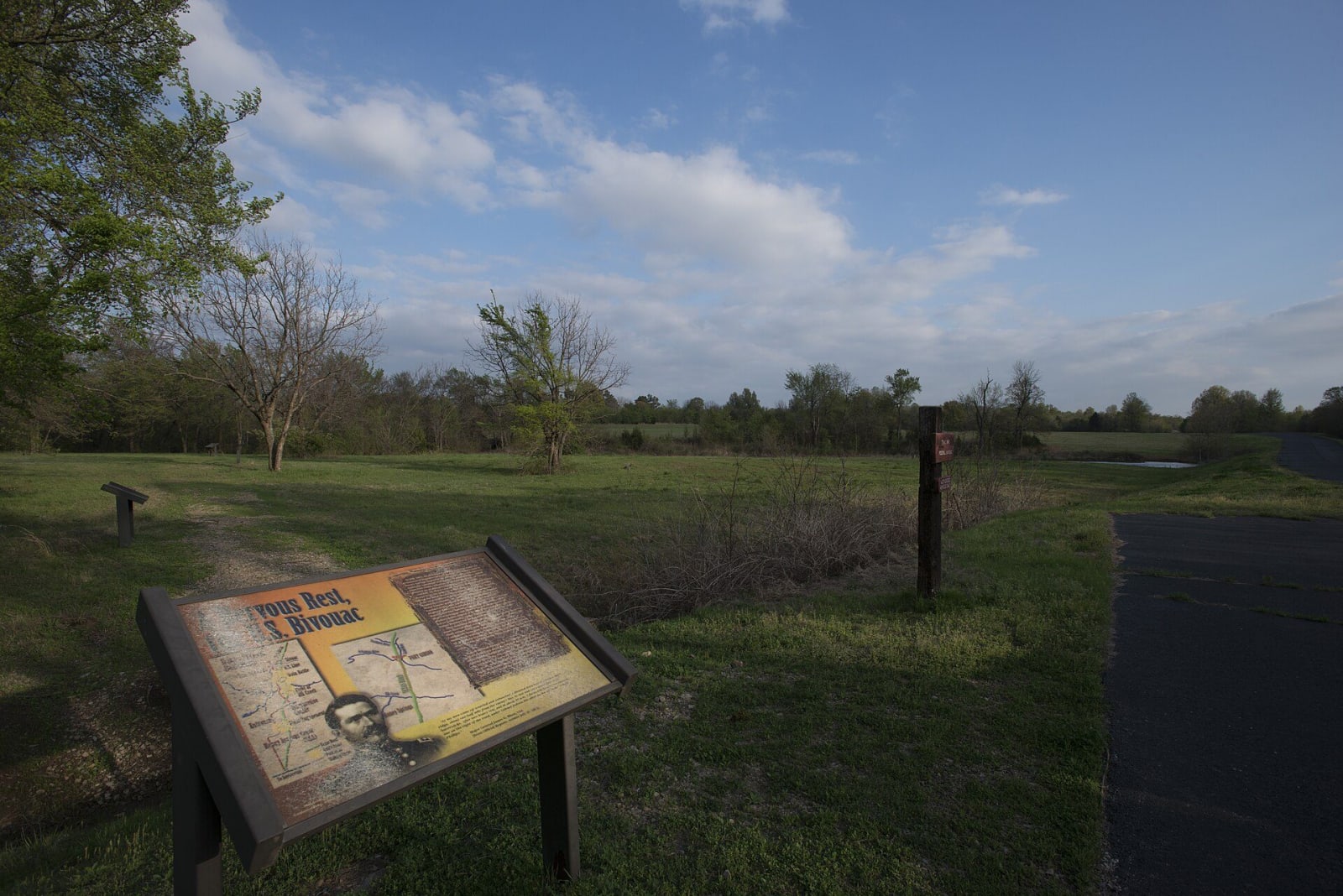
Six signed trails cross the Union camp, both battle lines, an eighth of a mile of the Texas Road, the Elk Creek bridge and the depot. The visitor center is east of US-69 between Oktaha and Rentiesville.
Visitor Info
On the Map
Nearby
The closest stops worth working into your route
Historical markers nearby
Roadside plaques and monuments within a short detour