Home / Oklahoma / The Kiamichi & Choctaw Country / Spiro Mounds Archaeological Center
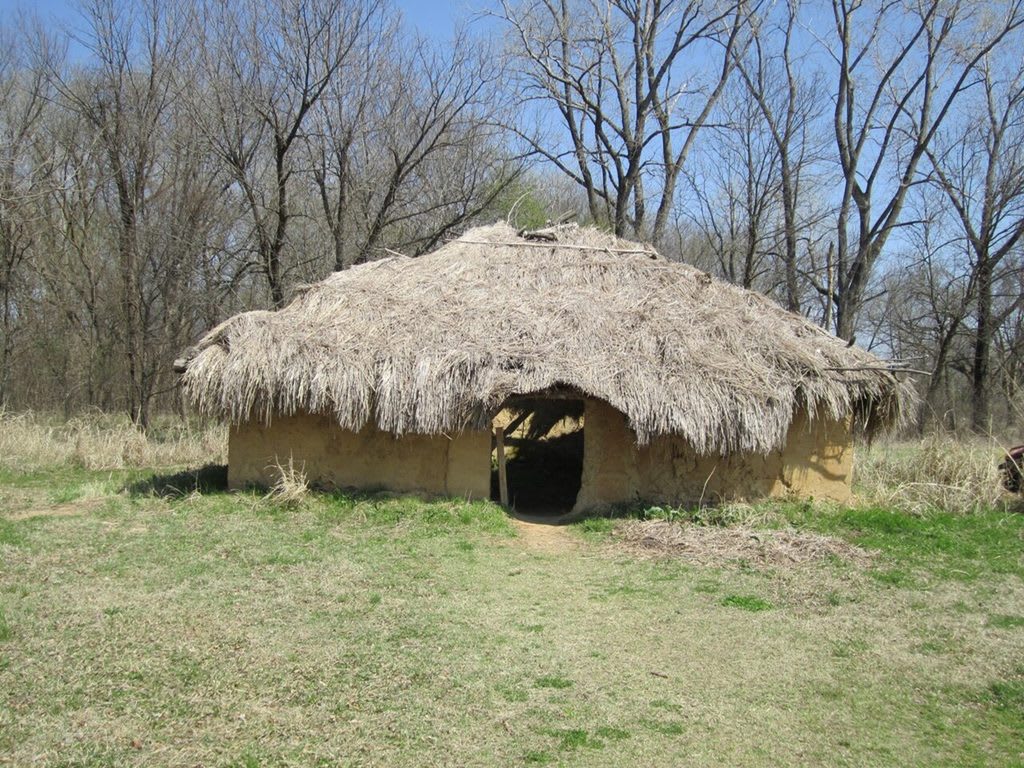
A reconstructed thatched house on the grounds of Spiro Mounds Archaeological Center.Smallchief / CC BY-SA 3.0 via Wikimedia Commons
🏛️Historical

Spiro Mounds Archaeological Center

Part ofThe Kiamichi & Choctaw Country

A Mississippian ceremonial center on the Arkansas River, about 850 to 1450, whose burial mound was mined in the 1930s, now run in consultation with the Caddo Nation and the Wichita and Affiliated Tribes.

⏱
Duration
Two hours.
🎟
Admission
Adults $10, seniors (62+) $8, students 6-18 $5; children 5 and under, veterans and active military with ID, OHS and NARM members, and members of the Caddo Nation and the Wichita and Affiliated Tribes free; family (up to six) $30.
📅
Best Season
Spring and fall. Trails and visitor center open Tuesday to Saturday, 9 a.m. to 4 p.m.; with limited staff, OHS recommends calling first (918-962-2062).

The Story

Between about 850 and 1450 the people at Spiro raised twelve mounds on a bend of the Arkansas River: nine house mounds, two temple mounds and one burial mound, Craig Mound, with an elite village and part of a support city around them. With Cahokia, Moundville and Etowah it was one of four regional centers of the Mississippian world, tied by trade from the Rockies to the Virginia coast. Its builders are believed to have been Caddoan speakers, and the site's culturally affiliated nations are the Caddo Nation and the Wichita and Affiliated Tribes.

Choctaw farmers and Freedmen worked the land from the late 1800s and left the mounds largely alone. In 1933 commercial diggers calling themselves the Pocola Mining Company leased Craig Mound and for two years dug into it, destroying about a third of it and selling thousands of objects of stone, copper, shell, basketry and cloth to collectors around the world. A state licensing law shut them down in November 1935. The University of Oklahoma then excavated what was left until 1941, removing more than six hundred burials. The looting made Oklahoma one of the first states to protect archaeological sites by law.

Craig Mound was rebuilt in the 1970s from photographs taken before the digging. The center opened on May 9, 1978. About a mile and a half of interpreted trail leaves from the visitor center and is open only when the center is. Many objects on display are being repatriated under NAGPRA, so some may be covered or removed.

Visitor Info

⏱
Time Needed
Two hours.
🎟
Admission
Adults $10, seniors (62+) $8, students 6-18 $5; children 5 and under, veterans and active military with ID, OHS and NARM members, and members of the Caddo Nation and the Wichita and Affiliated Tribes free; family (up to six) $30.
📅
Best Season
Spring and fall. Trails and visitor center open Tuesday to Saturday, 9 a.m. to 4 p.m.; with limited staff, OHS recommends calling first (918-962-2062).
🛣️
Highway
US-271

On the Map

Nearby

The closest stops worth working into your route

historical15 mi away
Sequoyah's Cabin Museum
The log cabin near Akins where Sequoyah, who gave the Cherokee language its syllabary, settled in 1829, kept since 2016 by the Cherokee Nation inside a stone shelter of 1936.
cultural47 mi away
Cherokee National History Museum
The Cherokee Nation's own history museum, in the brick capitol it built on Tahlequah's square after the Civil War, a short walk from its 1844 supreme court and its 1875 prison.
natural50 mi away
Robbers Cave State Park
A sandstone cave in the Sans Bois Mountains north of Wilburton, wrapped in outlaw stories, and the park that Boy Scouts, prison labor and the CCC built around it.
historical51 mi away
Fort Gibson Historic Site
The army's first post in what became Oklahoma, built at Three Forks in 1824, where removed nations arrived; deeded to the Cherokee in 1857, it later housed the Dawes Commission.
historical54 mi away
Honey Springs Battlefield
The July 17, 1863 battlefield on the Texas Road, the largest fight in Indian Territory, where Cherokee and Muscogee regiments fought on both sides and the 1st Kansas Colored Infantry held.
historical61 mi away
Tvshkahomma Capitol Museum
The Choctaw Nation's 1884 brick capitol in the Kiamichi valley, seat of its senate, house and supreme court until statehood, now the Nation's museum and the ground of its Labor Day Festival.

Historical markers nearby

Roadside plaques and monuments within a short detour

Marker4.3 mi away
Walker's Station
Marker4.5 mi away
Skullyville
Marker5.2 mi away
Fort Coffee
Marker8.7 mi away
Battle of Backbone Mountain
Marker20 mi away
Dwight Mission
Marker23 mi away
Cephas Washburn, Founding Missionary, Dwight Mission