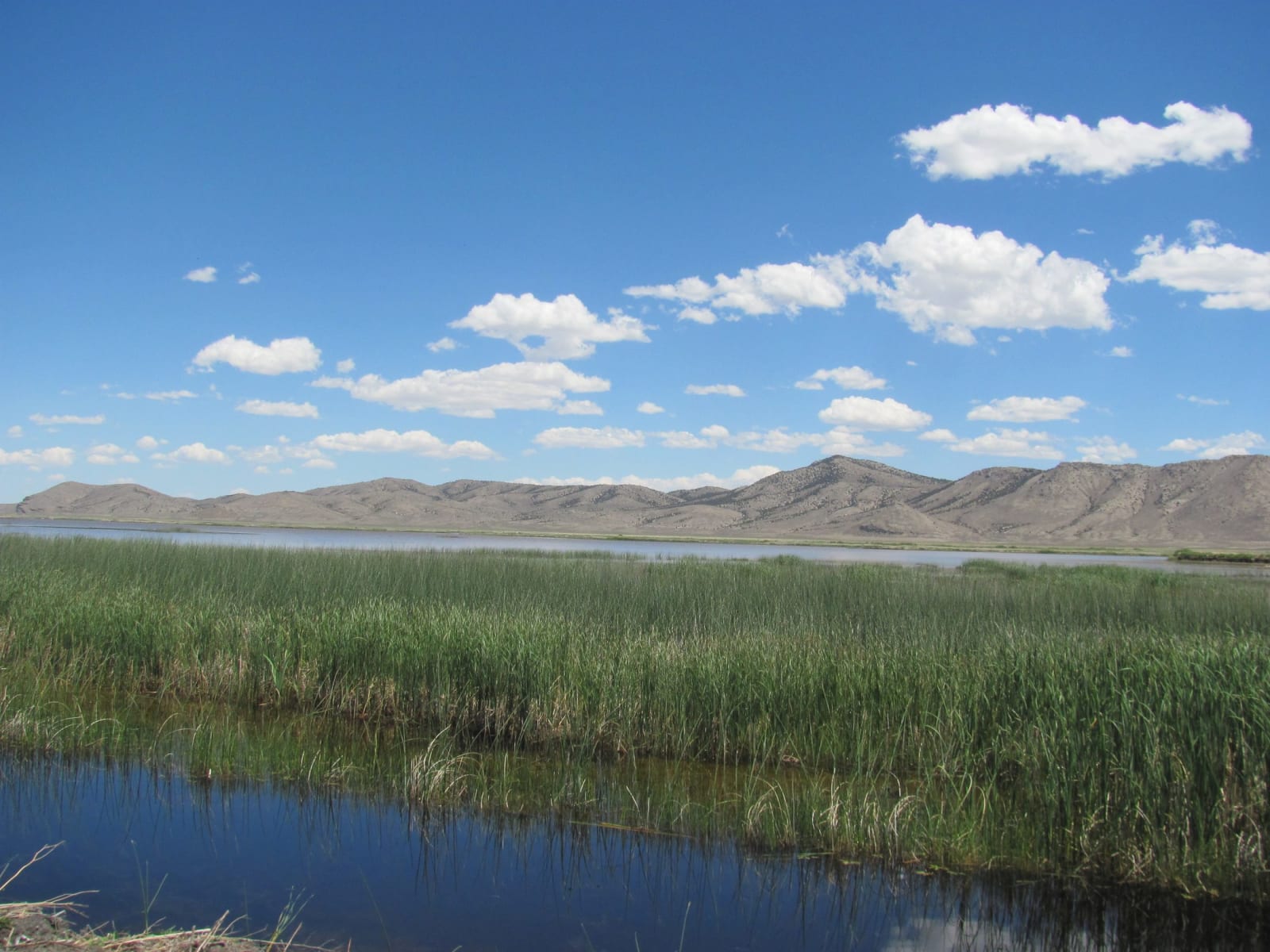
 Jrmichae / CC BY-SA 4.0
The Story
On the dry floor of Ruby Valley, in the rain shadow of the very mountains that make it, lies the last thing you expect in the Great Basin: a seventeen-thousand-acre marsh, blue and reedy and loud with birds. Ruby Lake National Wildlife Refuge is the great paradox of the Ruby Mountains — the alpine snow that carves their granite west face drains underground and comes back out as more than a hundred and fifty springs along their eastern foot, and those springs feed a wetland that has no business existing in a desert this severe. It is one of the most remote refuges in the lower forty-eight, an oasis at six thousand feet that most of Nevada has never seen.
The marsh is older than it looks. It is the surviving remnant of Lake Franklin, a great Ice Age lake that once filled the valley and then shrank, as all the Pleistocene lakes of the Great Basin did, to a fraction of itself — here, to a spring-fed marsh that the snowmelt keeps alive year after year. The water runs cold and clear at the source and warms as it spreads through the reeds, and because it never quite dries, it has become a refuge in the plainest sense: a permanent wet island in a sea of sage, holding life the surrounding desert cannot.
What the water brings is birds, in numbers that put the place on the world's map. More than two hundred and twenty species have been recorded here, and the marsh sits on both the Pacific and Central flyways, a crossroads for migration twice a year — the American Bird Conservancy counts it among five hundred globally important bird areas on earth. Its signature is the canvasback: the South Marsh, a National Natural Landmark, holds the densest nesting population of canvasback ducks anywhere in North America outside Alaska. Trumpeter swans, hauled back from near-extinction, nest here; sandhill cranes bugle across the meadows; white-faced ibis, avocets, and black-necked stilts work the shallows, and sage grouse drum on their leks in the brush above.
What's here now is a quiet refuge for people, too. A ten-mile auto-tour route runs the dikes for wildlife watching and photography; canoes and kayaks thread the labyrinth of the South Marsh; anglers fish for bass and trophy trout, and a state hatchery on the grounds gives tours. There is a clean federal campground, a great deal of silence, and almost nothing else — the nearest gas station is the better part of an hour away, and the cell signal is mostly a rumor. It is the kind of place where people lower their voices without quite deciding to.
Getting here is half the commitment. Ruby Valley is reached only by long gravel roads — over Harrison Pass from the Elko side in summer, or by Secret Pass and Ruby Valley Road the rest of the year — and the marsh shares the valley's south end with the old Fort Ruby site and the treaty ground whose story is told out in Ruby Valley. Come for a dawn or a dusk, when the light goes long over the water and the birds lift off the marsh by the thousand. From Lamoille Canyon the Rubies show their hard, dramatic face. Here, on the back side, they show their gentlest — a desert made briefly, improbably green.
Visitor Info
On the Map
Stories featuring this place
Go deeper into the history and character of this stop
Nearby
The closest stops worth working into your route