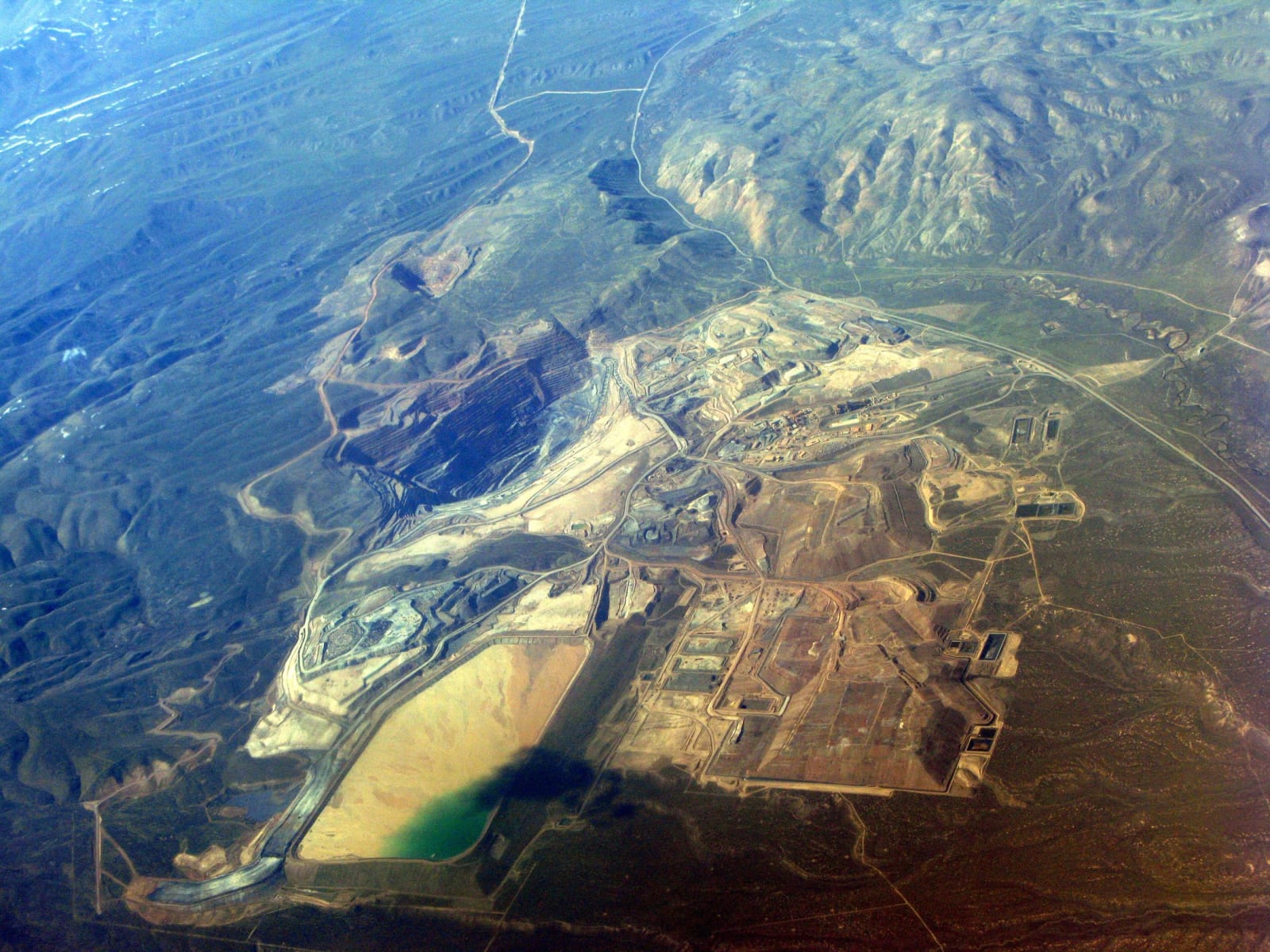
 Uncle Kick-Kick / CC BY-SA 2.0
The Story
Twenty-three miles west of Elko, the small city of Carlin sits beside the richest gold ground in the United States and shows you almost none of it. That is the strange thing about the place: it is the gateway to the largest gold-mining complex on earth, and there is nothing golden to look at. The metal here is microscopic, locked invisibly in ordinary rock, and the mines that pull it out are pits and process plants back in the hills, not the picturesque diggings of a silver camp. The town of about three thousand on the Humboldt is a working place that has had two completely different fortunes, and neither of them looks the way you would expect.
It began on the railroad. The Central Pacific laid the townsite out in 1869, and for the better part of a century Carlin lived on the line — a division point with roundhouses, crew quarters, and machine shops, built and run in good part by the Chinese laborers who had spiked the rails and the Italians who came after. Its first real fortune, oddly, was ice: the same creeks that drew the railroad fed one of the largest ice-harvesting operations on the West Coast, cutting and storing winter ice to chill the refrigerator cars that rolled produce east. Diesel engines and mechanical refrigeration killed both the roundhouse and the ice ponds by the 1950s, and almost every trace of railroad Carlin is gone now — though the Union Pacific tracks still run straight through the middle of town.
Then, in the early 1960s, Newmont's geologists found the invisible gold in the hills just north, and Carlin's second life began. The Carlin Trend — a belt of deposits roughly five miles wide and forty long — has since given up more gold than any district in the country, and the mines that work it now run as Nevada Gold Mines, a joint venture of Barrick and Newmont that is, by output, the single largest gold-producing complex in the world. Nevada digs more gold than any other state, the overwhelming majority of it from these northern trends; were the state a nation it would rank among the top producers on the planet. This is not history. It runs three shifts a day, every day, and it is a good part of why Elko booms.
What a traveler can actually see of all that is less than the scale would suggest, because active gold mines give no tours and invisible gold makes no show. From Interstate 80 and the slopes above town you can take in the Gold Quarry pit and the terraced overburden — vast, geometric, faintly lunar — and grasp the sheer earth-moving of it: whole hills taken down a bench at a time, hauled in trucks the size of houses, the ore crushed and leached or roasted to free a metal you could never catch by eye. It is industrial sublime rather than scenic, and worth a slow look from the highway for what it stands for.
It is worth knowing whose ground this is. The Carlin Trend lies within Newe Sogobia, the homeland of the Western Shoshone, which under an 1863 treaty was never ceded — a fact that turns the richest gold in America into a long-running question of who it belongs to, one taken up more fully out in Ruby Valley. The town itself is plain and friendly, a place of mine shifts and ball fields with a small historical society keeping the railroad and ice story alive. Carlin does not trade on charm. It trades, still, on what is in the ground.
It makes a quick, honest stop between Elko and the open country west: the place to understand that the gold rush in Nevada never actually ended. It only went invisible, and got bigger. Pull off at Carlin, look north at the terraces, and you are looking at a boom that has outlasted every ghost town in the state by the simple trick of refusing to show itself.
Visitor Info
On the Map
Stories featuring this place
Go deeper into the history and character of this stop
Nearby
The closest stops worth working into your route
Historical markers nearby
Roadside plaques and monuments within a short detour