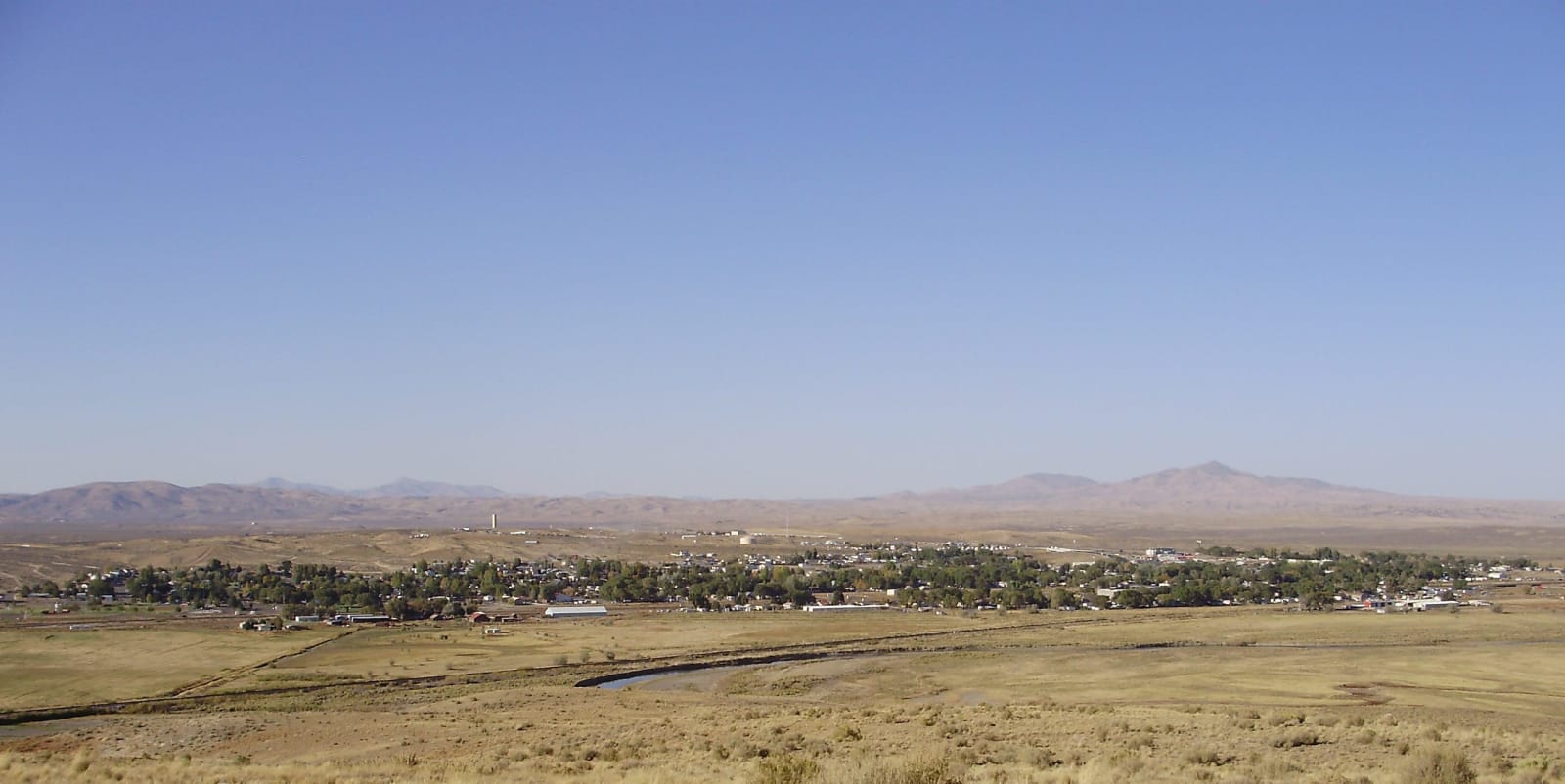
Interstate 80 — The Humboldt Road
The Humboldt corridor — about 175 miles of Interstate 80 from Wells to Winnemucca, the region's all-weather spine, with the Ruby Mountains, the emigrant trail, the invisible gold, and Jarbidge hanging off it.
The Route at a Glance
Interstate 80 is the modern Humboldt road, and it is the easy way across — the one route in northern Nevada that runs with the land instead of against it. Where the Loneliest Road climbs basin and range the hard way, this corridor simply follows the river west, the way the wagons and the railroad did before it, and it stays open and fast in nearly every season. This route runs the spine of Cowboy Country east to west, about a hundred and seventy-five miles from Wells to Winnemucca, with nearly everything worth seeing hanging off it on a spur.
You come in from the east at Wells, where the Humboldt rises and I-80 meets US-93, and drop down the valley to Elko — the region's capital and the only sensible base for everything around it. Give Elko a day in its own right: the saddle shops, the Basque dinners, the Western folklife. Then point off the interstate, because the best of Cowboy Country is not on it.
The biggest detour is the finest. An hour southeast of Elko, Lamoille Canyon and the Ruby Mountains put up a wall of glaciated granite that no one expects in Nevada, with a paved scenic byway running straight into the high country. Farther out the same range hides two more worlds: the treaty ground and living history of Ruby Valley, and below it the spring-fed marsh of Ruby Lake National Wildlife Refuge, both reached only by long gravel roads and worth every mile in summer. And for the truly committed, a hundred miles north of Elko on dirt, Jarbidge waits at the literal end of the road — the last gold camp, the most isolated town in the state.
Back on the interstate heading west, the history comes fast. Eight miles past Elko at the Hunter exit, the California Trail Interpretive Center sits on the emigrant trail itself — the best place in Nevada to understand what crossing this country on foot once cost. Another fifteen miles brings Carlin, unremarkable to look at and sitting beside the largest gold complex on earth, where the metal is invisible and the boom never ended. From there the road runs long and open — past Battle Mountain and the wide Humboldt valleys — to Winnemucca at the western edge, where US-95 peels off north and south, the Basque hotels set their long tables, and the river bends on toward its desert sink.
Driven straight through, it is a half day — three easy hours of interstate. Driven right, with the canyon and the marsh and the long road to Jarbidge, it is a week. The mountain spurs are a summer-and-fall proposition and the gravel turns bad in weather, but the corridor itself runs year-round: the all-weather crossing, the one road west, exactly as it has always been.
The Drive, Stop by Stop
8 stops along the route, in driving order from Wells to Winnemucca. 4 of them sit off the road itself — the distance is noted on each.
- 1
- 2
- 3
- 4
- 5
- 6
- 7
- 8
Stories Along This Route
Go deeper into the history and character of this drive.
That's the drive. Take your time, pull over often, and let Interstate 80 — The Humboldt Road do what it does best.
← Explore more of Open Road Guide