 David Jay Fullmer / CC BY-SA 4.0
The Story
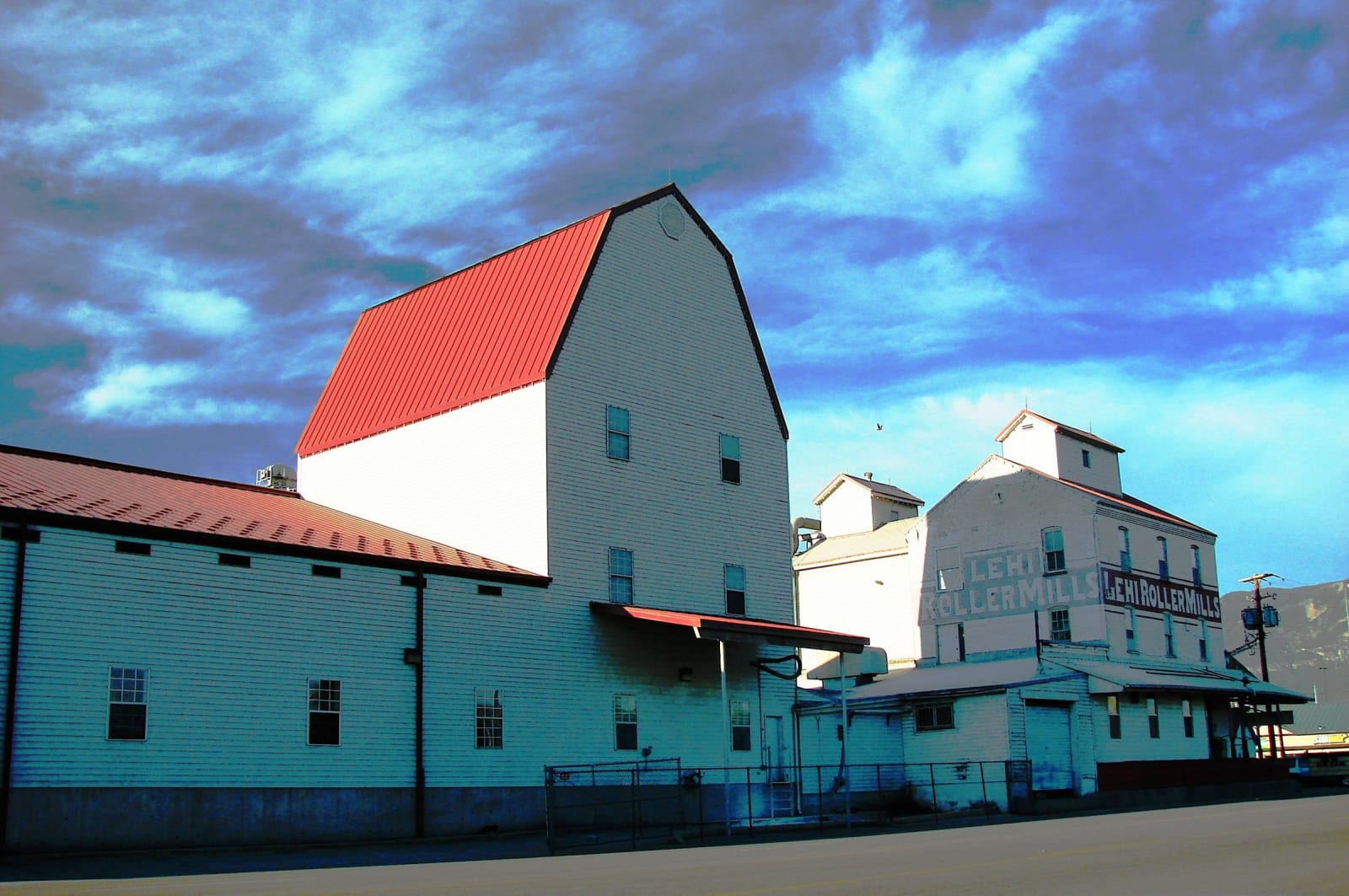
Lehi Roller Mills is a working flour mill that became a movie star by accident and has been living with the consequences ever since. The mill appeared in the opening credits of the 1984 film Footloose — a brief shot of the building's weathered facade establishing the small-town setting that Kevin Bacon would spend the rest of the film dancing his way out of — and that few seconds of screen time transformed a utilitarian agricultural building into a cultural landmark that draws visitors who were not alive when the film was released. It is one of two reasons travelers detour into Lehi — the other being the sprawling Thanksgiving Point complex a few minutes away across town.
The mill was built in 1906, and it has been grinding grain into flour continuously for over a century. The building is a classic early-twentieth-century industrial structure — multiple stories of brick and timber, with the vertical proportions and loading-dock architecture that flour mills of the era shared from Minnesota to Utah. The machinery inside has been updated over the decades, but the fundamental process — wheat goes in, flour comes out — has not changed, and the mill continues to produce flour, pancake mix, and baking products that are sold under the Lehi Roller Mills brand in grocery stores across the Intermountain West.
The Footloose connection is the thing that brings most visitors to the door, and the mill has embraced it with good-humored pragmatism. The building is photogenic in exactly the way that film location scouts need — aged but not derelict, industrial but not threatening, specific enough to feel real and generic enough to stand in for any small American town. The shot in the film lasts only seconds, but it captured the mill at a moment when its weathered facade and small-town setting perfectly embodied the conservative, repressed community that the film's plot would disrupt.
The mill sits on Main Street in Lehi, a town in northern Utah County that has undergone dramatic transformation in recent decades. The surrounding area — once agricultural land and small-town neighborhoods — has been consumed by the suburban sprawl of the Silicon Slopes tech corridor, and the mill now stands as an anachronism amid strip malls, office parks, and housing developments that did not exist when Footloose was filmed. The contrast between the weathered mill and its modern surroundings gives the building an additional layer of meaning — it is not just a filming location and a working mill, it is a remnant of a Utah that is rapidly being paved over.
The mill operates a small retail store where visitors can purchase flour, baking mixes, and branded merchandise. The products are genuinely good — the flour is milled from locally sourced wheat, and the pancake and bread mixes have the kind of straightforward quality that comes from a century of doing one thing well. The store is modest and unpretentious, staffed by people who are happy to talk about flour, about the mill's history, and about the Footloose connection that brings strangers through the door.
The building itself cannot be toured in the traditional sense — the interior is a working industrial facility with machinery, grain dust, and safety considerations that preclude casual visitors. But the exterior is the part that matters for most visitors, and photographing the facade that appeared in the film takes about five minutes. The mill is located at 833 East Main Street in Lehi, easily accessible from Interstate 15, and requires no appointment or admission fee.
Lehi Roller Mills is a minor landmark by any objective measure — a small flour mill in a small town that appeared briefly in a mid-1980s dance movie. But minor landmarks are often the most revealing ones. The mill tells a story about Utah's agricultural heritage, about the relationship between Hollywood and the American landscape, and about the persistence of a family-owned business that has been grinding wheat since Theodore Roosevelt was president. The Footloose connection gets people through the door. The flour keeps them coming back. And the building itself — solid, functional, slightly worn, still working — stands as a quiet monument to the idea that some things are worth doing for a century and counting.
Visitor Info
On the Map
Nearby
The closest stops worth working into your route
Historical markers nearby
Roadside plaques and monuments within a short detour