 U.S. Federal Highway Administration / public domain via Wikimedia Commons
The Story
Edge of the Cedars is the museum where you climb down a ladder into a thousand-year-old room and stand in the same space where Ancestral Puebloan people gathered, performed ceremonies, and made decisions that shaped their community. The kiva — a circular, semi-subterranean chamber used for religious and social purposes — has been partially restored and is open to visitors who descend a wooden ladder through the roof opening, the same way the original inhabitants entered. Your feet touch the same floor. Your hands touch the same walls. The room is cool, dim, and resonant, and the silence inside carries the weight of ten centuries of absence.
The site sits on the northern edge of Blanding in southeastern Utah, at the boundary between the pinyon-juniper woodland and the sagebrush desert — the edge of the cedars that gives the park its name. The Ancestral Puebloan village here was occupied from roughly AD 750 to 1220, and at its peak it consisted of several room blocks, kivas, and associated structures housing a community that farmed the surrounding land, traded with neighboring villages, and participated in the cultural networks that connected communities across the Four Corners region.
The museum houses the largest collection of Ancestral Puebloan pottery in the Four Corners region, and the ceramics alone justify a visit. The collection includes hundreds of vessels spanning several centuries and multiple pottery traditions — black-on-white geometric designs, corrugated gray ware, red ware from communities to the south, and polychrome pieces that demonstrate the artistic sophistication and trade connections of the people who lived here. The progression of styles over time is visible in the displays, and the evolution from simple utilitarian vessels to elaborately decorated ceremonial pieces tells a story of cultural development that parallels the architectural growth of the village itself.
The museum also houses a significant collection of artifacts beyond pottery — stone tools, bone implements, woven sandals, turquoise ornaments, and the everyday objects that constitute the material record of a community that existed for nearly five centuries. The displays are well-designed and thoughtfully curated, with enough context to make the artifacts meaningful without overwhelming visitors with academic detail. The emphasis throughout is on the people — who they were, how they lived, what they valued, and why they eventually left.
The question of why the Ancestral Puebloans abandoned their villages across the Four Corners region in the late 1200s is one of the most debated topics in Southwestern archaeology. Drought, resource depletion, social conflict, and shifting trade networks have all been proposed as contributing factors, and the answer is almost certainly a combination rather than a single cause. Edge of the Cedars does not pretend to have a definitive answer, but the exhibits present the current state of research honestly and accessibly, inviting visitors to engage with the mystery rather than accepting a simple narrative.
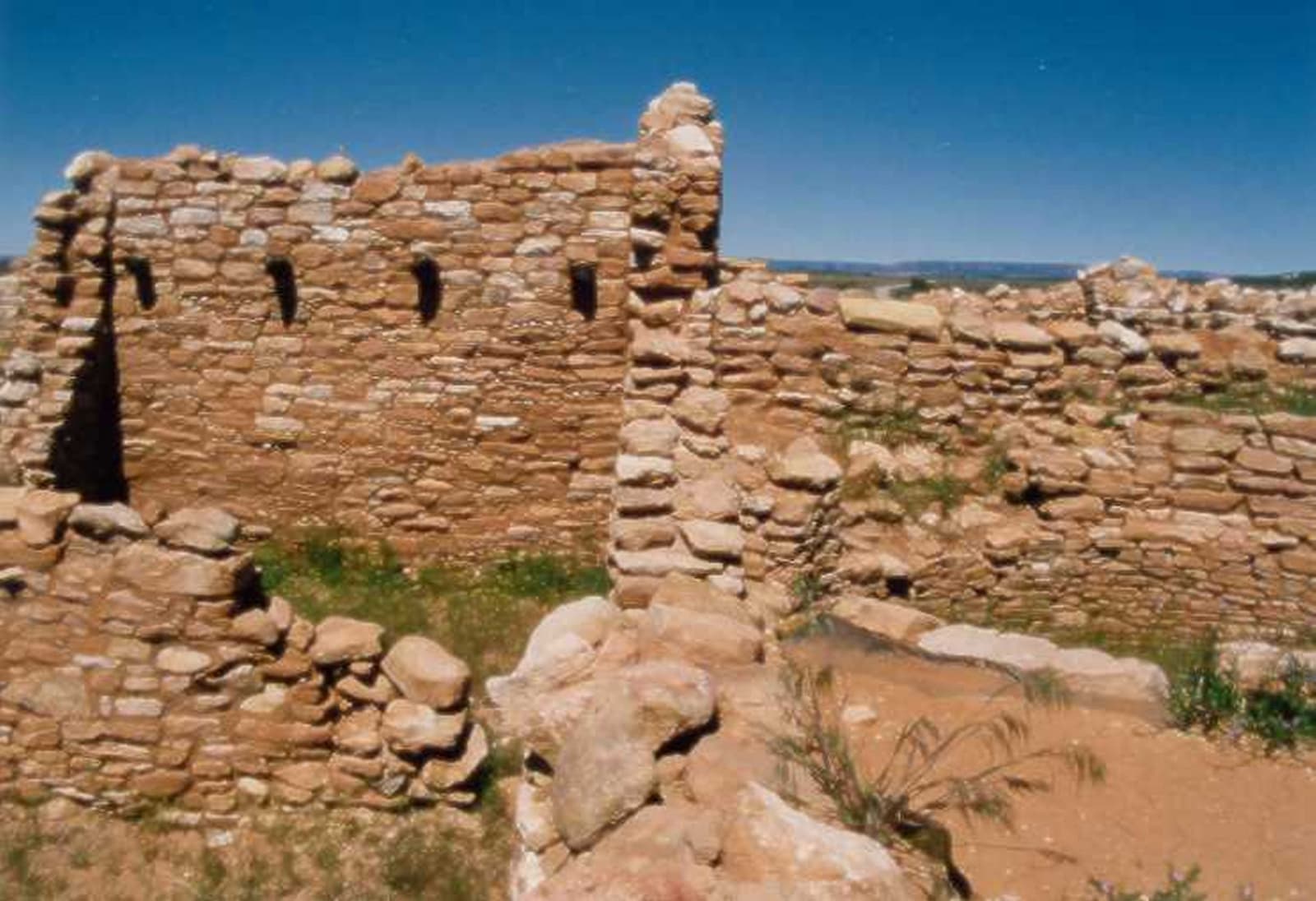
The outdoor ruins are modest in scale compared to the great houses of Chaco Canyon or the cliff dwellings of Mesa Verde, but their accessibility and intimacy offer something those larger sites cannot. You can walk among the excavated room blocks, peer into storage rooms, and examine the masonry techniques that the builders used — the careful selection and placement of stone, the mud mortar, the wooden lintels spanning doorways. The kiva, with its restored roof and ladder access, is the experiential highlight — descending into the cool interior and sitting on the bench that rings the wall, you are physically inside the architecture of a culture that vanished seven centuries ago.
The museum also serves as an unofficial gateway to the archaeological riches of southeastern Utah. The surrounding region — Cedar Mesa, Grand Gulch, Comb Ridge, Bears Ears — contains one of the highest concentrations of archaeological sites in North America, and the museum provides maps, information, and cultural context that help visitors explore responsibly. The staff are knowledgeable about site conditions, access routes, and the ethical considerations of visiting archaeological sites on public land.
Edge of the Cedars occupies an important position in the ongoing conversation about how indigenous cultural heritage is presented and preserved. The museum has worked to incorporate Native American perspectives — particularly those of the Hopi, Zuni, and Navajo peoples who are the cultural descendants of the Ancestral Puebloans — into its interpretive framework. The exhibits increasingly reflect indigenous voices and values, presenting the artifacts not as relics of a vanished culture but as the heritage of living peoples with ongoing connections to this land.
The museum is small enough to visit in an hour or two, and the combination of the pottery collection, the archaeological site, and the kiva experience makes it one of the most rewarding cultural stops in southeastern Utah. It sits at the intersection of history and landscape in a way that few museums achieve — you walk through the exhibits, climb into the kiva, and then step outside into the same terrain that the people who built this village looked at every day. The cedars are still at the edge. The desert still stretches south. And the kiva still holds the silence of a room that has been waiting for someone to climb down the ladder for a very long time.
Visitor Info
On the Map
Nearby
The closest stops worth working into your route
Historical markers nearby
Roadside plaques and monuments within a short detour