The Story
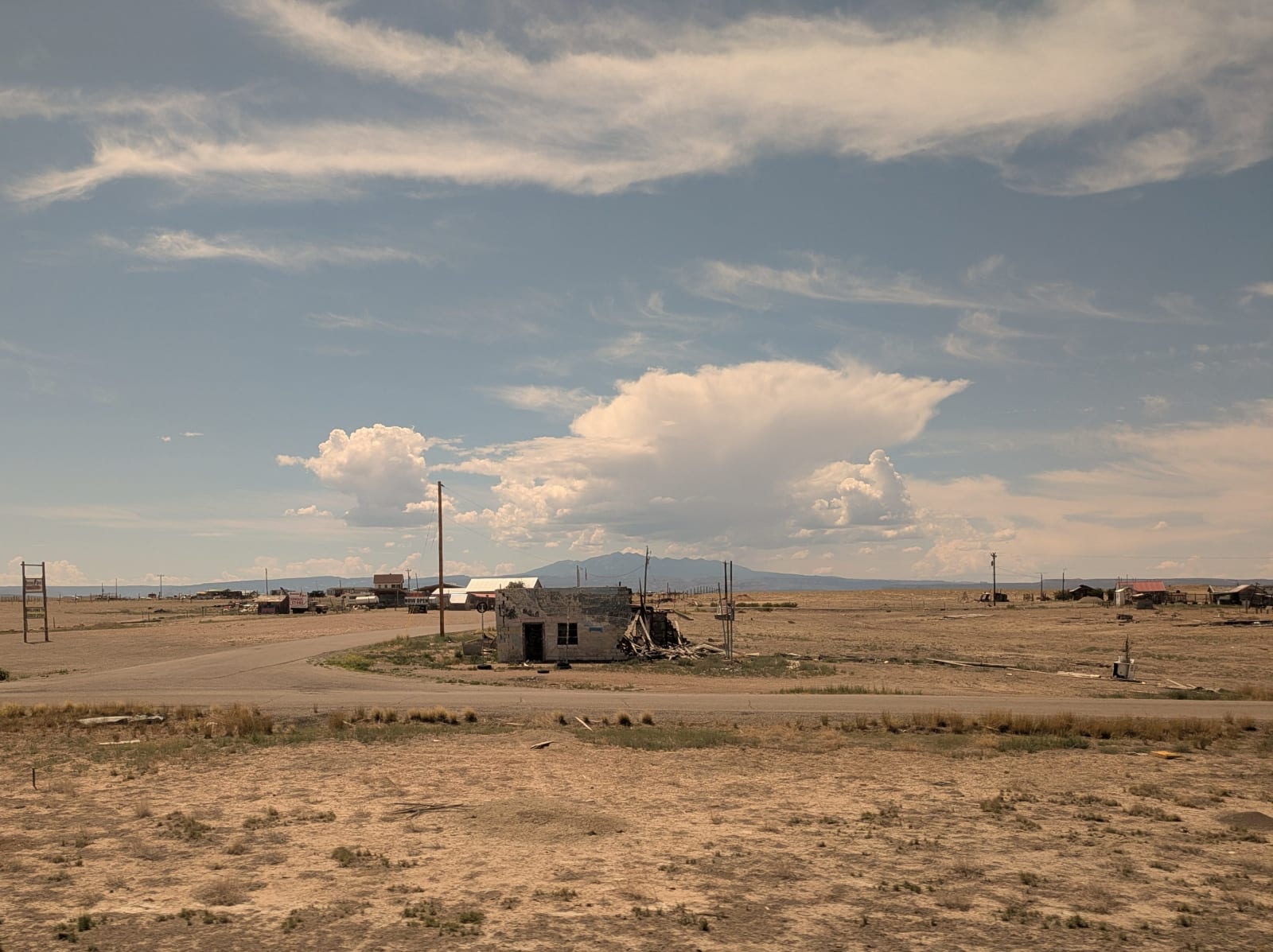
Cisco sits at the far end of UT-128, where the canyon opens out and the highway runs toward the Interstate near the Colorado line, and it is the kind of place that quietly explains why the rest of the drive exists. The town was born in the 1880s as a water stop: the Denver and Rio Grande Western Railroad needed somewhere to refill the boilers of its steam locomotives, the Colorado River was close enough to pump from, and a saloon and a section house went up beside the tracks. Ranchers followed, because the railroad gave them a way to ship wool and livestock, and by the 1940s Cisco had a couple hundred residents, a post office, a general store, a one-room schoolhouse, and a working cattle ranch.
Two things kept it alive longer than most desert sidings, and then both gave out. In 1924, oil and natural gas were discovered nearby, and Cisco spent the next several decades as a genuine energy town, while US Highways 50 and 6 ran through it and fed it cross-country traffic. But in the 1950s the railroad switched from steam to diesel and no longer needed the water stop, and around 1970 Interstate 70 was built a few miles to the north and pulled the highway traffic away with it. With both of its reasons for existing gone, Cisco emptied out, leaving a scatter of collapsing buildings, rusting cars, and oilfield debris baking in the sun.
It has had an odd afterlife. Hollywood used the ruins as a backdrop for Vanishing Point in 1971 and Thelma and Louise in 1991, and in recent years a small revival has taken hold: an artist named Eileen Muza started a residency program here, the Buzzard's Belly General Store reopened in 2019 to serve river runners heading for nearby Westwater Canyon, and a few old buildings have been patched up. The 2020 census counted four residents, which means Cisco is not quite a ghost — and that is the part that matters for a visitor. People live here, the buildings are private property, and the right way to see it is from the road, camera in hand, without wandering through anyone's home. It makes a fitting end to UT-128: a reminder that this whole corridor was once a working route people used to get somewhere, back when the Dewey Bridge downstream was the only way across the water.
Visitor Info
On the Map
Nearby
The closest stops worth working into your route
Historical markers nearby
Roadside plaques and monuments within a short detour