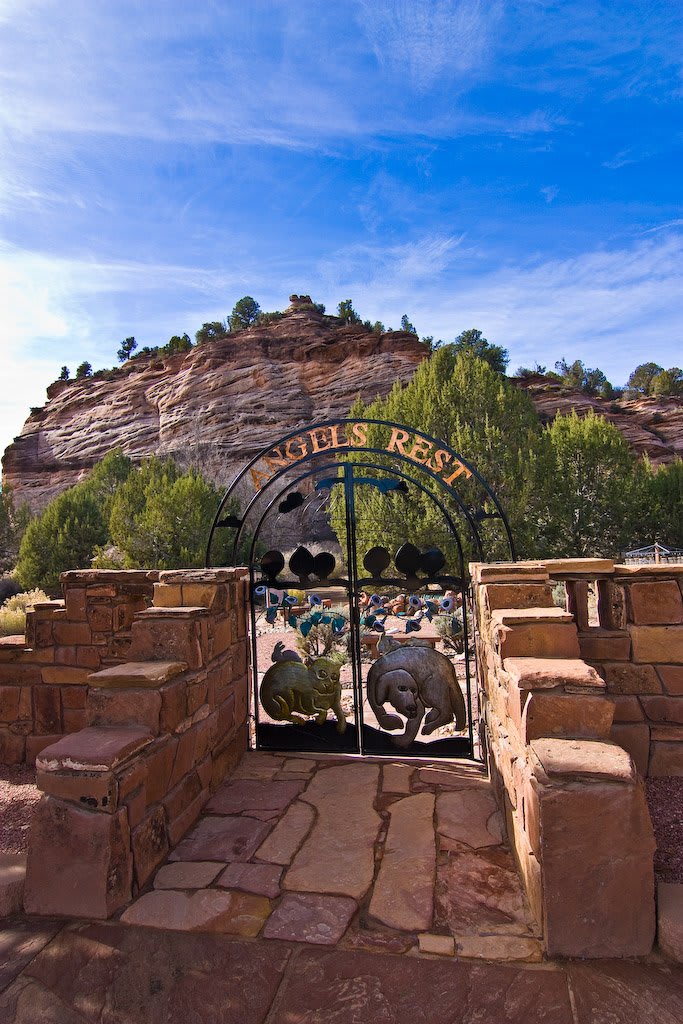
 Photo: Jeremiah Ro / CC BY-SA 2.0
The Story
Best Friends Animal Sanctuary is the largest no-kill animal sanctuary in the United States, and its location — set in the stunning red rock of Angel Canyon north of Kanab — is so beautiful that it raises the question of whether the animals or the visitors have the better deal. The sanctuary cares for up to 1,600 animals at a time across a sprawling campus of specialized housing areas, veterinary facilities, and open pastures tucked into a canyon of cream and vermillion sandstone. Dogs, cats, horses, pigs, birds, rabbits, and the occasional exotic animal live here while waiting for adoption, and some — the ones too old, too sick, or too behaviorally complex for placement — live out their lives here permanently, in a setting that most humans would envy.
The sanctuary was founded in 1984 by a group of animal welfare advocates who wanted to create a model for what a no-kill community could look like. At the time, millions of healthy, adoptable animals were being euthanized in shelters across the country, and the founders of Best Friends believed that was a problem of will, not of resources. They bought land in Angel Canyon, started taking in animals, and began building the infrastructure — physical, organizational, and philosophical — for an approach to animal welfare that prioritized saving every life. The model worked. Best Friends became the flagship of the national no-kill movement, and the organization's advocacy, training programs, and coalition-building have contributed to a dramatic decline in shelter euthanasia rates nationwide.
Visiting the sanctuary is free, and the experience is designed to be as interactive as the animals' needs allow. Guided tours depart from the welcome center and visit the various housing areas — Dogtown, Cat World, Horse Haven, the Bunny House, Piggy Paradise, and the Parrot Garden. Each area is tailored to the species it houses, with enrichment features, socialization spaces, and the kind of thoughtful design that reflects decades of learning about what different animals need to thrive. Dogtown, the largest section, houses several hundred dogs in individual or group accommodations, and the sleepover program allows visitors to take a dog to their cabin or hotel for the night — an experience that is therapeutic for the dog, delightful for the visitor, and responsible for a significant number of adoptions.
The volunteer program is the sanctuary's not-so-secret weapon. Visitors can sign up for volunteer shifts that range from a few hours to a full week, and the tasks are hands-on — walking dogs, socializing cats, grooming horses, cleaning enclosures, and generally providing the individual attention that animals in institutional care desperately need. The volunteer experience is structured and supervised, with orientation sessions that prepare participants for the specific needs of the animals they will be working with. Many volunteers return repeatedly, and some have rearranged their lives — relocated, changed careers, restructured their schedules — to spend more time at the sanctuary.
Angel Canyon itself is worth visiting for its scenery alone. The canyon walls rise several hundred feet in layers of Navajo and Kayenta Sandstone, colored in the warm reds and creams that characterize the Kanab region. Ancient Ancestral Puebloan ruins and rock art are visible in alcoves along the canyon walls, evidence of human habitation stretching back centuries. The combination of red rock scenery and animal sanctuary creates an atmosphere that is simultaneously grand and intimate — you are in a landscape of geological majesty, and you are also petting a three-legged dog named Charlie who is very glad you showed up.
The sanctuary's impact extends far beyond Angel Canyon. Best Friends operates programs in Los Angeles, New York, Salt Lake City, Atlanta, and other cities, partnering with local shelters to increase adoption rates and decrease euthanasia. The organization's data-driven approach — tracking outcomes, sharing best practices, building coalitions of shelters committed to no-kill goals — has been instrumental in moving the national conversation about animal welfare from resignation to action. The goal, stated plainly and pursued relentlessly, is to make the entire country no-kill by 2025 — a target that has driven the organization's strategy for years.
The sanctuary is located about 5 miles north of Kanab on Angel Canyon Road. The welcome center is open daily, and tours and volunteer shifts should be reserved in advance, especially during peak season. There is no admission fee, though donations are welcomed and tax-deductible. Accommodations in Kanab range from modest motels to vacation rentals, and several properties in the area are pet-friendly — appropriate, given the context.
Best Friends Animal Sanctuary is the rare attraction that makes you a better person for having visited. You arrive as a tourist and leave as an advocate, carrying the memory of a specific animal — a cat who purred in your lap, a horse who nuzzled your hand, a dog who leaned against your leg and sighed — and the understanding that every one of those animals is alive because someone decided that their life mattered. The canyon is beautiful. The mission is urgent. And the animals, every single one of them, are worth the trip.
Visitor Info
On the Map
Nearby
The closest stops worth working into your route
Historical markers nearby
Roadside plaques and monuments within a short detour