 dconvertini / CC BY-SA 2.0
The Story
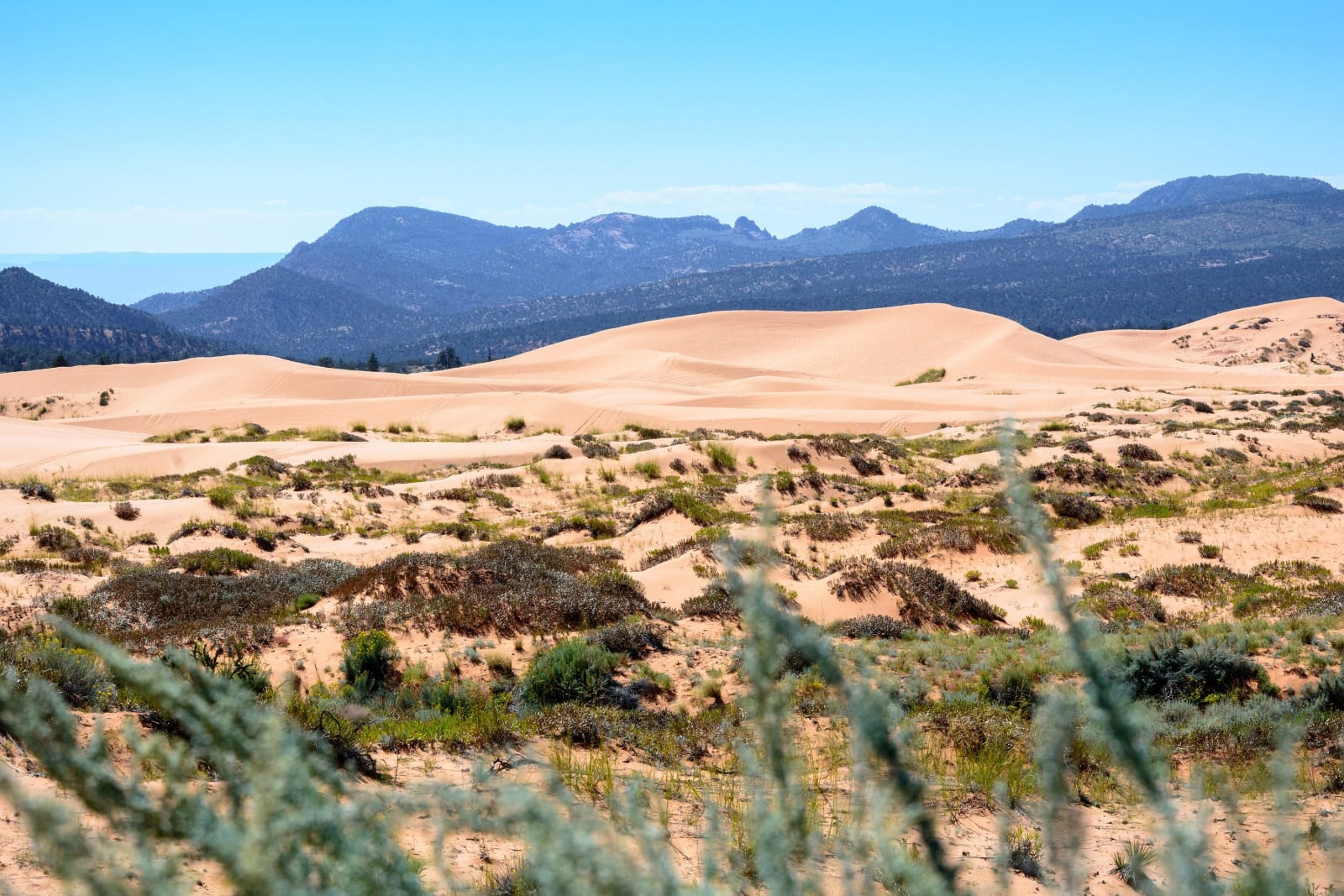
Coral Pink Sand Dunes is one of those places that makes you question your GPS. You are driving through pine forest and red rock mesa country near Kanab, and then suddenly the trees part and an ocean of coral-colored sand stretches out in front of you — dunes 50 to 100 feet high, rippled by wind, glowing pink and orange in the afternoon light. It looks like someone dropped a piece of the Sahara into southern Utah and tinted it the color of a desert sunset.
The dunes exist because of a geological accident. A narrow gap between the Moquith and Moccasin Mountains acts as a natural wind tunnel, funneling prevailing winds through a notch in the cliffs and accelerating them across a valley of eroding Navajo Sandstone. The wind picks up grains of sand weathered from the surrounding red rock, carries them through the gap, and deposits them in the valley below. The process has been running for thousands of years, building a dune field that covers roughly 3,700 acres — small by Saharan standards but strikingly large for a place surrounded by mountains and forest.
The coral pink color comes directly from the Navajo Sandstone source rock. The sand grains are coated with iron oxide — the same mineral that gives southern Utah its characteristic red hues — and the specific shade shifts depending on the light. At midday the dunes look almost peach. At sunrise they glow salmon and rose. At sunset they turn deep coral and burnt orange, and the shadows between the dune ridges fill with violet. Photographers who visit at multiple times of day come away with images that look like they were taken on different planets.
The dunes are open for recreation in a way that few natural areas are. You can hike barefoot up the ridgelines, slide down the steep slip faces, and generally treat the landscape like a giant sandbox — because that is essentially what it is. Unlike fragile desert environments where footprints can last for years, the wind reshapes the dune surfaces constantly. Your tracks from this morning will be gone by tomorrow. This resilience makes the dunes one of the rare geological attractions where you can play without guilt.
ATV and OHV riding is permitted on a large section of the dune field, and the rumble of engines is a regular feature of the soundscape. The park divides the dunes into motorized and non-motorized zones, and the boundary is clearly marked. If you want silence and solitude, head to the hiking-only areas on the southern and western edges of the dune field, where the sand meets the forest and the only sounds are wind and birdsong. If you want adrenaline, rent an ATV in Kanab and spend an afternoon carving tracks up the steepest faces you can find.
The boardwalk nature trail on the park's western edge offers an easy introduction to the dune ecosystem. Despite the harsh appearance, the dunes support a surprising diversity of life. The Coral Pink Sand Dunes tiger beetle — a species found nowhere else on Earth — lives exclusively in this dune field. It is small, iridescent, and fast, sprinting across the sand surface in pursuit of prey. The beetle was listed as a candidate for Endangered Species Act protection, making it one of the rarest insects in North America and a reminder that even landscapes that look barren are often anything but.
Other wildlife includes kit foxes that hunt the dune margins at night, mule deer that browse the surrounding forest, and a variety of lizards that have adapted to life on shifting sand. In spring, after good winter rains, wildflowers bloom in the interdunal flats — the low areas between dune ridges where moisture collects and seeds germinate. The contrast of yellow and purple flowers against coral sand is startling and short-lived, lasting only a few weeks before the heat dries everything out.
The park campground sits at the edge of the dune field, and falling asleep to the sound of wind moving sand across the dunes is a surprisingly soothing experience. The sky here is dark — Kanab and the surrounding towns are small and distant enough that light pollution is minimal — and the dunes themselves make excellent foreground subjects for astrophotography.
Coral Pink Sand Dunes is a detour, not a destination on the main highway, and many travelers blow past the turnoff without knowing what they are missing. That is a shame, because there is nothing else like it in Utah. The dunes are a reminder that geology is not always about cliffs and canyons — sometimes it is about wind, sand, patience, and a color so specific that they put it in the name.
Visitor Info
On the Map
Nearby
The closest stops worth working into your route
Historical markers nearby
Roadside plaques and monuments within a short detour