County guide · Kentucky
Jefferson County
8 places to stop and 134 historical markers in Jefferson County, Kentucky.
Towns: Louisville (126), Anchorage (4), St. Matthews (3), Middletown (2), Prospect (2), Eastwood (1), Audubon Park (1), Lyndon (1), Hurstbourne (1), Jeffersontown (1)
Places to stop
historical · Louisville
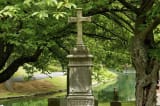
Cave Hill Cemetery
A garden cemetery of 1848 on 296 rolling acres and 500 kinds of trees, where George Rogers Clark lies and Muhammad Ali was buried in 2016.
natural · Louisville
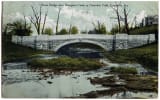
Cherokee Park
Frederick Law Olmsted's 409-acre park along Beargrass Creek, laid out in 1891, flattened by a tornado in 1974 and replanted to his plan.
cultural · Louisville
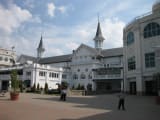
Churchill Downs and the Kentucky Derby Museum
The 1875 track under the twin spires, where 13 of the 15 riders in the first Kentucky Derby were Black and Isaac Murphy won it three times.
historical · Louisville
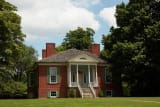
Farmington Historic Plantation
The Speed family's 1816 hemp plantation house, told through the 20 to 70 people they enslaved here, and the place Lincoln stayed in 1841.
historical · Louisville
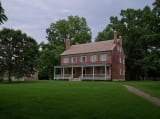
Historic Locust Grove
A Georgian farmhouse of about 1790 built by enslaved craftsmen, where George Rogers Clark spent his last years and Lewis and Clark stopped on the way home from the Pacific.
historical · Louisville
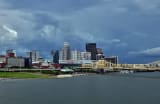
Louisville Waterfront Park
Eighty-five acres of lawn on the Ohio below downtown, where the Falls made a city, the river trade carried people south, and an old railroad bridge now walks you to Indiana.
cultural · Louisville
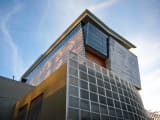
Muhammad Ali Center
Six stories on the riverfront that Muhammad Ali and Lonnie Ali founded to tell how a West End boy became the man who would not go to Vietnam.
historical · Louisville
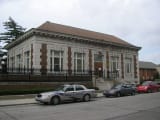
Western Branch Library
The 1908 Carnegie library at Tenth and Chestnut, opened in 1905 as the first public library in the nation run by and for Black residents, still lending books.
Historical markers
Louisville · Erected 2006
"Bloody Monday" and American (Know-Nothing) Party
Quinn's Row, a line of frame houses on Main between Tenth and Eleventh owned by an Irishman, Peter Quinn, was set alight after its tenants fired from their windows at a…
Louisville · Erected 2003
"Little Africa"
Before the name Little Africa stuck, the freed families who settled this low ground in the 1870s called it Needmore.
Louisville
"Neighborhood House"
Frances Ingram, head resident from 1905 to 1939 and a Louisville Girls' High School graduate, corresponded with Jane Addams and John Dewey.
Louisville · Erected 2008
"Nunnlea"
The name is twentieth-century. Mr. and Mrs. George Eady bought the house in 1935, called it Nunnlea, and had the Louisville architect E. T.
Eastwood · Erected 1937
Abraham Lincoln
The Long Run Baptist Church that marks the grave stands on the 400-acre tract Captain Lincoln bought near Hughes Station in 1780, by tradition on the site of his cabin.
Louisville · Erected 2008
Aero Club of Louisville
Flying had a rough start in Louisville. At the city's first aviation meet, staged by the Elks at Churchill Downs in 1911, one of the two airplanes never left the ground.
Louisville · Erected 2010
Alonzo "Lonnie" Clayton / African American Jockey
Lonnie Clayton was one of nine children of Robert and Evaline Clayton, and his brother Albertus rode too.
Louisville · Erected 1964
Artist of Confederacy
Marschall's claim rests largely on his own account, given in a 1917 newspaper interview the year he died: in February 1861, he said, Mary Clay Lockett and her daughter…
Louisville · Erected 1962
Belknap Campus
The city first meant this ground for the dead. Louisville bought the 82.5-acre tract in 1850 for a public burial ground called Oakland Cemetery, but it never caught on…
Anchorage
Berrytown
Samuel Nock, who sold Alfred Berry his five acres, was a partner in Nock & Rawson, one of Louisville's largest tobacco and wholesale grocery houses before the Civil War…
Anchorage
Berrytown Cemetery
The lodge that bought this ground belonged to one of the great Black benevolent orders.
Louisville
Bowman Field
The airport's high ground made it Louisville's lifeline in the January 1937 flood. With much of the city under water, municipal offices moved into the terminal and…
Louisville · Erected 2014
Bray Place
The oldest part, a two-story brick dwelling of about 1800, faces south toward Beargrass Creek; a larger five-bay Federal block of about 1820 was joined to its rear, and…
Louisville · Erected 2012
Brennan House
Few houses of its kind survive north of Broadway, where Louisville's wealthy once lived near the commercial district; most neighbors gave way to commerce and parking…
Louisville
Calvary Baptist
Charles H. Parrish Sr., the pastor who led Calvary from 1885 to 1931, was born into slavery in Lexington in 1859, the son of Hiram Parrish, a teamster, and Henrietta…
Louisville
Calvary Episcopal Church
Architect W. H. Redin had a puzzle to solve. The congregation, which left the Methodist church in 1860 and kept meeting in Sehon Chapel until 1872, was neither high…
Louisville · Erected 2003
Camp Zachary Taylor
Announced on June 11, 1917, Camp Zachary Taylor was at one point the largest training camp in the country, holding 47,500 men at once on what had been mostly farmland…
Louisville · Erected 2011
Campaign to End Racial Segregation in Louisville
Louisville's young demonstrators took their cue from Greensboro, where four Black students sat down at a Woolworth's lunch counter on February 1, 1960; a year later high…
Louisville · Erected 2019
Carl Braden Memorial Center / Home to Campaigns for Racial Justice
Carl Braden was born in New Albany, Indiana, in 1914 and spent years on Louisville and Cincinnati newspapers before the Wade house case cost him his Courier-Journal job…
Louisville
Center Street C.M.E. Church (Chestnut St. C.M.E. Church)
When the building was dedicated on September 17, 1865, the Daily Democrat walked its readers through it: 150 feet long on a 54-foot front, a Sunday school room and four…
Louisville · Erected 2019
Central High School
The school was born of unequal money. When it opened in 1873 as the city's first publicly funded school for Black children, its budget came from property taxes paid by…
Louisville · Erected 1995
Charles W. Anderson, Jr.
Charles W. Anderson Jr. was the son of a Louisville physician and a schoolteacher, and he studied at Kentucky State College and Wilberforce before taking his law degree…
Louisville · Erected 2019
Chickasaw Park
Chickasaw Park was laid out on a plan from the Olmsted firm as part of Louisville's park system, and work began in 1923, though it was not finished until the 1930s.
Audubon Park
City of Audubon Park
High ground was the selling point in a flood-prone city, and the Audubon Park Realty Company, which bought the land in 1912, made the most of it.
Louisville · Erected 2013
Civil Rights Movement Overview - Fourth Street Sit-In Demonstration Sites
The ordinance came only after the city's leaders tried everything short of it. Mayor Bruce Hoblitzell refused integration demands in 1959, and in 1960 city lawmakers…
Louisville · Erected 2012
Clarke and Loomis Architects/Levy Brothers Building
Moses Levy left Nierstein, Germany, in 1857 and opened a clothing store in 1861, moving it to this corner five years later; his younger brother Henry followed him across…
Louisville · Erected 2011
Col. Frederick Geiger/Early Butchertown
The droves made the neighborhood. Bluegrass cattle and hogs came down the Frankfort Pike past Geiger's land, sometimes 50,000 hogs at once, and drovers' inns with pens…
Louisville · Erected 2021
Dirt Bowl, Algonquin Park
The tournament began in a hard season: Watkins and Carter started it in the summer after Louisville's 1968 riots, hoping basketball and family-style picnics would bring…
Louisville · Erected 2010
Douglas Park Racetrack
Col. James J. Douglas built for harness racing in hard times, when even Churchill Downs was struggling through the 1890s.
Louisville
Dr. James Bond (1863-1929)
Bond was born enslaved on Preston Bond's farm, and family tradition holds that Preston fathered Bond and his brother, Henry, by their mother, Jane.
Louisville
Early Jewish Congregations
Adath Israel moved often before it moved east. Its first synagogue, consecrated in January 1849 on Fourth Street between Green and Walnut, burned in 1866.
Louisville · Erected 2004
Enid Yandell (1869-1934)
The war ended Yandell's sculpting years more than age did. Caught in Paris when fighting began in 1914, she helped found L'Appui aux Artistes, whose canteens served more…
Louisville · Erected 2014
Evan Williams 1755-1810
Williams built his trade on Kentucky's surplus corn: the farms grew more grain than could be hauled to market, so he bought it and turned it into whiskey.
Louisville · Erected 2004
Farnsley-Moremen House
Ebenezer Christopher bought these 200 acres in 1822 and died without a will a few years later; his estate appraisal listed nine enslaved people alongside the stock…
Louisville · Erected 2002
Father Herman Felhoelter
Four days before he died, Felhoelter wrote to his mother: "Don't worry, Mother. God's will be done." His battalion of the 19th Infantry was falling back from the Kum…
Louisville · Erected 2017
First Lutheran Church
Mason Maury was one of the few Louisville architects to try the vocabulary of Louis Sullivan and Frank Lloyd Wright, and his Kaufman-Straus store was designed a year…
Louisville · Erected 2006
First Unitarian Church
James Freeman Clarke, later a leading voice of Transcendentalism, served here before John Healy Heywood, whose forty years from 1840 to 1880 were marked by work for the…
Louisville
Floyd's Station
Floyd moved onto his own 1774 survey on November 3, 1779, with his wife, Jane Buchanan, his brother and an unnamed Black man who helped build the cabin, and found eleven…
Louisville · Erected 2000
Forest Home Cemetery
Eliza Tevis made the law work for her. Once freed, she sued the estate of John B. Hundley, who had held her, for back pay for her work, and won.
Louisville
Fort Southworth
The fort took its name from A. J. Southworth, who died at Atlanta in August 1864, the month work began.
Louisville
Fort William
Christian's frontier career was built on war against the Cherokee. In 1776 Virginia made him commander of its western expedition against them, he led two such campaigns…
Louisville · Erected 2010
Fort-on-Shore
The stockade at Twelfth and Rowan stood on land with a cloud over it. Clark could put a military post anywhere, but the families who came ashore from Corn Island had no…
Louisville · Erected 1998
Founding of Jefferson Seminary
The pledge of 1798 took a long time to become a school. Jefferson Seminary did not open until the fall of 1813, and it closed in 1829.
Louisville · Erected 1962
Galt House
The Nelson killing began at the front desk on the morning of September 29, 1862. Jefferson C.
Louisville
George Rogers Clark
Clark's move to Cave Hill was a family project. His nephews Isaac and Dr. William Clark, sons of his brother Jonathan, planned to gather their kin from the burial…
Louisville · Erected 2005
Gilded Age Mansions/Chateausque Architecture
Louisville's chateau houses owe a debt to Richard Morris Hunt, architect of the Vanderbilts' French Renaissance palaces.
St. Matthews · Erected 2008
Gilman's Point
The potatoes grew in reclaimed swamp. Farmers who drained the wet ground between Shelbyville and Brownsboro roads found it ideal for root crops, especially potatoes and…
Middletown · Erected 2014
Gov. Lawrence W. Wetherby
Earle Clements backed Wetherby for lieutenant governor in 1947, and when Clements went to the U.S.
Louisville · Erected 2007
Governor Thomas E. Bramlette
Bramlette was a Unionist who spent the war quarreling with Lincoln. He fought the enlistment of Black soldiers in the state, the suspension of habeas corpus and the…
Louisville
Grave of Steamboat Captain
Mary Miller took her master's license because rivals forced the question. Competitors of the Saline complained that her husband George was illegally serving as both…
Anchorage
Griffytown
Griffith, listed as Griffy in the 1880 census, and his wife, Margret, set the cabin on a lot they bought from Silas O.
Prospect
Harrod's Creek
The Jacob School cost $4,800 when it opened around 1918, and the Black families it served paid part of that themselves: at a 1916 school board meeting they agreed to do…
Louisville
Hayfield
Colonel George Hancock, a Yale-educated Virginian, built the main house soon after marrying Mary Davidson in 1834; his first wife, Eliza Croghan, had died the year…
Louisville · Erected 2019
Highland Park
The railroad's promises outran its deliveries. The Vance Land Corporation chartered the suburb in 1890 for L&N workers, mostly Irish and African American families, and…
Louisville · Erected 2015
Highlands Neighborhood
Preston's first house may still stand inside a later one. Major William Preston's two-story log lodge of 1815 is thought to be the core of the house at 1072 Baxter…
Louisville · Erected 2008
Home of Anne & Carl Braden / Civil Rights Landmark
In 1954 Anne and Carl Braden bought a house in Shively, then an all-white suburb, and deeded it to Andrew and Charlotte Wade, a Black couple whom sellers had turned…
Louisville
Home of I. Willis Cole
Cole came up from Memphis, where he finished high school and LeMoyne Junior College, and arrived in Louisville before the First World War working as a salesman.
Louisville · Erected 2019
Immanuel Baptist Church/First Christian-Lampton Baptist Church
The congregation that built this church had sold its first church, a stone temple-fronted building at Fourth and Walnut, as downtown land values soared; after several…
Louisville
Irene Dunne (1898-1990)
Dunne was born on East Gray Street, the daughter of Joseph Dunn, a steamboat engineer and government inspector who died of a kidney infection in 1913, when she was…
Anchorage
Isaac Hite's Home
The log house's own story is less certain than its link to Hite. A 1976 survey found that neither its date nor its first owner had been established, though it ranks…
Louisville
James Guthrie (1792-1869)
At the Treasury, Guthrie found methods that had not kept up with the government's growth.
Louisville
Jefferson County Courthouse
Shryock's courthouse was cut down before it was finished. Engravings in 1844 and 1845 show that the end porticoes and cupola he planned were never attempted, and the…
Louisville
John Floyd's Grave
Before Kentucky claimed him, Floyd went to sea. In 1776 Virginia investors fitting out the Phoenix to raid British commerce in the West Indies chose the landsman as her…
Louisville · Erected 2009
Jug Band Pioneer
Earl McDonald was born in South Carolina in 1885 and grew up in Louisville, where he formed his first jug band in 1902, at seventeen.
Louisville · Erected 2011
Kosmosdale - Est. 1905
Samuel Horner Jr. wanted his own station. The Illinois Central already stopped at Riverside, near the mill, but Horner struck a deal: the cement company gave land for…
Louisville · Erected 2010
Lakeland Asylum
The land was bought in 1869 from descendants of Isaac Hite for a state reform school for juvenile delinquents, and it became an asylum only because Kentucky's other…
Louisville · Erected 2017
Landmark Civil Rights Cemetery
The written offer at the heart of the case carried its own escape clause: Warley would build a house and live in it, but he need not pay or take the deed unless Kentucky…
Louisville · Erected 2003
Lewis and Clark in Kentucky - Charles Floyd (ca. 1782-1804)/Charles Floyd (ca. 1782-1804)
Floyd's illness came on fast. On July 31 he wrote that he had been very sick but was recovering; by August 19 Clark recorded him suddenly much worse with what he called…
Louisville · Erected 2008
Lewis and Clark in Kentucky - Louisville
Where the expedition began is an old argument. One writer dated it to the morning of August 31, 1803, when Lewis's new keelboat left a Pittsburgh wharf; another to May…
Louisville · Erected 2002
Lewis and Clark in Kentucky - Trough Spring
Most of what Clark wrote to this house surfaced only in 1988. Jonathan's papers passed down to his great-grandson, the historian Temple Bodley, and after Bodley's death…
Louisville · Erected 1998
Louis D. Brandeis (1856-1941)
Born to Jewish parents from Prague, Brandeis finished Louisville Male High School at fourteen with top honors, studied in Dresden and graduated first in his class at…
Louisville
Louisville Bar Association
The reform the lawyers pressed for answered cases like the Foster murders. On an August night in 1868, two white men took an axe to Jack and Sallie Foster, Sallie's…
Louisville
Louisville City Hall
Andrewartha's building is one wing of what the city planned, a complex nearly three times as large with a grand south portico, a fire station and a public auditorium…
Louisville · Erected 2017
Louisville Cotton Mill
At its height the mill ran two shifts and employed more than 750 men and women, and through its whole life it was one of the three largest cotton mills in Kentucky; in…
Louisville
Louisville Legion
When Governor Owsley called for volunteers in 1846, the Legion was the first unit to answer and be accepted, though volunteers were so plentiful that Washington nearly…
Louisville
Louisville Medical College
The faculty paid for this building themselves: its $150,000 cost came entirely from private funds within the college. When it opened, Dr. Joseph M.
Louisville · Erected 2018
Louisville to Portland Turnpike
Portland was laid out in 1811 by William Lytle, the founder of Cincinnati, who meant to sell lots on his 3,000 acres below the Falls to pay for a canal around them.
Louisville · Erected 1980
Louisville's Steamboat Era
The Falls of the Ohio were the only barrier to navigation between Pittsburgh and the Gulf, and they made Louisville.
St. Matthews
Low Dutch Station
James Brown came west from Delaware about 1800 and worked at the salt works at Mann's Lick before buying the 480-acre Dutch Station tract from George R. C.
Lyndon
Lyndon
The name Alvin Wood gave his depot reached back almost a century. The railroad bordered his land, and when he built a stop there to spare travelers the trip to Gilman's…
Louisville
Memorial Auditorium
A committee formed in 1912 to plan a public auditorium, and after the First World War its backers chose to make the building a memorial to the county's dead.
Louisville · Erected 2003
Merriwether House
Harry Merriwether had been enslaved and later worked as a steamboat captain, and the lot he bought in 1891 lay in the Harrods Creek community known as the Neck.
Louisville · Erected 2010
Mockingbird Valley
This was plantation land first. When Edward Lightfoot died in 1823, he divided his land and the people he enslaved among his widow, Martha, and their three children, and…
Louisville · Erected 2017
Montgomery Street School
The school board's minutes put construction late in 1856 and into 1857, when Portland's growing population needed a second school near the old Portland School.
Louisville · Erected 2012
Muhammad Ali's Home Site
The pink house is small: a one-story, two-bedroom home of about a thousand square feet, built in 1942 and bought by the Clays in 1947, and the whole family lived here…
Louisville · Erected 2004
Murray Atkins Walls - Civil Rights Pioneer
Walls came to Louisville in 1935 newly married to Dr. John Walls, and took a Works Progress Administration housing survey job that showed her the city's segregation…
Louisville · Erected 2021
Nannie Helen Burroughs / Notable Educator, Social Activist
Nannie Helen Burroughs was born in Orange, Virginia, in 1879 to parents who had both been enslaved, and grew up in Washington, D.C.
Louisville
Noted School Site
Black Louisville had schools long before this building. Henry Clay Weeden, writing in 1897, recalled classes for Black children running in the city in the early 1840s…
Louisville
Old Catholic High School
The school grew out of St. Augustine, Louisville's oldest Black Catholic parish. The first Black Catholics in Kentucky were enslaved people brought from Maryland by…
Louisville · Erected 2019
Optimist International
The Louisville club that hosted the founding was itself only three years old, started in 1916 by forty business and civic leaders.
Louisville
Our Lady Church
The church on Rudd Avenue is the congregation's third, and its odd steeple tells the story.
Louisville · Erected 2010
Pennsylvania Run Presbyterian Church and Cemetery
The congregation was organized in 1789 by Scotch-Irish Presbyterians, and for its first decade it relied on supply ministers sent out by the Transylvania Presbytery…
Middletown · Erected 1962
Perryville Prelude
These skirmishes frightened a city. With Bragg's army in Kentucky in September 1862, Louisville's military authorities ordered women and children across the river to…
Louisville
Presentation Academy
The school began because the Rev. Robert Abell of St. Louis Church, then the only Catholic parish in Louisville, wanted an organized school for his congregation and…
Louisville · Erected 2017
Preston and St. Catherine Streets Historic District
Before Moorman built, the block was mostly big undivided lots: the hardware merchant John Rust subdivided it as early as 1847, yet much was still open in 1876.
Louisville · Erected 2001
Rev. William H. Sheppard
Sheppard went to the Congo in 1890 alongside Samuel Lapsley, a white minister from Anniston, Alabama; together they founded the mission at Luebo in the Kasai, and…
Louisville · Erected 2006
Rosa Phillips Stonestreet 1859-1936
The system Stonestreet set out to change left each school district to three elected trustees, who held the money and the hiring.
Louisville · Erected 2018
Roscoe Goose House/Golden Goose, 1891-1971
Goose came to horses as a teenager driving delivery wagons in Louisville. In 1913 he talked owner Thomas P.
Louisville · Erected 2013
Rotary Club of Louisville
The club's 1912 constitution limited membership to white adult males. That wording gave way in April 1923 to Rotary International's standard phrase, adult males of good…
Louisville · Erected 2018
Saddler Sergeant Otto Voit
The water party came on the bluffs where the battalions of Major Marcus Reno and Captain Frederick Benteen were besieged.
Louisville · Erected 2019
Samuel M. Plato, 1882-1957
Samuel Plato was born in 1882 in Waugh, Alabama, and first came to Louisville as a student, enrolling at State University, now Simmons College of Kentucky, in 1898 and…
Louisville
Scottish Rite Temple
The room that mattered most to the members is the Inspector General's Room, paneled in cedar of Lebanon, the wood the Bible names for King Solomon's temple.
Louisville
Second African Baptist Church
The congregation nearly did not get started. George Wells began organizing it in the spring of 1844, but the effort stalled in April because other churches saw no need…
Louisville · Erected 2013
Shelby Park Neighborhood
The branch library at the park's edge was designed by Loomis & Hartman, the firm Arthur Loomis formed with Julius Hartman in 1908.
Louisville
Since 1842
For years the Printing House worked from a basement at the Kentucky School for the Blind.
Louisville
Sisters of Mercy
The sisters who came to run a struggling federal hospital soon turned teachers. Not long after their 1869 arrival they began a teaching ministry with a few books and a…
Louisville · Erected 2013
Sit-In Demonstration Site, Blue Boar Cafeteria
The Blue Boar demonstrations grew out of a campaign that began on February 9, 1961, when Black students from Central and Male high schools, members of CORE and the NAACP…
Louisville · Erected 1998
Slave Trading in Louisville
Henry Bibb knew this trader's methods firsthand. Having escaped slavery, Bibb came back to Kentucky in 1839 to free his wife, Malinda, and their daughter, Frances; all…
Louisville
Slavery Laws in Old Kentucky
Kentucky had chances to end slavery and turned them down. The first constitution allowed emancipation only with an enslaver's consent or with payment.
Louisville
Smoketown
For the freedpeople who crowded into Smoketown after 1865, the great prize was a house of their own, and many bought one with what they earned in the tobacco trade.
Hurstbourne
Soldier's Retreat
After the Revolution, Richard Clough Anderson was the principal surveyor of the Virginia military lands in Kentucky, the grants paid to veterans of the Continental Line…
Louisville · Erected 2012
Southern Parkway/Iroquois Park
Olmsted's plan for Louisville rested on three parks of deliberately different character, each developed from its own ground: meadows and creek at Cherokee, riverbank at…
Louisville · Erected 2011
St. Boniface Parish
D. X. Murphy, who designed the church and the friary, sometimes cut his fee to as little as one percent on Catholic commissions; his sister, Sister Mary Anselm, belonged…
Louisville · Erected 2013
St. Frances of Rome School/Sisters of Charity of Nazareth
Thomas Nolan's 1930 school struck the historians who listed it as one of the few large Italian Renaissance buildings in the area, its main front carved with an unrolled…
Louisville · Erected 2018
St. James Court
The court owes its odd shape to a fair. The Southern Exposition, opened by President Chester A.
Louisville
St. John's Evangelical Church
The congregation's first church, built in 1848 on Hancock Street, outlived its use. After the members moved to their new church on Market Street in 1867, the old…
Louisville · Erected 2016
St. Joseph Catholic Church
Adolph Druiding, a St. Louis and Chicago architect who drew plans for more than a hundred American churches, designed St.
Louisville · Erected 2018
St. Vincent de Paul Parish
D. X. Murphy's church stood unaltered for forty years before the congregation outgrew it.
St. Matthews
Sturgus Station
The station's best-known household arrived in August 1785. Colonel William Christian, delayed a month on the Holston waiting for enough travelers to cross safely…
Louisville · Erected 2018
Susan Look Avery
Avery came to her public causes late. She was nearly seventy when her husband died in 1885, and she then gave herself to free trade, currency reform, temperance…
Louisville
The Filson Club Historical Society
The society lost its first collection for want of a safe building. Its first president, Reuben Durrett, held the founding collection, and it was sold to the University…
Louisville · Erected 2018
The Good Shepherd Order
St. Mary Euphrasia had founded the Sisters of the Good Shepherd at Angers, France, in 1835, and at Bishop Flaget's invitation she sent five of them, who reached…
Prospect · Erected 2016
The Kentucky Soldiers' Home
Kentucky's Union veterans got this home through their own Grand Army post, and it sheltered thirty-five men before closing within a few years.
Louisville · Erected 2009
The Little Loomhouse
The Little Loomhouses are three cabins strung up the north slope of Kenwood Hill, beside an old quarry road.
Louisville · Erected 1998
Thomas Merton (1915-68)
What followed the moment on this corner is the Merton most readers know. Through the 1960s he wrote against nuclear weapons and the Vietnam War and for racial equality…
Jeffersontown
Tyler Settlement
The Tyler farms were worked by enslaved people as well as by the family, though not in the numbers of the county's larger estates.
Louisville · Erected 2018
U.S. Marine Hospital
Congress authorized the inland marine hospitals in 1837 for sick boatmen on the western rivers and lakes, and Louisville's opened beside the Portland Canal in 1852.
Louisville
Water Works Pumping Station
Polluted private wells had spread cholera and typhoid through the 1830s and 1840s, enough to earn the city the name graveyard of the West, and a run of bad fires in the…
Louisville · Erected 1966
Wilderness Road
Close to the Falls, the pioneer road was really a bundle of paths. Settlers arriving in 1780 most often took the route from Harrodsburg to near Bullitt's Lick, then…
Louisville · Erected 2018
Wisertown/St. Andrew's Church Road
The Wiser farm ran to hundreds of acres, stretching past the ridgeline that now rises behind the football field, and each generation carved off a share for its children…
Louisville · Erected 2009
Wolf Pen Corridor
The Wolf Pen Branch Mill is a stone building that replaced a log or frame mill, called the Postlewaite or Jacob Trace Mill in old deeds, which a flood destroyed in the…
Louisville
Zachary Taylor Home
Springfield was built by Richard Taylor and the people he enslaved; its western section dates to about 1795 and its eastern block to about 1810.
Louisville · Erected 1971
Zachary Taylor National Cemetery
For decades the grave had no keeper. Taylor's body came back to the family graveyard on his father's Springfield farm, and by 1879 the farm had passed out of Taylor…
Louisville · Erected 1979
Zion Baptist Church
The congregation grew out of a departure from York Street Baptist in 1877 and rented the old Smith Mills at Preston and Broadway for a year before organizing in August…