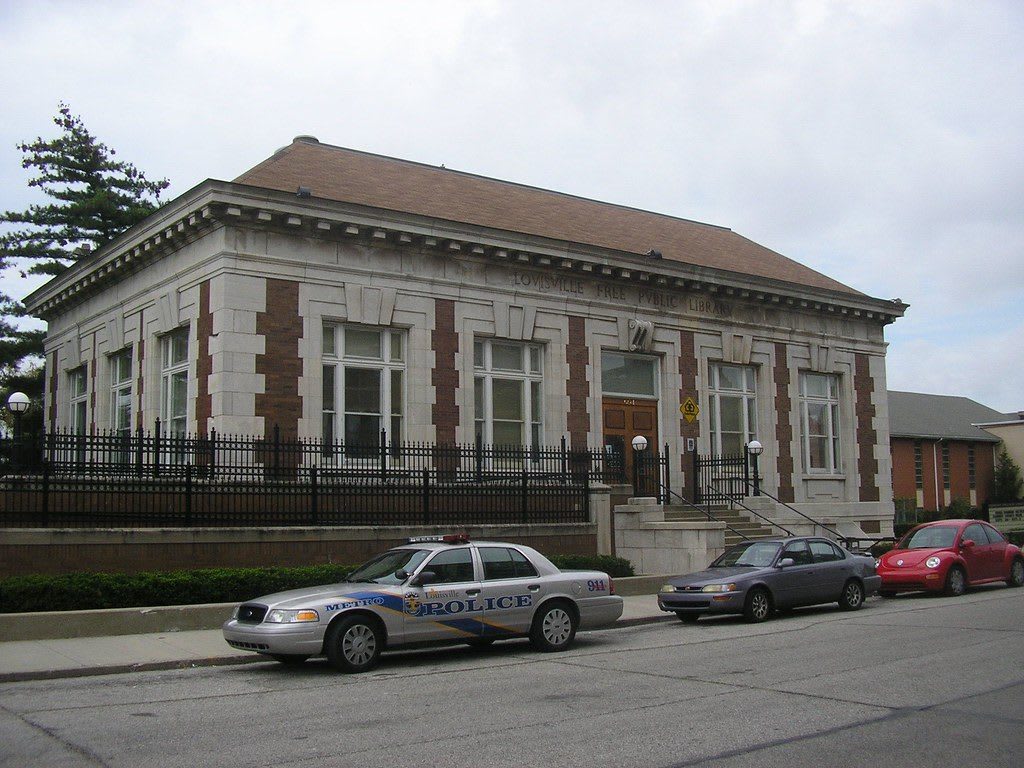
 w.marsh / CC BY 2.0 via Flickr
The Story
When Louisville set up its public library system by ordinance in 1902, Black residents were shut out of it. Albert E. Meyzeek, an educator and civil rights activist, pressed the city until the plan, by 1904, included a branch for African American citizens, paid for with Andrew Carnegie's money. While the building went up, the branch opened in 1905 in three rooms of William M. Andrews' house on West Chestnut Street, with an all-Black staff. It was the first public library in the nation run by and for Black residents, when most public libraries in the South were closed to Black patrons.
Its librarian was Thomas Fountain Blue, trained as a theologian at Virginia Union University, the first African American to head a public library in the United States. Blue made the branch a neighborhood center, with story hours, a children's spelling bee sponsored by the educator Joseph S. Cotter, and the Douglass Debate Club, high school boys who argued civil rights. He also started an apprenticeship program that trained Black library students from across the country and became a model for libraries in the South.
The Carnegie building at the southwest corner of Tenth and Chestnut opened on October 28, 1908, and it has been a library ever since. When the branch faced closing in 2001, an anonymous $12,000 gift, later known to be from the musician Prince, helped keep it open. It now holds the library system's African American Archives, and a state historical marker stands outside. Walk in; the reading room is the monument.
Visitor Info
On the Map
Nearby
The closest stops worth working into your route
Historical markers nearby
Roadside plaques and monuments within a short detour