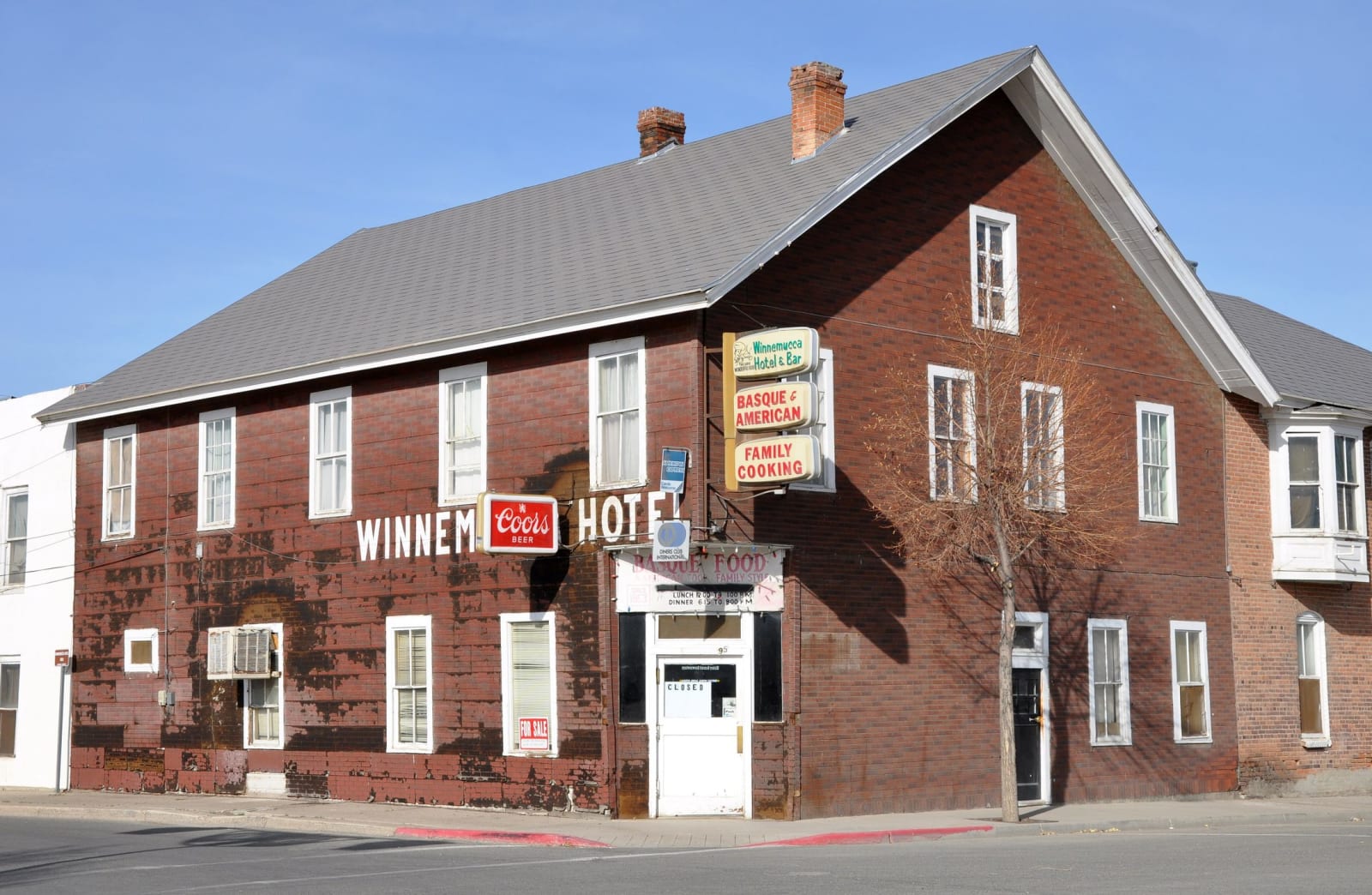
 Finetooth / CC BY-SA 3.0
The Story
Winnemucca is a crossing. Long before it was a town it was the place where the Humboldt River forded conveniently — where the emigrant trains turned off to leave the river, where the Central Pacific bridged it, and where today Interstate 80 and US-95 meet in the only sizable town for a hundred miles. Peter Skene Ogden's beaver trappers camped here in 1828; a Frenchman ran a post called Frenchman's Ford in the 1850s; and in 1863 the settlement took the name it still carries — that of the principal Northern Paiute leader of the region, the Numu chief Winnemucca, whose daughter Sarah grew up to become one of the most important Native voices of the century, the author of a book that argued the Paiute case to white America in its own language. The Humboldt County seat, about eight thousand strong, is a working town first and a historic one second, which is most of its charm.
It grew up divided. When the transcontinental railroad ran its tracks along the hillside south of the river in 1869, it raised an Upper Town of railroad men above the old riverside Lower Town of farmers and ranchers, and the two halves eyed each other warily for years before US-40 finally stitched them together. That double identity — freight and cattle, depot and ranch — is the town in miniature, and it served Winnemucca well: it wrestled the county seat away from failing Unionville in 1872 and settled in as the commercial center of north-central Nevada, a job it has never given up.
Its most famous day was September 19, 1900, when three armed men walked into the First National Bank, put a knife to the banker's throat, emptied the safe of some thirty-two thousand dollars in gold coin, and rode out under a hail of bullets. Winnemucca has told it as a Butch Cassidy robbery for more than a century — there is a bronze plaque on the building, an annual Butch Cassidy Days, and a cherished local story that Butch himself handed a town boy one of the getaway horses. The trouble is that Cassidy was almost certainly elsewhere: his gang had hit a train in Wyoming three weeks earlier, six hundred miles away. Elzy Lay and Kid Curry may well have been here; the famous name on the plaque probably was not. It is a fine story anyway, and the town is right to keep telling it — with an asterisk.
The other reason to stop is dinner. Winnemucca, like Elko, filled in the early twentieth century with Basque sheepherders, and their boardinghouses became some of the best restaurants in the state. The Martin Hotel has fed people family-style since 1898 — you sit at a long communal table, the courses arrive whether you ordered them or not, and the picon punch comes without being asked — and the Winnemucca Hotel, older still, has poured for the Basque community since the 1860s. You can eat better in this freeway town than a freeway town has any right to offer.
What's here now is a tidy, friendly crossroads that catches travelers without leaning on them. The Humboldt Museum lays out the whole story, from Ice Age fossils to the Paiute, Chinese, and Basque communities who built the place; downtown keeps a run of storybook brick, including a fairy-tale 1920s bank on the National Register. Gold mines work the hills nearby and cattle still come to town, so Winnemucca, unlike many a Nevada main street, is not performing its past — it is still living a version of it.
It makes the natural pause on the western Humboldt: fuel up, eat extravagantly well, and sleep before the long empty miles to Reno or the turn north on US-95. The river that everyone since the trappers has used to cross Nevada still runs through the middle of town, mostly ignored — about right for a place that has always been less a destination than the best possible place to stop on the way to one.
Visitor Info
On the Map
A story featuring this place
Go deeper into the history and character of this stop
Nearby
The closest stops worth working into your route
Historical markers nearby
Roadside plaques and monuments within a short detour