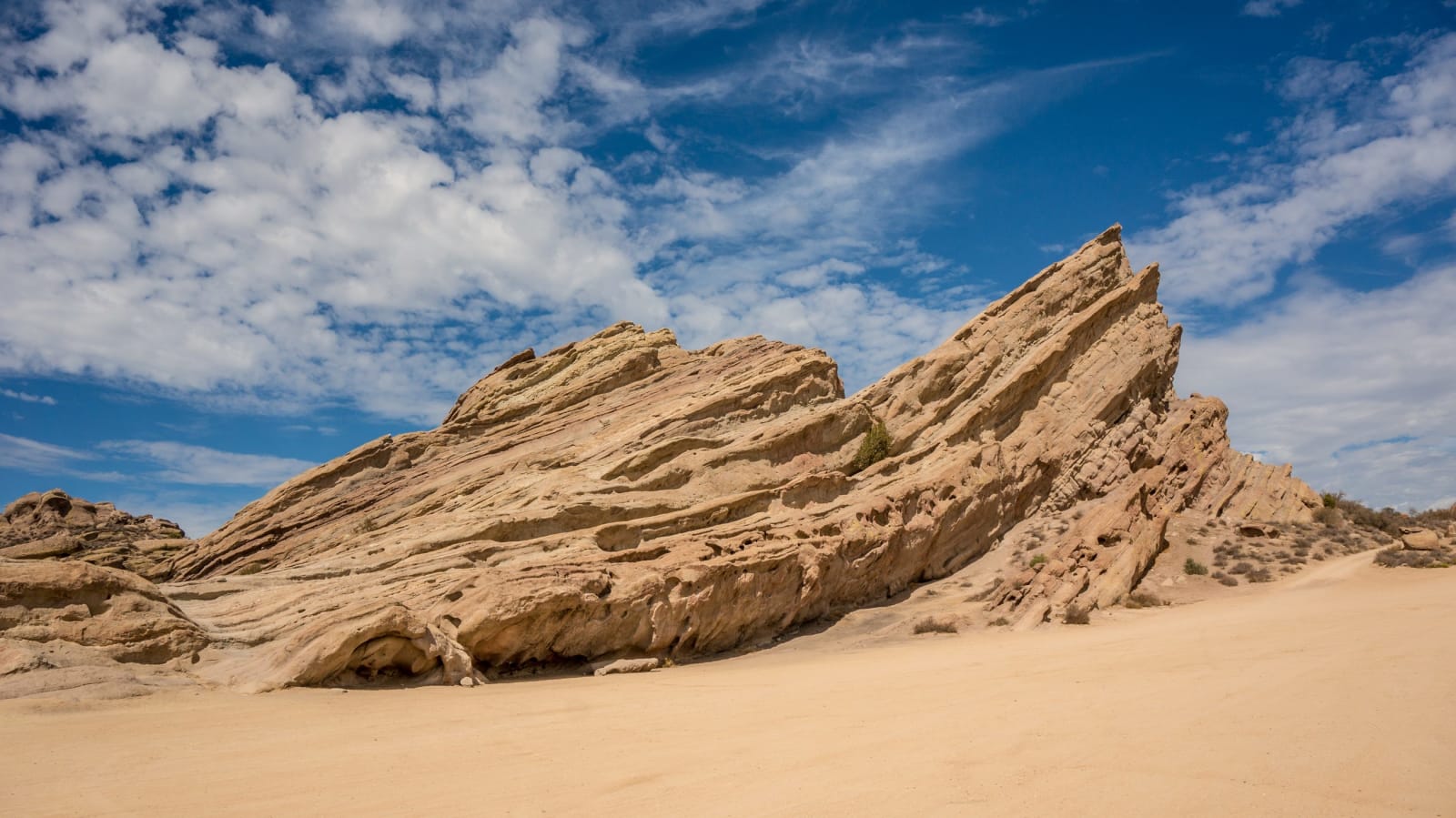
Tilted sandstone slabs at Vasquez Rocks in Agua Dulce, at the northeast edge of the Santa Clarita Valley.
Mikebhuang / CC BY-SA 4.0 via Wikimedia Commons
California · Region

San Fernando & Santa Clarita Valleys

Tataviam and Tongva country behind the hills — Mission San Fernando at the village of Achoicominga, California's first gold and first oil well, and the Owens Valley water that arrives at the Cascades.

10 places to explore

The Fernandeño Tataviam Band of Mission Indians is headquartered in San Fernando, across from the city hall, and its citizens' lineages run through both of these valleys and out into Simi and the Antelope Valley beyond. Mission San Fernando Rey de España was founded on September 8, 1797 at the village of Achoicominga, and the nation's own account of what followed uses the word enslaved — people taken from every surrounding lineage to build the mission and to run it. The Spanish called them Fernandeño after the place that took their labor. The valley's southern rim is Tongva ground and the country west of the Simi Hills is Chumash; the lineages traded and married across boundaries that were never lines.

The drive is two valleys and the pass between them: the 101 across the San Fernando floor, then the 5 climbing over Newhall into Santa Clara River country. Everything else here follows from that gap in the hills. Every era cut its own way through — Phineas Banning's notch of the 1850s, deepened toward ninety feet under Edward Beale and dug largely by Chinese laborers; the San Fernando railroad tunnel of 1876; the Newhall Tunnel after it; the freeway interchange standing there now. At Lang on September 5, 1876, Charles Crocker drove a ceremonial gold spike to finish the Southern Pacific's San Joaquin Valley line and link Los Angeles to San Francisco by rail for the first time. Chinese crews built that too, and went uncredited for a century.

Gold came first and almost nobody remembers it. In March 1842, six years before Sutter's Mill, Francisco López pulled wild onions in Placerita Canyon and found gold clinging to the roots — California's first documented discovery, worked afterward by Sonoran miners. Oil came next. Pico Canyon's fourth well was completed on September 26, 1876, ran for a hundred and fourteen years, and made this the birthplace of the California petroleum industry, with a company town at Mentryville and the state's first refinery down at Newhall.

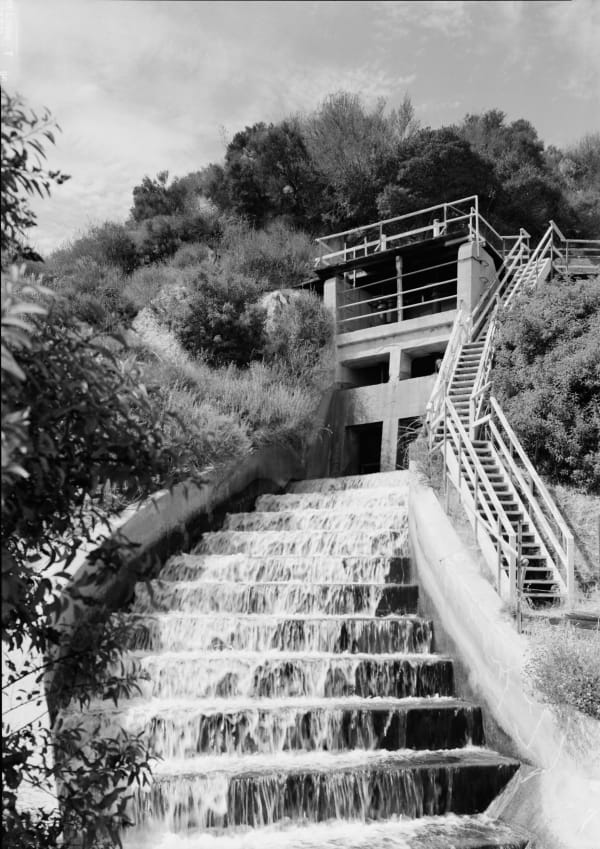
Water came last, and it came from somewhere else. On November 5, 1913 the Los Angeles Aqueduct emptied into the north valley at the Cascades in front of some forty thousand people, carrying Payahuunadü — the Owens Valley, the land of flowing water — south to a city that had bought it out from under the people who lived there. The dam built to hold that water in reserve failed just before midnight on March 12, 1928, and the flood down San Francisquito Canyon killed more than four hundred and fifty. It remains the worst civil engineering failure in twentieth-century America, and it ended William Mulholland.

What to See in San Fernando & Santa Clarita Valleys

10 places across the region, grouped by what they are.

Geology & Rock Formations
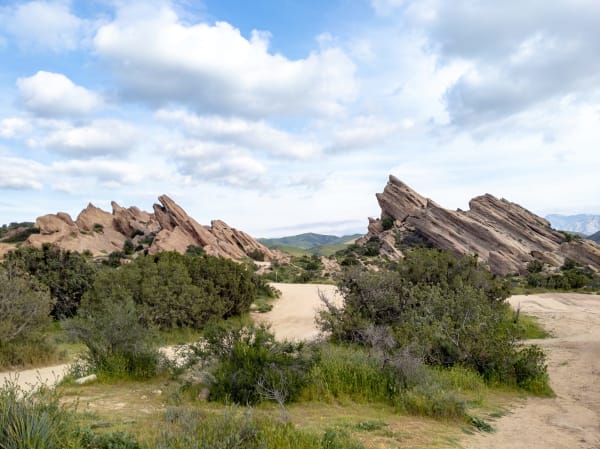
The park trail running between two groups of canted Vasquez Formation fins at Vasquez Rocks, Agua Dulce.

Vasquez Rocks

Agua Dulce

Sandstone beds stood on end by the fault underneath, on Tataviam ground, named for a man the county hanged.

View details →

Historic Sites

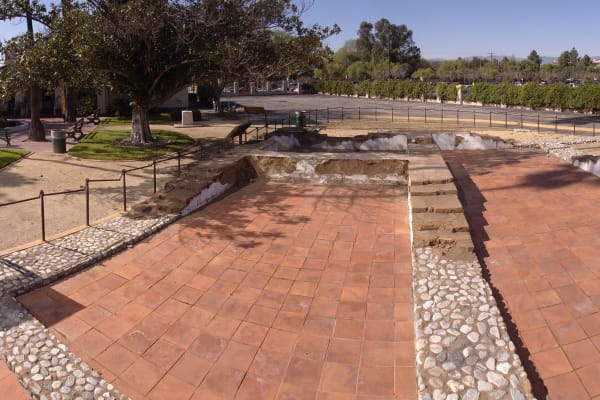
Terracotta paving and cobblestone bands at Campo de Cahuenga tracing the footprint of the original adobe, which runs on beneath Lankershim Boulevard.

Campo de Cahuenga

North Hollywood

The treaty that ended the fighting in California was signed on this ground, and the building it was signed in is now under the boulevard.

View details →
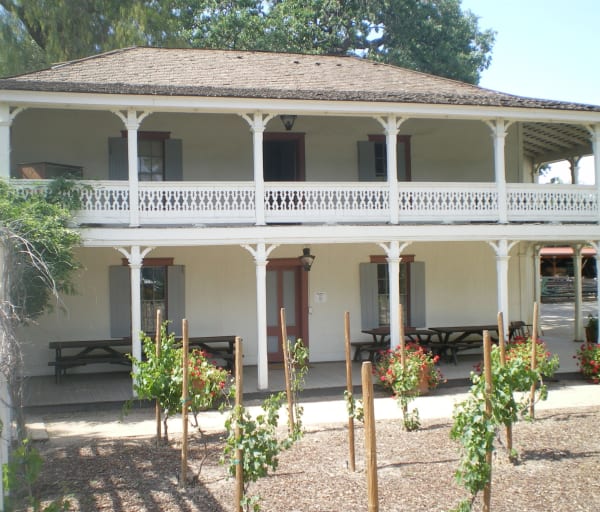
The two-storey Monterey-style Leonis Adobe in Calabasas, its balcony running the length of the front veranda.

Leonis Adobe

Calabasas

Miguel Leonis left his estate to relatives in France and called Espíritu Chijulla his housekeeper; she spent sixteen years proving in court that she was his wife.

View details →
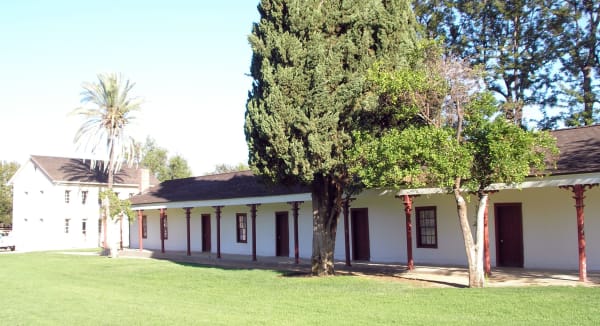
The single-story de la Osa adobe at Los Encinos State Historic Park, with the two-story Garnier house behind it.

Los Encinos State Historic Park

Encino

A spring that never stopped running, the village it fed for thousands of years, and the rancho that took the ground away.

View details →
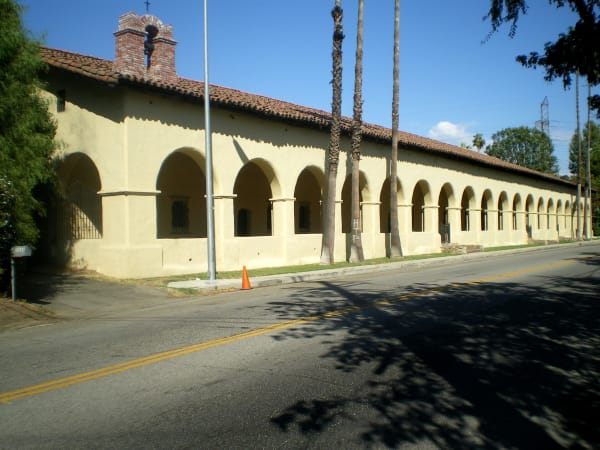
The convento at Mission San Fernando Rey de España, a long two-story adobe fronted by a colonnade of arches.

Mission San Fernando Rey de España

Mission Hills

The seventeenth Alta California mission, founded at the Tataviam village of Achoicominga, with the largest adobe building in the state standing beside it.

View details →
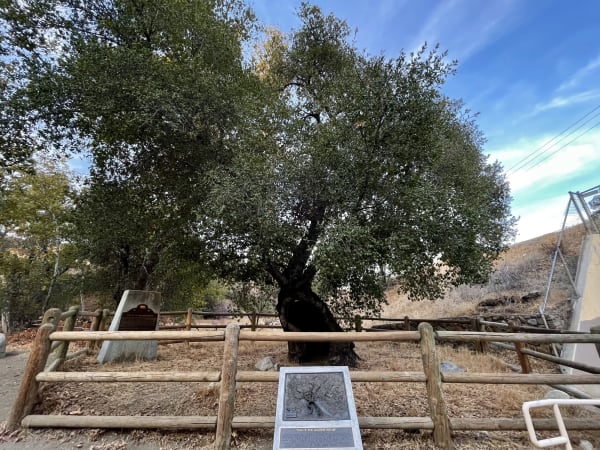
The Oak of the Golden Dream in Placerita Canyon, a broad old coast live oak standing inside a split-rail fence.

Oak of the Golden Dream

Newhall

Gold was found in California here in 1842, six years before Sutter's Mill, and the oak it was found under is still standing.

View details →
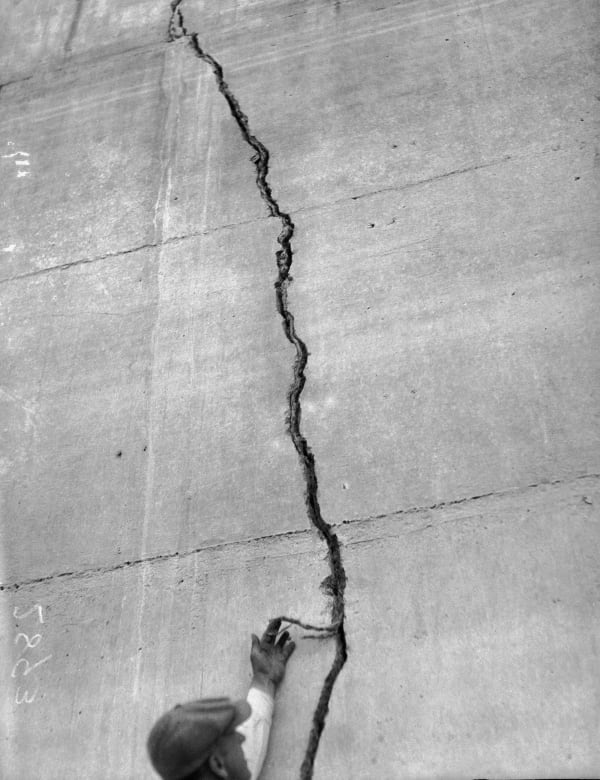
A man reaching up to a crack running down a concrete face of the St. Francis Dam, photographed after the March 1928 collapse.

St. Francis Dam Disaster Site

Santa Clarita

The dam failed just before midnight on March 12, 1928, and the flood ran fifty miles down the canyon to the sea.

View details →

Industry & Mining

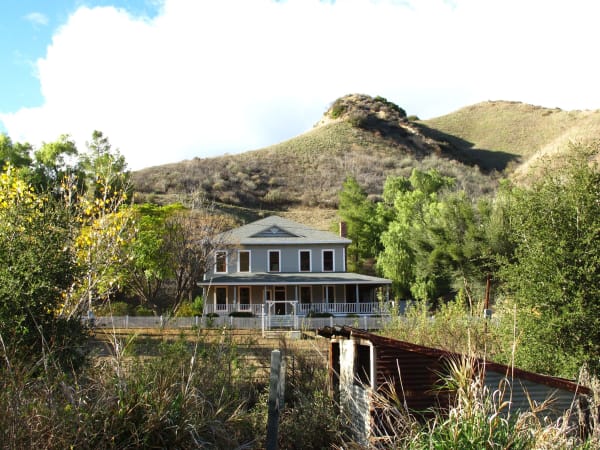
The C. A. Mentry house at Mentryville, a two-story wooden house below the bare hills of Pico Canyon.

Mentryville and Pico Canyon

Newhall

A company town in a canyon, and a mile and a half further up the road, the well that started the California oil industry.

View details →
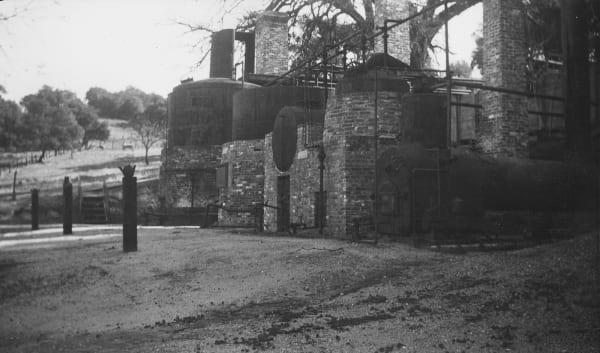
The Pioneer Oil Refinery at Newhall around 1940 — brick stills, piping and three smokestacks standing in an open field.

Pioneer Oil Refinery

Santa Clarita

The first commercially successful refinery in the West, built in 1876 to take the crude coming down the pipeline from Pico Canyon.

View details →
Water running down the stepped concrete chute of the first Los Angeles Aqueduct cascade at Sylmar, below the portal structure.

The Cascades

Sylmar

The concrete chute where the Los Angeles Aqueduct arrives, and where forty thousand people watched the Owens Valley come south in 1913.

View details →

Stories from San Fernando & Santa Clarita Valleys

History

The Aqueduct Never Reached the City

Los Angeles spent twenty-three million dollars bringing Owens Valley water two hundred and thirty-three miles south, then delivered it to a valley that was not part of Los Angeles — and the men who had known the route in advance already owned that valley.

7 min read

San Fernando & Santa Clarita Valleys rewards the unhurried. Pick a base, fan out, and let the country between the headline stops surprise you.

← Explore more of Open Road Guide