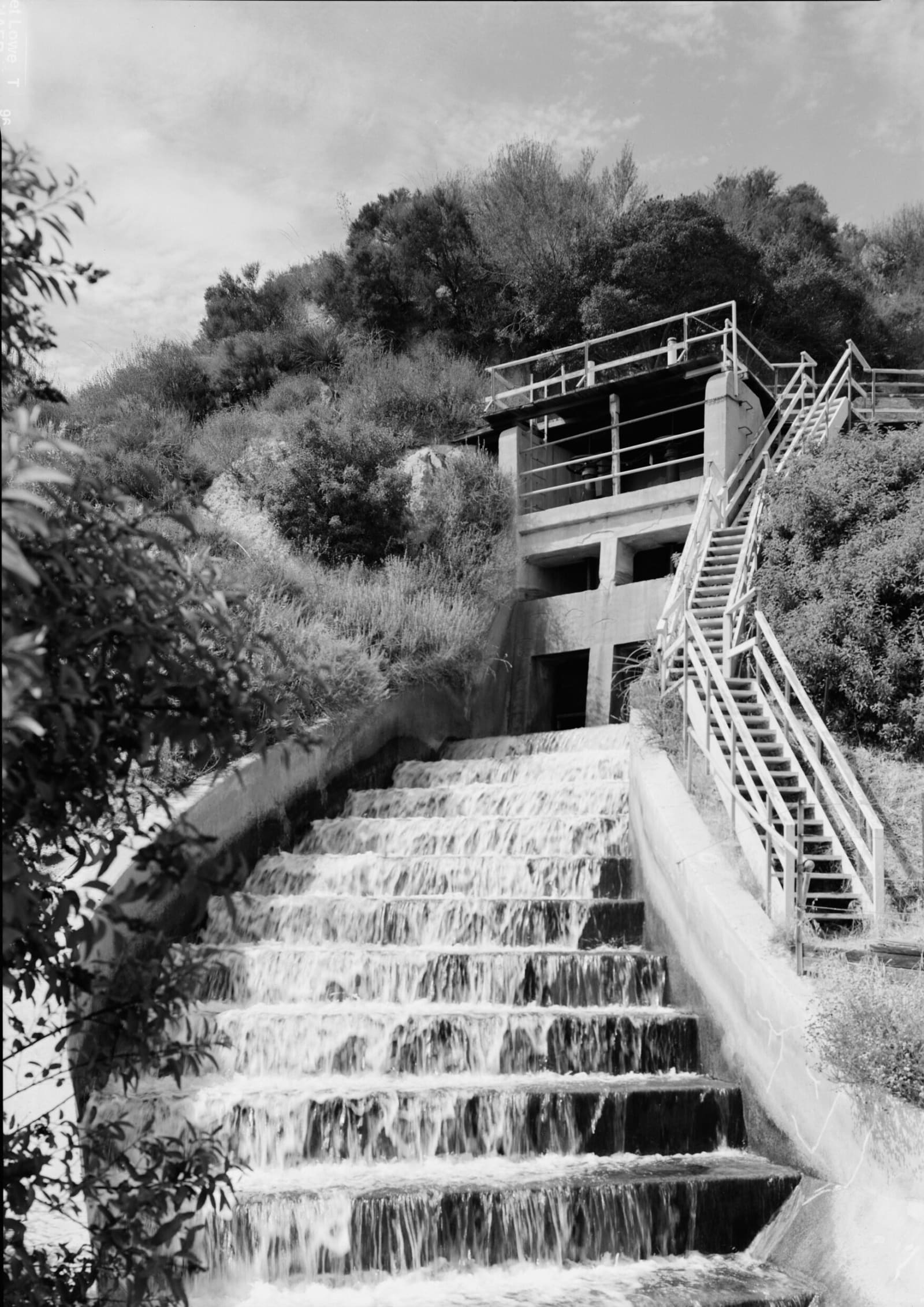
 Jet Lowe / public domain via Wikimedia Commons
The Story
On November 5, 1913 something like forty thousand people came out to Sylmar to watch water run down this hillside. The Los Angeles Aqueduct had been building since 1908 — more than two hundred miles of it, moving the whole way on gravity alone — and this concrete chute is where it finally emptied into the San Fernando Valley. It is still working. What comes down the cascade is the same water on the same errand it was running a century ago.
What arrived was Payahuunadü, the land of flowing water, carried south to a city that had spent years quietly buying up the rights out from under the people who lived there. The valley behind it dried, and Owens Lake turned into the dust problem it remains. The aqueduct is the reason Los Angeles could grow past anything its own river would support, and the reason this valley was farmland worth annexing to the city in the first place. Fifteen years later the dam built to hold that water in reserve failed and killed hundreds; the St. Francis Dam site is half an hour north. The cascade is a roadside view rather than a park, best seen from the Foothill Boulevard side, and it takes about as long as it sounds.
Visitor Info
On the Map
Nearby
The closest stops worth working into your route
Historical markers nearby
Roadside plaques and monuments within a short detour