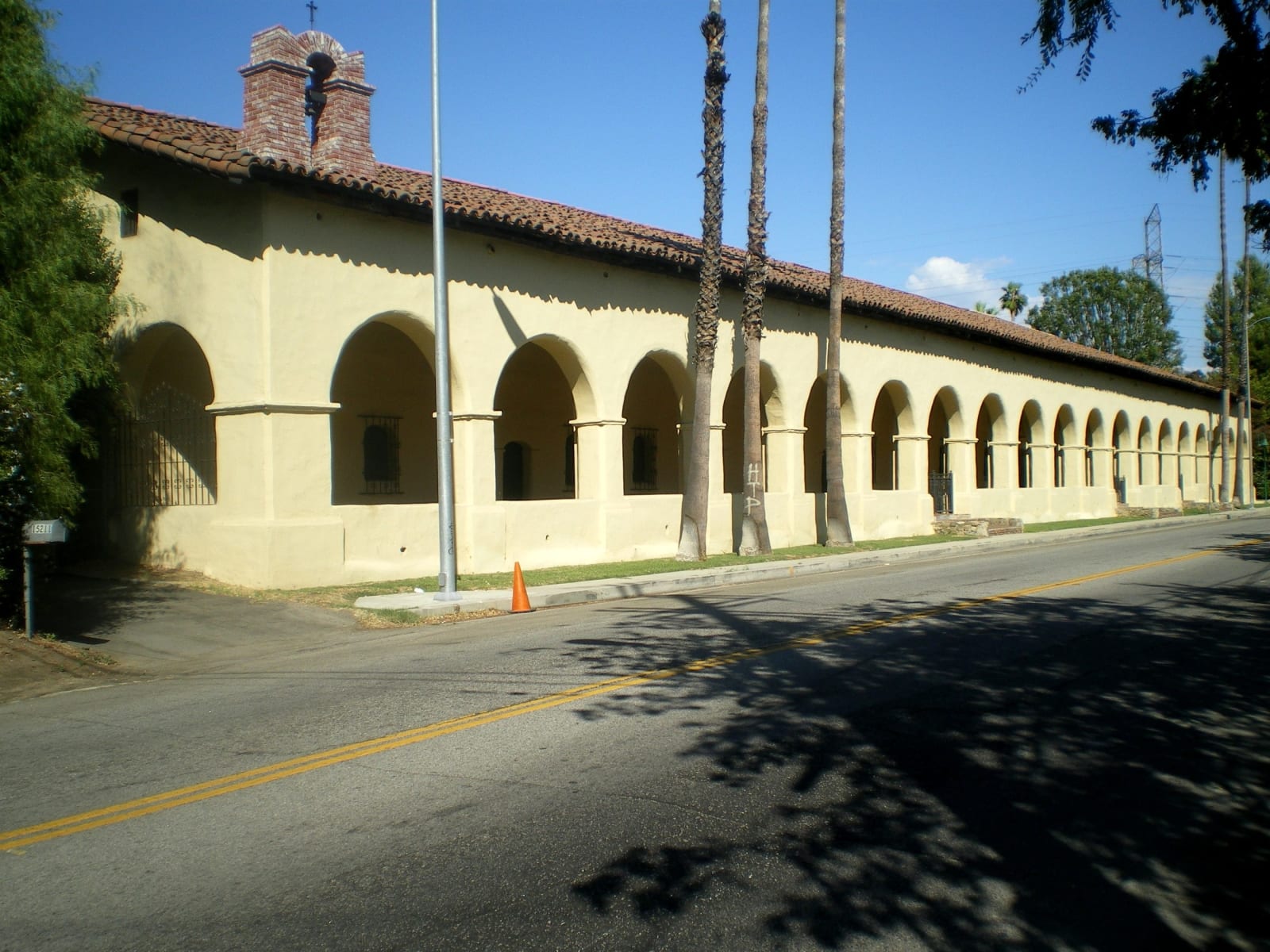
 Los Angeles / CC BY-SA 3.0 via Wikimedia Commons
The Story
Mission San Fernando Rey de España was founded on September 8, 1797 at Achoicominga, a village whose descendants make up the Fernandeño Tataviam Band of Mission Indians — a sovereign nation still headquartered a mile from here, across from the city hall in San Fernando. The nation's own account of what followed does not soften it: people were taken from the lineages of every surrounding valley, Simi and Santa Clarita and the Antelope Valley as well as this one, and enslaved to build the mission and to run it. The Spanish called them Fernandeño after the place that took their labor. By 1811 more than a thousand people lived here.
The building most visitors photograph is not the church. It is the convento, the long two-story adobe finished in 1822 after thirteen years of work, twenty-one arches down its front and walls four feet thick. It is the largest adobe structure in California and the only original building left on the site, listed on the National Register in its own right in 1988. Almost everything else came down on February 9, 1971, when the Sylmar earthquake destroyed the church; what stands now is a replica dedicated in 1974. In the 1840s treasure hunters dug up the floors here, convinced the padres had hidden gold after the strike up at Placerita. Across the road, Brand Park keeps the mission's old garden. Mission San Gabriel, founded twenty-six years earlier, tells the parallel story on Tongva ground.
Visitor Info
On the Map
Nearby
The closest stops worth working into your route
Historical markers nearby
Roadside plaques and monuments within a short detour