 Los Angeles / CC BY-SA 4.0 via Wikimedia Commons
The Story
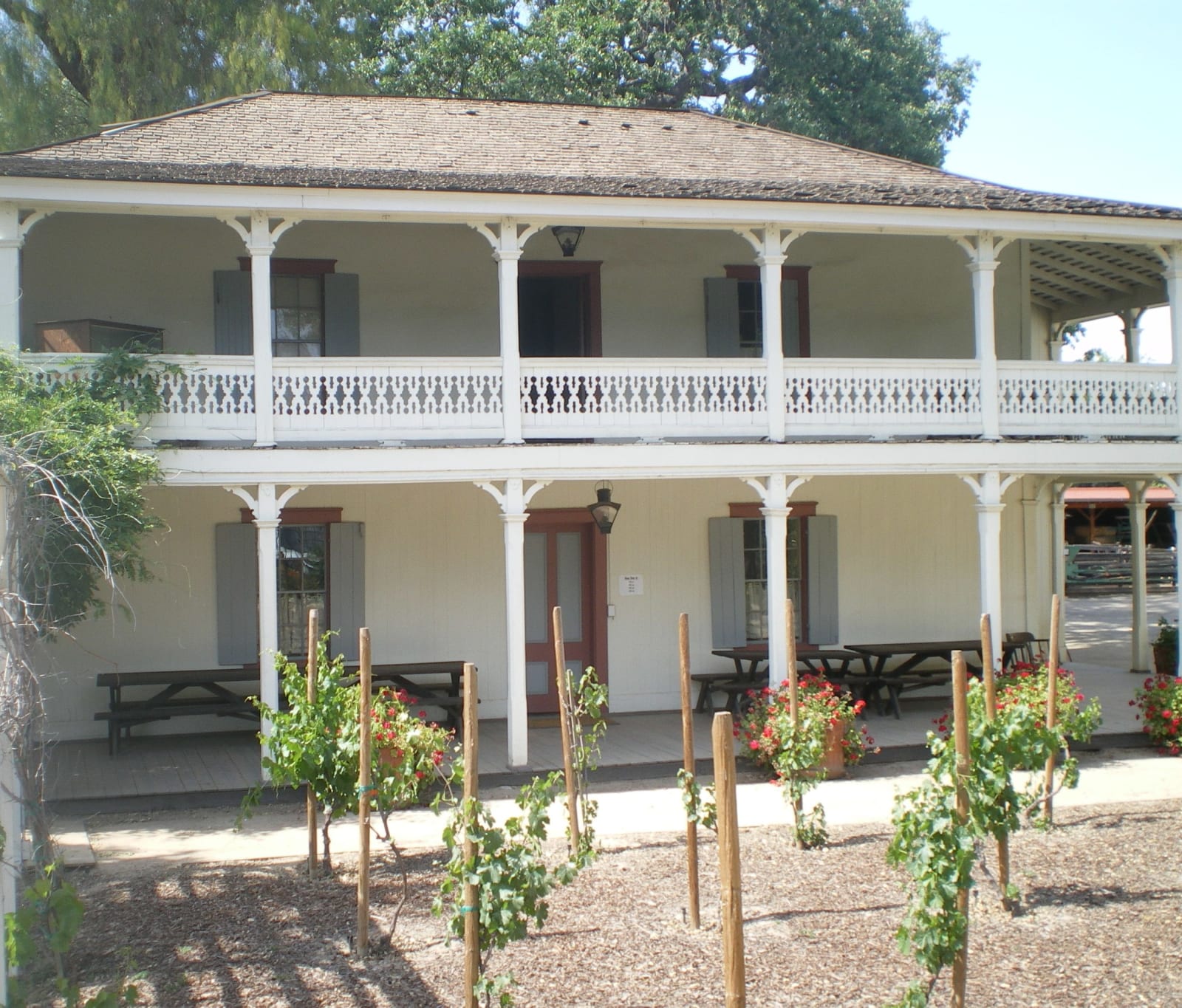
Miguel Leonis came from Cambo-les-Bains in the French Basque country, reached Los Angeles in 1854, and went to herding sheep on Rancho El Escorpión. The rancho was one of the rare Mexican grants made to Native men: Odón Chijulla held it with his son-in-law and his son-in-law's son. In 1859 Leonis met Odón's daughter, Espíritu Chijulla, Chumash on her father's side and Tongva on her mother's, baptized at Mission San Fernando in 1836 and already widowed with a son. They lived together thirty years, and in that time Leonis took most of the western valley through homestead maneuvers, hired men and near thirty lawsuits. Calabasas called him its king. He rebuilt this 1844 adobe into the two-story Monterey-style house standing now.
Leonis was thrown from his own wagon on the road over Cahuenga Pass in 1889 and died. His will left more than three hundred thousand dollars to relatives in France and ten thousand to Espíritu, whom it named his faithful housekeeper. She refused the money and sued. The case reached the California Supreme Court three times across sixteen years. In 1905 it held that she had been his wife in law, the first common-law spouse in California to win that. She died the following May and is buried at the mission. The adobe was nearly cleared for a supermarket in 1961 and survived by being made Los Angeles Historic-Cultural Monument No. 1. It is a working museum now, with draft horses and stock in the pens. The valley's other Basque sheep house is Los Encinos.
Visitor Info
On the Map
Nearby
The closest stops worth working into your route
Historical markers nearby
Roadside plaques and monuments within a short detour