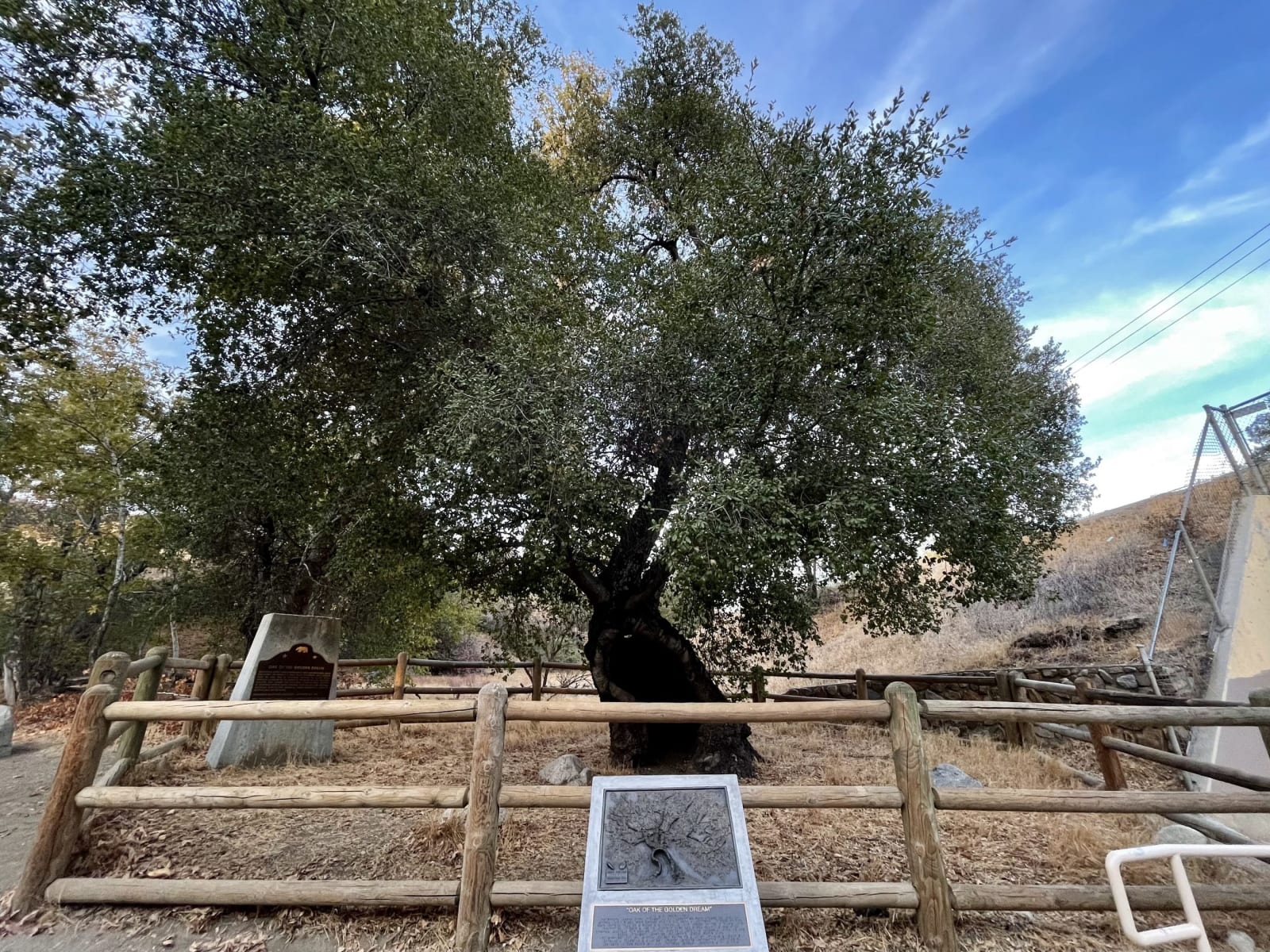
 Ponderosapine210 / CC BY-SA 4.0 via Wikimedia Commons
The Story
In March 1842 Francisco López, a majordomo on one of Mission San Fernando's ranches, stopped in this canyon and pulled up wild onions. Gold was clinging to the roots. He registered the find with the Mexican governor of Alta California, and that paperwork is what makes this California's first documented gold discovery — six years earlier than James Marshall at Coloma, and with no connection to it. Sonoran miners worked the San Fernando placers afterward with pans, sluices and dry washing. The ground gave up a few years of gold and then stopped, and California went back to being a quiet Mexican province for a while longer.
The oak is still here, gnarled and fenced and possibly five hundred years old, and it has come through every brushfire since. The story that López dreamed of a river of gold before he woke and found it is a story; the discovery is documented, the dream is not. The canyon around it went on to a second career as a movie backlot, close enough to Hollywood to stand in for anywhere a western needed. Placerita Canyon Natural Area is a Los Angeles County park with a nature center and a short paved heritage trail out to the tree, plus real trails past it. The gold rush that everyone means started in 1848. This one nobody means.
Visitor Info
On the Map
Nearby
The closest stops worth working into your route
Historical markers nearby
Roadside plaques and monuments within a short detour