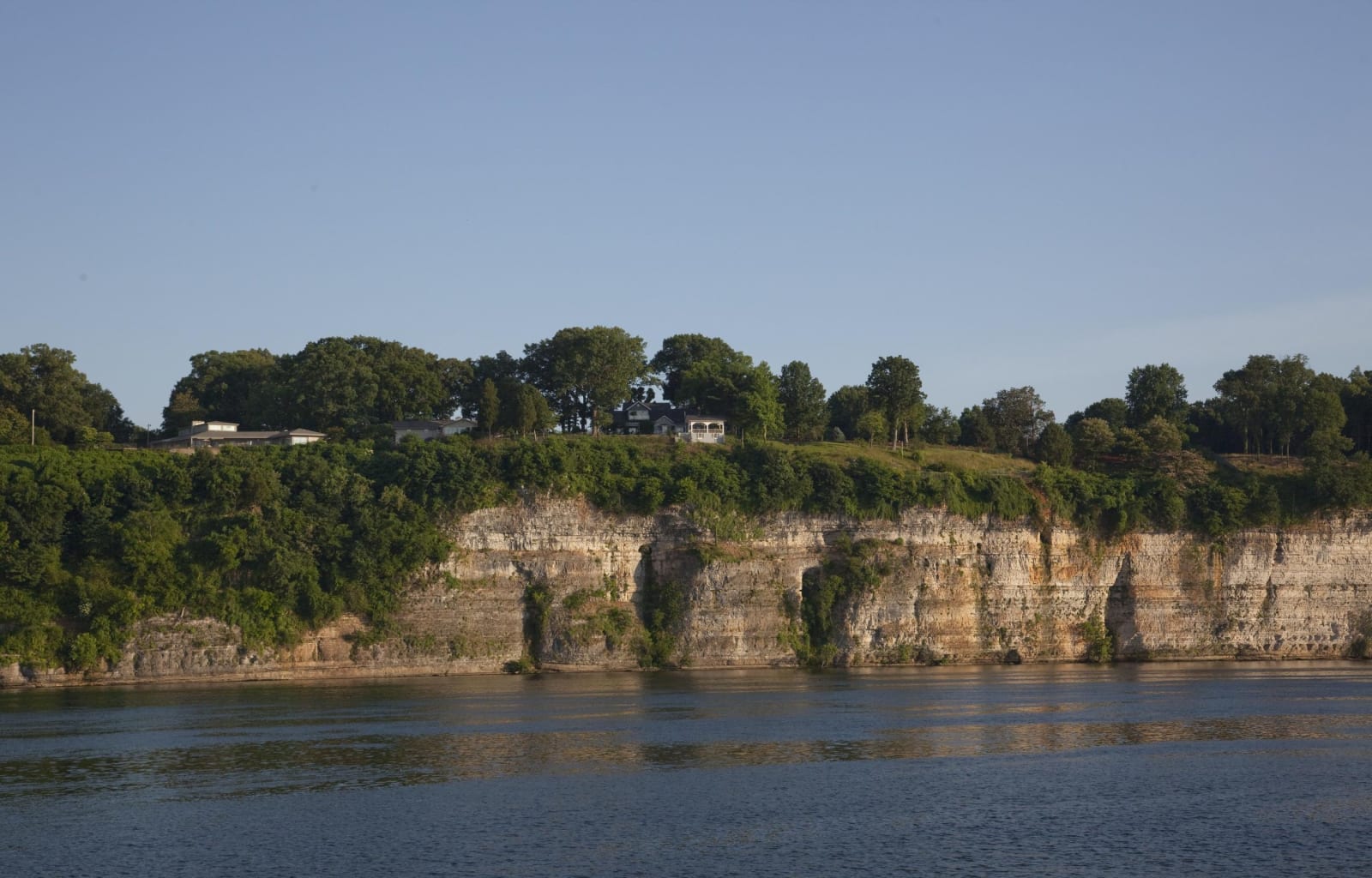
Pale limestone cliffs above the Tennessee River at Florence, with trees and houses along the top of the bluff.
Carol M. Highsmith / public domain via Library of Congress
Alabama · Region

Muscle Shoals & Northwest Alabama

Mounds at Florence and Oakville, Tuscumbia Landing, W. C. Handy's cabin, FAME and Muscle Shoals Sound, Ivy Green, Wilson Dam, Dismals Canyon and the Sipsey Wilderness.

12 places to explore

Long before the river was dammed, people gathered at the Muscle Shoals. In Florence a Woodland platform mound rises 43 feet beside the Tennessee, and at Oakville a ceremonial mound and a Copena burial mound survive from a field that farmers plowed flat. This was Chickasaw and Cherokee country, and the Chickasaw George Colbert ran the Natchez Trace ferry by treaty right. At Tuscumbia Landing, Cherokee and Creek removal parties left the rail cars for steamboats west, and on a back road near the Trace a stone wall remembers a Yuchi girl who walked home.

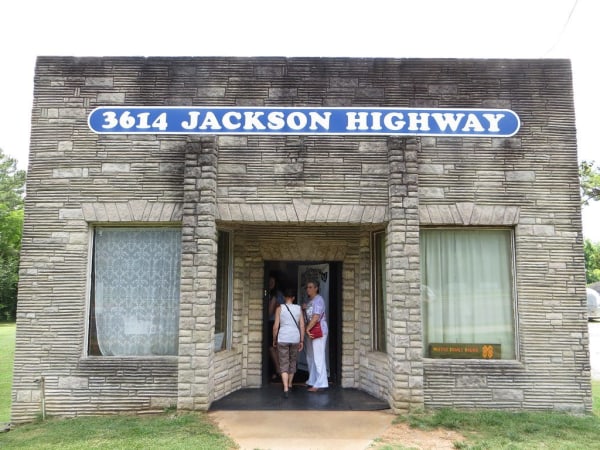
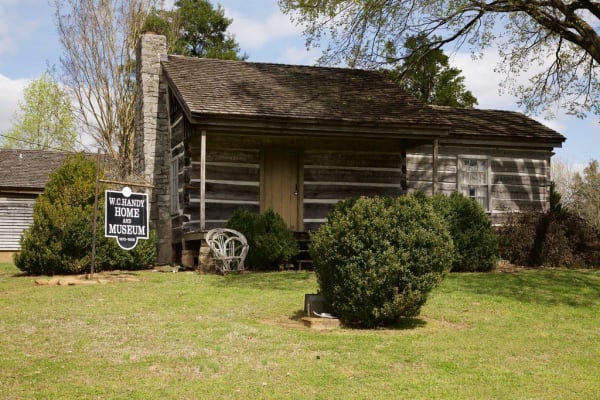
The music came from small rooms. W. C. Handy was born in a Florence log cabin in 1873. Rick Hall's FAME Studios and the Swampers' studio at 3614 Jackson Highway put Wilson Pickett, Aretha Franklin, the Staple Singers and the Rolling Stones on tape with a white rhythm section in the years of the civil rights movement. In Tuscumbia, Ivy Green keeps the pump where Anne Sullivan spelled water into Helen Keller's hand.

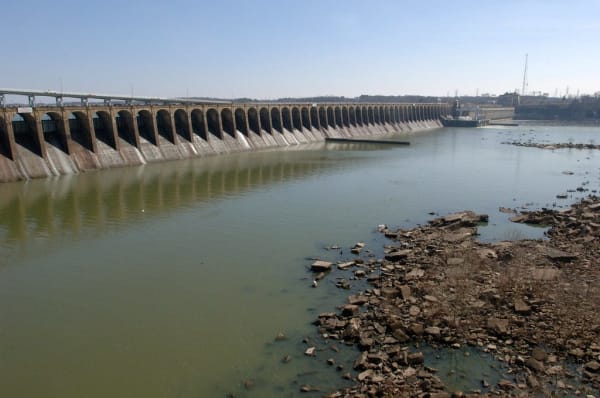
Wilson Dam, begun for wartime nitrates, became the cornerstone of the TVA. South of the river the land turns to sandstone: Dismals Canyon, where larvae glow on the walls at night, and the Sipsey Wilderness in the Bankhead National Forest, with a waterfall in nearly every side canyon.

What to See in Muscle Shoals & Northwest Alabama

12 places across the region, grouped by what they are.

Natural Areas
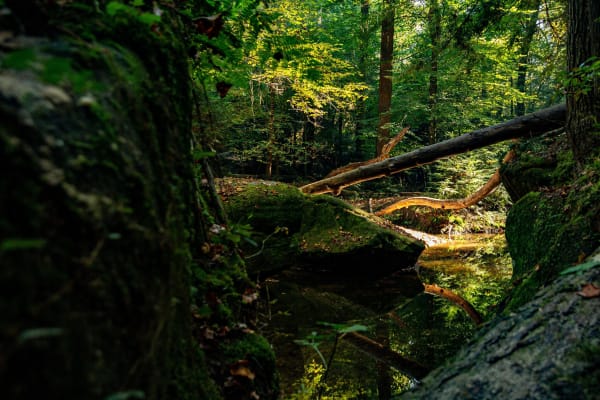
Sunlight filtering through the green canopy onto mossy boulders and fallen logs on the floor of Dismals Canyon.

Dismals Canyon

Phil Campbell

A privately run sandstone canyon near Phil Campbell with old-growth hemlocks, waterfalls and the blue-green glowing larvae called dismalites, a National Natural Landmark since 1975.

View details →
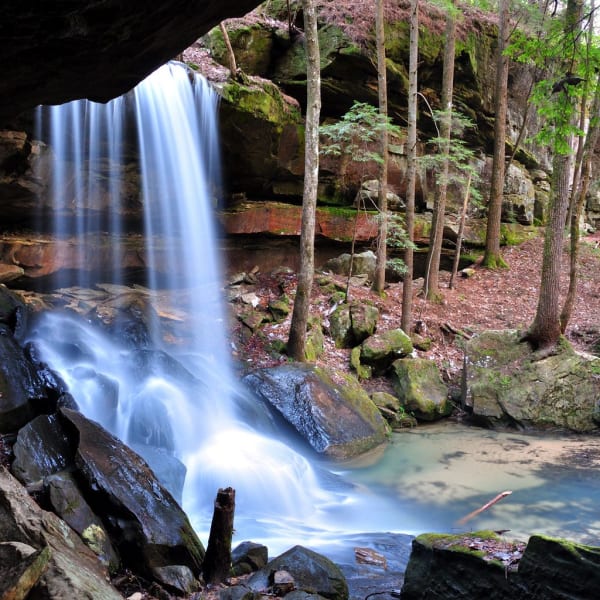
Turkeyfoot Falls pouring off a sandstone overhang into a pool among mossy boulders and young trees in the Sipsey Wilderness.

Sipsey Wilderness

Double Springs

The Bankhead National Forest's wilderness of sandstone gorges, waterfalls and old-growth hemlock along the Sipsey Fork, Alabama's only National Wild and Scenic River.

View details →

Historic Sites

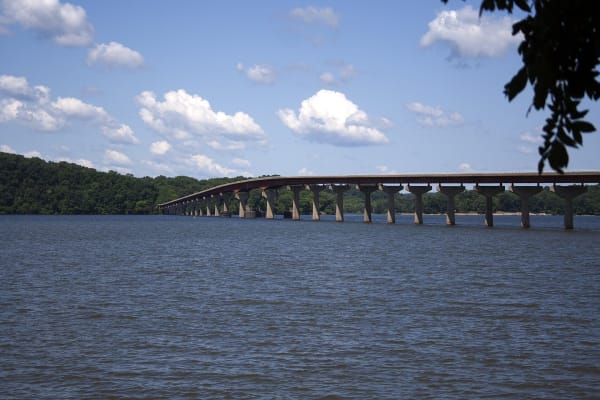
The Natchez Trace Parkway's long John Coffee Memorial Bridge crossing the wide Tennessee River at Colbert Ferry, with wooded shores beyond.

Colbert Ferry

Cherokee

George Colbert's Tennessee River ferry and stand on the Natchez Trace, run by a Chickasaw businessman and worked by enslaved people, with Chickasaw Nation exhibits at the house site.

View details →
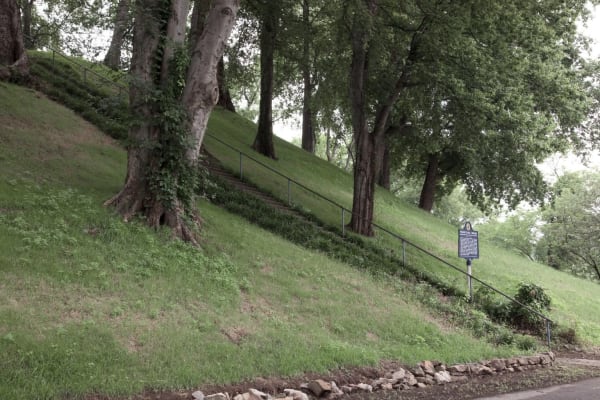
The grassy flank of the Florence Indian Mound under tall shade trees, with a handrailed stair climbing its side and a marker at the foot.

Florence Indian Mound and Museum

Florence

The largest Native earthwork in the Tennessee Valley, a Middle Woodland platform 43 feet high on the riverbank in Florence, with a city museum at its foot.

View details →
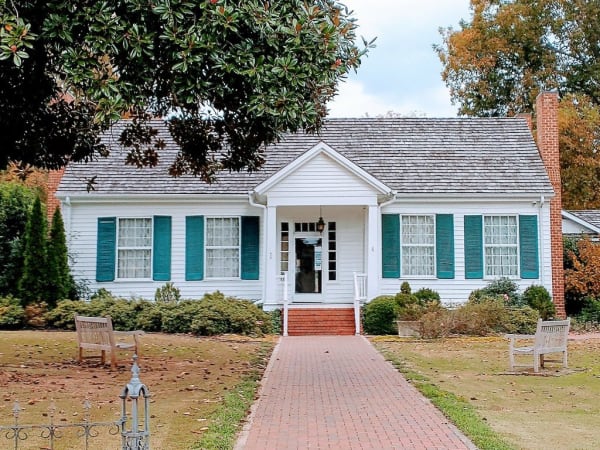
A white clapboard house with green shutters and a brick walk leading to its front steps, framed by trees and boxwoods.

Ivy Green, Birthplace of Helen Keller

Tuscumbia

The 1820 Keller family house in Tuscumbia, with the cottage where Helen Keller was born and the pump where Anne Sullivan spelled water into her hand in 1887.

View details →

Oakville Indian Mounds Education Center

Moulton

A Woodland ceremonial mound almost 27 feet high near Moulton, a Copena burial mound to respect, and a seven-sided museum built on the plan of a Cherokee council house.

View details →
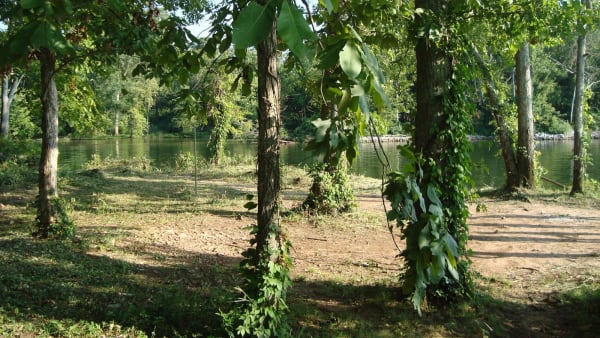
The Tennessee River seen through ivy-wrapped trees from a shaded grassy clearing at Tuscumbia Landing.

Tuscumbia Landing

Sheffield

The river landing at the mouth of Spring Creek where Cherokee and Creek removal parties left the rail cars for steamboats, now a quiet park on the Trail of Tears National Historic Trail.

View details →

Towns & Gateways

A brown metal-clad studio building with yellow FAME Recording Studios letters on its front, beside a parking lot under a blue sky.

FAME Studios

Muscle Shoals

Rick Hall's concrete-block studio on Avalon Avenue where Arthur Alexander, Wilson Pickett and Aretha Franklin cut records with the white session men later called the Swampers.

View details →
A small gray stone studio front with a blue 3614 Jackson Highway sign over the open doorway, where two visitors step inside.

Muscle Shoals Sound Studio

Sheffield

The plain building at 3614 Jackson Highway where the Swampers set up on their own in 1969 and recorded the Rolling Stones, the Staple Singers and Lynyrd Skynyrd.

View details →
A small log cabin with a stone chimney behind shrubs and a W. C. Handy Home and Museum sign on a green lawn.

W. C. Handy Birthplace, Museum and Library

Florence

The log cabin where W. C. Handy, the Father of the Blues, was born in 1873, rebuilt in Florence beside a museum holding the piano he wrote St. Louis Blues on.

View details →

Wichahpi Commemorative Stone Wall

Florence

Tom Hendrix's dry-stacked wall near the Natchez Trace, raised by hand over three decades for a Yuchi great-great-grandmother who walked home from Indian Territory.

View details →

Industry & Mining

The long arched concrete face of Wilson Dam stretching across the Tennessee River, with rocky shoals exposed below it.

Wilson Dam

Muscle Shoals

The World War I nitrate dam on the Muscle Shoals that Henry Ford tried to buy and that became the cornerstone of the TVA, with a 100-foot single-lift lock.

View details →

Muscle Shoals & Northwest Alabama rewards the unhurried. Pick a base, fan out, and let the country between the headline stops surprise you.

← Explore more of Open Road Guide