 amanderson2 / CC BY 2.0 via Flickr
The Story
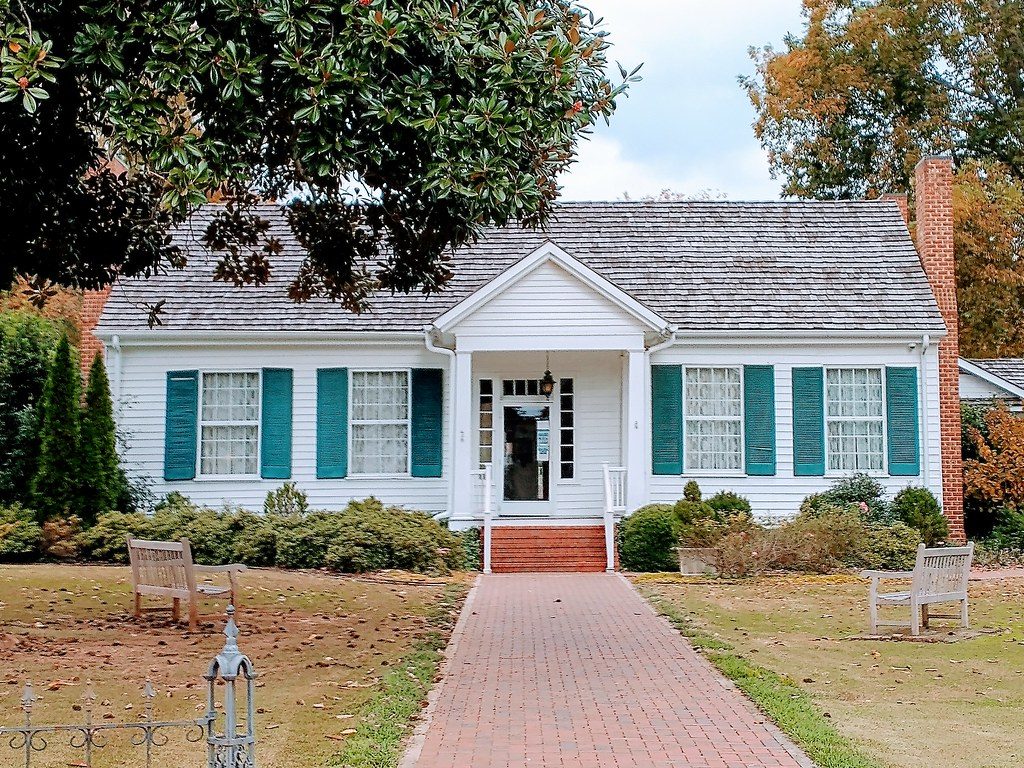
Helen Keller's grandparents, David Keller and Mary Fairfax Moore Keller, built Ivy Green in 1820 on a 640-acre tract at Tuscumbia: a white clapboard house a story and a half high, a cook's house behind it, and beside it a cottage that served as the plantation office. Helen was born in that cottage on June 27, 1880, the daughter of Kate Adams Keller and Arthur H. Keller, a newspaper editor who had been a captain in the Confederate Army. An illness at nineteen months left her deaf and blind.
Her memoir names her first companion: Martha Washington, the young daughter of the family's cook, who understood the signs Helen made up and whom Helen, by her own account, bullied. In March 1887 Anne Sullivan, a 21-year-old Perkins School graduate, came from Boston. Weeks later, at the pump by the well-house, Sullivan spelled w-a-t-e-r into one of Helen's hands while water ran over the other, and Keller wrote that language opened to her there. She left Alabama at eight, graduated from Radcliffe in 1904 and spent her life working for blind and deaf people, for workers and for women, always calling Ivy Green home.
The city of Tuscumbia bought the place from the family in 1954 and opened it that year; it went on the National Register in 1970. A fire in 1972 damaged the west side, and the repairs followed the old drawings. The pump stands under a small open shelter, the English boxwoods are more than 150 years old, and the museum room holds gifts from her travels.
Visitor Info
On the Map
Nearby
The closest stops worth working into your route
Historical markers nearby
Roadside plaques and monuments within a short detour