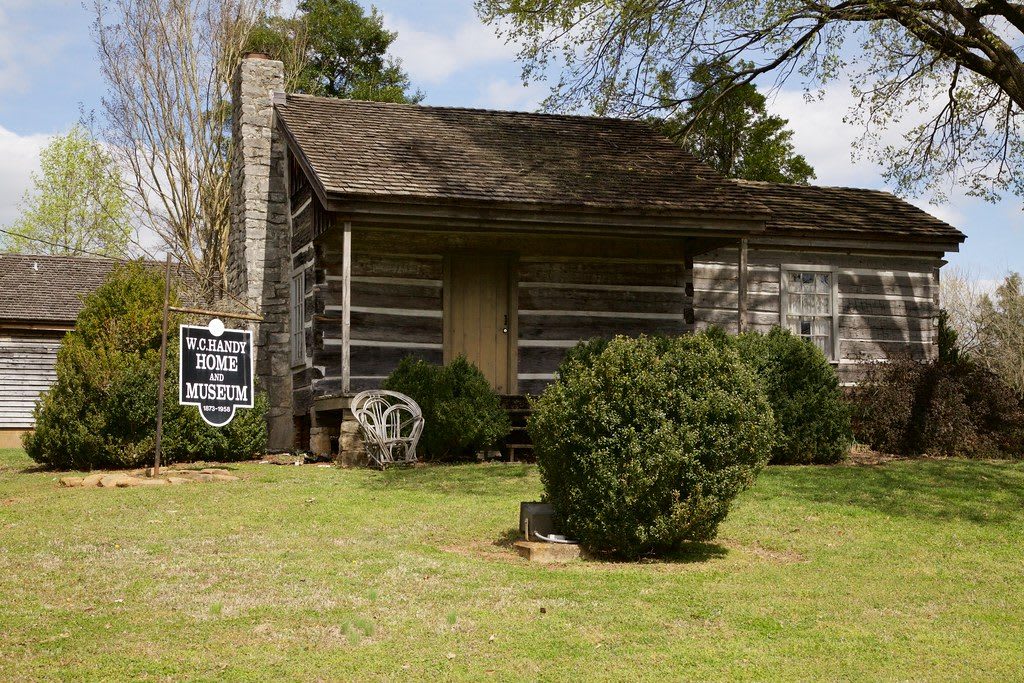
 David Brossard / CC BY-SA 2.0 via Flickr
The Story
William Christopher Handy was born in Florence on November 16, 1873, in a log cabin he said his grandfather, William Wise Handy, had built. His grandfather became an African Methodist Episcopal minister after emancipation, and so did his father, Charles, who held that secular music was sinful. When the boy saved berry and lye-soap money for a guitar, his father made him take it back and paid for organ lessons instead. Handy learned the rest from a fiddler called Uncle Whit Walker and from the minstrel bands that came through town.
He left to play cornet with Mahara's Minstrels, led a band in Clarksdale, Mississippi, and wrote down the scraps of melody and verse he heard from singers in the Delta. In Memphis he published "The Memphis Blues" in 1912 and "St. Louis Blues" in 1914, the first published blues with a section in a minor key, set to a habanera rhythm. It became one of the most recorded songs in jazz, and the 1925 version by Bessie Smith and Louis Armstrong set the slow, blue way of singing it.
In 1954 a city housing project threatened the cabin. Handy gave the $29,000 he was paid for the land back to Florence to restore it, and the logs were numbered and stored. They were raised again on West College Street, and the museum beside them opened on June 7, 1970, with the upright piano on which he composed "St. Louis Blues," his trumpet and boxes of his papers. Since 2018 a foundation run by the Handy family has owned it.
Visitor Info
On the Map
Nearby
The closest stops worth working into your route
Historical markers nearby
Roadside plaques and monuments within a short detour