 mightyfinebros / public domain (PDM) via Flickr
The Story
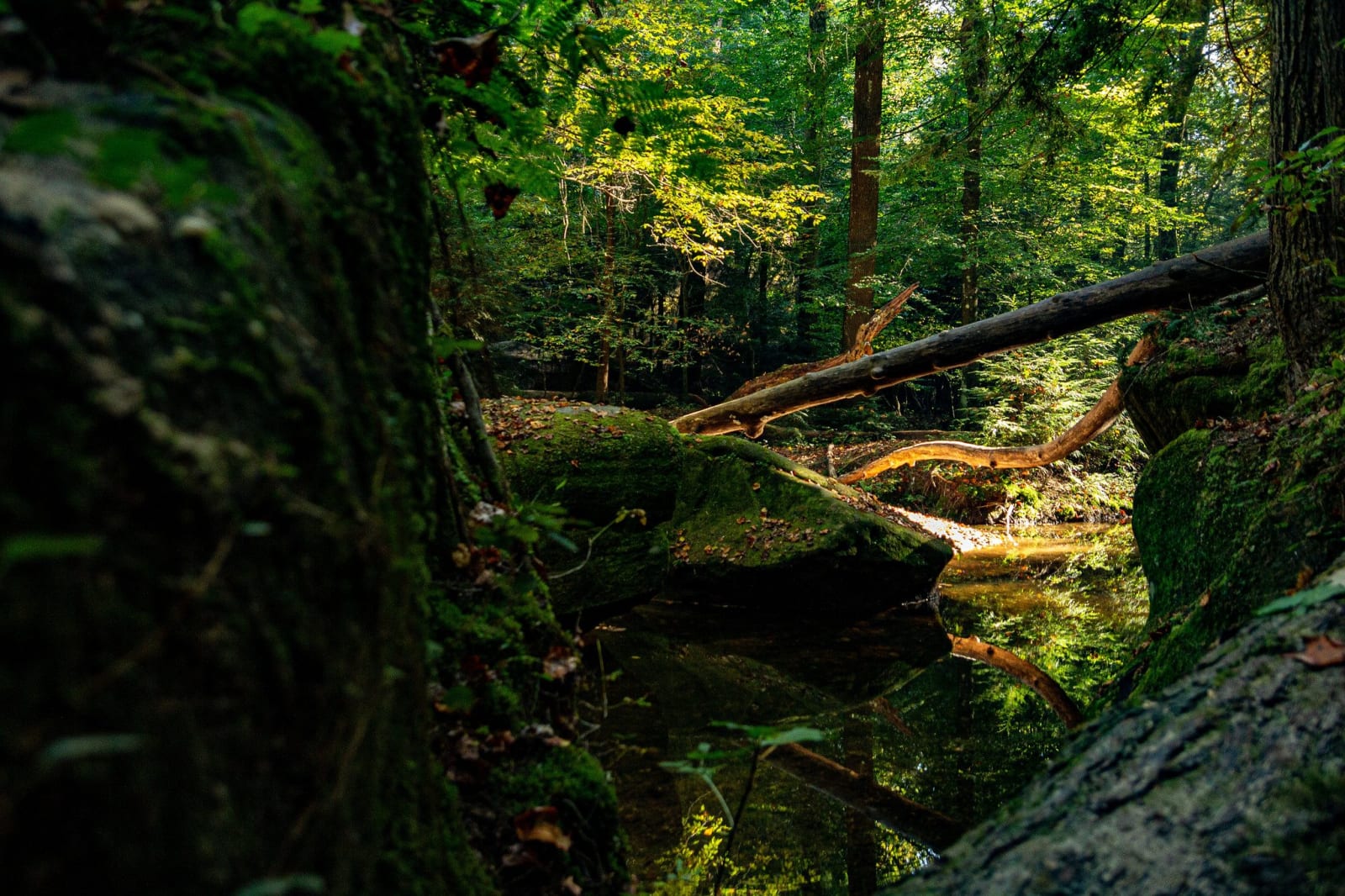
Dismals Branch has cut an 85-acre maze of sandstone gorges, boulders, caves and grottoes near Phil Campbell, and the ground was too rough for the loggers who cleared the country around it, so old-growth hemlock, beech and tulip poplar still shade the canyon floor over glades of fern and moss. The Park Service named it a National Natural Landmark in 1975. Nobody is sure of the name: Scots-Irish settlers may have borrowed it from rough country at home, or simply meant the gloom.
Spear points and pottery from the bluff shelters, Temple Cave among them, show people here as long as 10,000 years ago, and in historic times the Chickasaw and Cherokee used the canyon. Local histories say the Army briefly held Cherokee captives here in 1838, before removal. Later a cotton gin and a sawmill worked the creek until a flood in the 1950s carried them off; the mill's grinding stone still lies below Rainbow Falls.
The canyon is privately owned and run, with a visitor center, a 1.5-mile trail past Rainbow Falls, Secret Falls and Pulpit Rock, rustic cabins, campsites and a swimming hole in the creek. The draw after dark is the dismalites, larvae of a fungus gnat, Orfelia fultoni, which glow blue-green on the damp rock walls to lure small insects into sticky threads. Guided night tours go out to see them; they are thickest in summer, when the walls look scattered with stars. The canyon closes for the winter months.
Visitor Info
On the Map
Nearby
The closest stops worth working into your route
Historical markers nearby
Roadside plaques and monuments within a short detour