The Loneliest Road
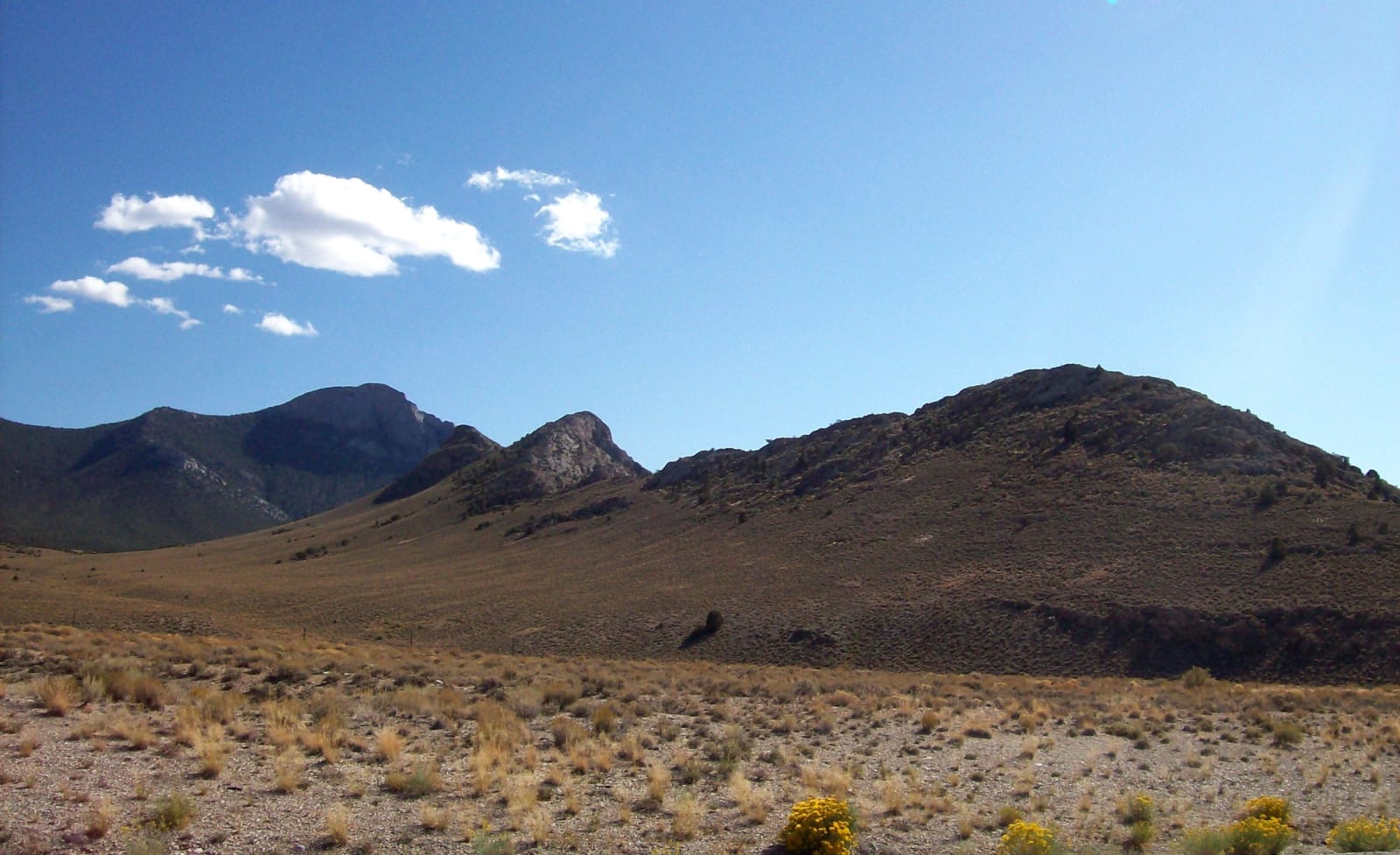
US-50 across the middle of Nevada — basin and range, basin and range, from Fallon to Ely, with Great Basin National Park and its bristlecone pines at the far end.
In July 1986, Life magazine ran a feature on American superlatives and handed central Nevada the booby prize — the Loneliest Road in America. A AAA counselor twisted the knife: totally empty, no points of interest, don't drive it unless you're confident of your survival skills. It was meant as an insult, and Nevada printed it on bumper stickers. The state issued a survival guide you could get stamped in each town and mail in for a certificate signed by the governor, and the slur became the best tourism slogan the state ever got. The joke works because it's half true — across the roughly 287 miles of US-50 from Fernley to Ely, the towns are small and far apart, and the desert does most of the talking. The emptiness isn't a flaw in the drive. It's the point of it.
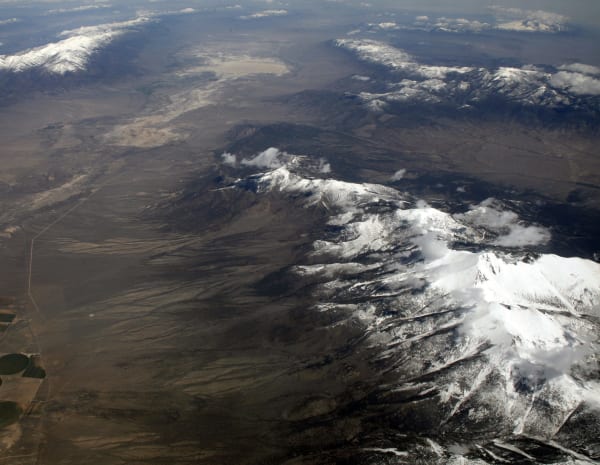
What fills the space is geology, repeated. This is the heart of the Basin and Range — the stretched-thin crust of the Great Basin, where the land has pulled apart into a corduroy of parallel mountain ranges and broad flat valleys, all of it running north to south. The road crosses them the hard way, straight against the grain: climb a summit, drop into a valley thirty miles wide, cross it, climb the next range, and do it again, some seventeen times between Fallon and Ely. After an hour the rhythm turns hypnotic — sagebrush flat, distant blue wall, the long pull up, the long coast down. Drivers tend to find it either monotonous or the most honest landscape in the country, with very little middle ground — which is fitting, for a road that has so little of it.
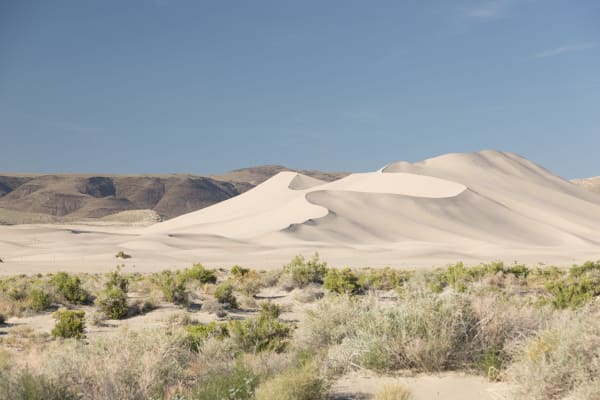
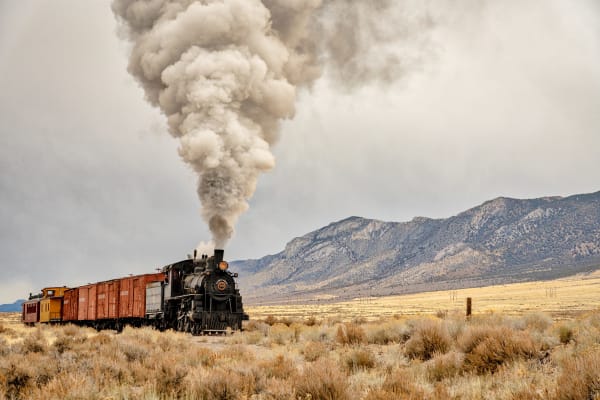
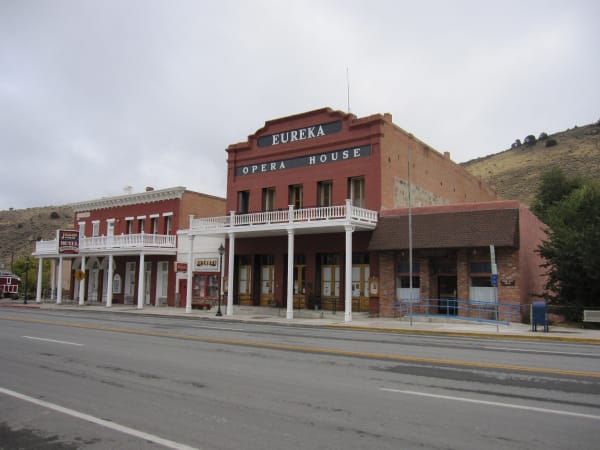
The loneliness is also a kind of forgetting, because this empty line is one of the most historically loaded corridors in the West. The same gap between the ranges carried the Pony Express in 1860, its riders swapping horses at relay stations spaced a hard ride apart — one of them, swallowed by the dunes out near Sand Mountain and dug back out in 1976, is among the best-preserved left anywhere. The telegraph put the Pony Express out of business in eighteen months, but the route stayed. In 1913 it became part of the Lincoln Highway, the first road to cross the country coast to coast, and the silver and copper booms threw up the towns that still hang on along it — Austin, Eureka with its 1880 opera house, Ely with the copper that arrived late and a steam railroad that still runs as the Ghost Train of Old Ely. They aren't quite ghost towns. They're the living kind, which is rarer, and stranger to drive through.
And the reward for crossing all that nothing waits at the far end, almost in Utah. Past Ely the highway runs out toward Baker and Great Basin National Park — one of the least-visited parks in the system, and one of the finest. Lehman Caves lies threaded under the foothills; Wheeler Peak climbs above thirteen thousand feet; and high on its flanks stand the bristlecone pines, gnarled and half-dead and nearly five thousand years old, among the oldest individual living things on earth. After dark the park holds some of the blackest skies left in the country, the Milky Way thrown bank to bank overhead. It is the opposite of empty — and you have to drive the loneliest road in America to get there. The naysayers, it turns out, were only ever describing the windshield. Never the view out the side.
What to See in The Loneliest Road
8 places across the region, grouped by what they are.
Natural Areas
Historic Sites
Towns & Gateways
Industry & Mining
Scenic Drives through The Loneliest Road
U.S. 50 — The Loneliest Road in America
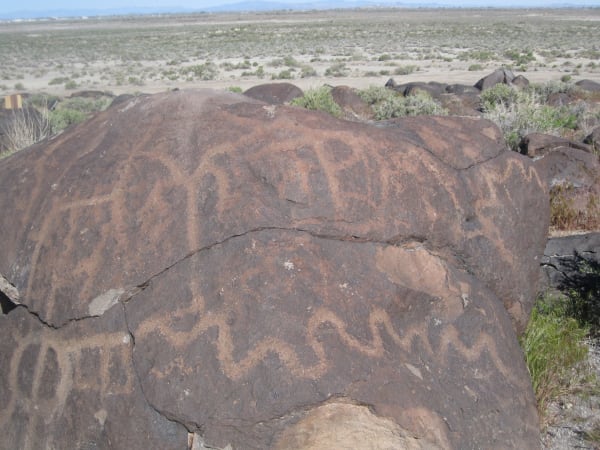
The 1986 insult that became an invitation — 320 miles of US-50 across central Nevada, from Fallon to the Utah line, linking petroglyphs, ghost towns, a singing dune, and the state's only national park.
U.S. 50: The Great Basin Crossing
The far end of the Loneliest Road: 150 empty miles from Ely across the Great Basin to Delta and the Topaz camp.
Stories from The Loneliest Road
The Company It Keeps
In 1986 Life magazine called US-50 across Nevada the Loneliest Road in America and warned people not to drive it — but the towns strung along it kept a Victorian opera house lit for a few hundred people, three boom-era churches for a couple hundred more, a 1910 steam locomotive under fire, and the memory of a traveling sack of flour and a hometown opera star: proof that in the emptiest quarter of the country, culture didn't thin out but distilled.
The Country That's Still Moving
US-50 crosses central Nevada at right angles to the grain of the ranges — which makes the loneliest road a cross-section of a continent being pulled apart, one tilted block and one earthquake at a time.
The Man Who Came Home
Ten miles off U.S. 50 near Fallon, a man was laid to rest in a dry cave more than ten thousand six hundred years ago — the oldest human ever found in North America — and taken from his grave in 1940. It took the Fallon Paiute-Shoshone the better part of a century, a lawsuit, and finally his own DNA to bring their ancestor home — and to reveal the loneliest road as one of the most anciently traveled in America.
Islands in the Sagebrush Sea
Nevada looks like the emptiest state in the country, and it is really an archipelago — three hundred mountain ranges rising out of the sagebrush like islands, each one stranded with something the desert around it cannot hold: the oldest trees on earth, a bird from the Himalaya, a marsh full of ducks, or a butterfly that lives on a single dune.
The Loneliest Road rewards the unhurried. Pick a base, fan out, and let the country between the headline stops surprise you.
← Explore more of Open Road Guide