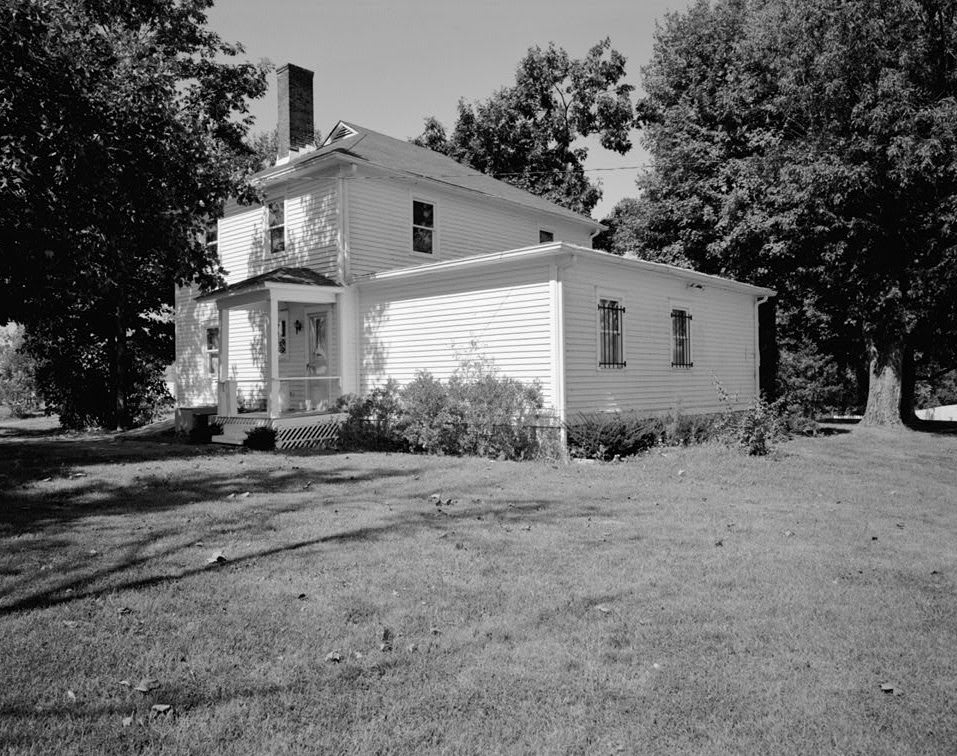
 Historic American Buildings Survey / public domain via Library of Congress
The Story
Berea College taught Black and white students together until Kentucky's Day Law of 1904 made integrated schooling illegal. Berea's trustees answered by raising money for a separate school for the Black students they could no longer teach, and Lincoln Institute opened on this ridge southwest of Simpsonville in 1912, absorbing the older Eckstein Norton Institute of Bullitt County. Its Tudor Revival buildings include Berea Hall, designed by the Black architects G. W. Foster and Vertner Tandy, on grounds laid out by the Olmsted firm. Whitney M. Young Sr. later became the school's first Black president.
His son, Whitney M. Young Jr., was born on the campus in 1921 and lived in this simple two-story frame house until he was 15. In the Army in World War II he was promoted from private to first sergeant of a Black road crew under white Southern officers, and the hostility on both sides set him on a life's work in race relations. He led the Omaha Urban League, served as dean of social work at Atlanta University, and at 40 became president of the National Urban League. He grew its staff from 38 to 1,600, pressed for federal aid to cities and received the Medal of Freedom from Lyndon Johnson. He died in 1971.
Lincoln closed in 1966, and since 1972 the campus has held a Job Corps center named for Young. The house is a National Historic Landmark with a museum inside, but it opens only by appointment, so call ahead rather than turning in at the gate.
Visitor Info
On the Map
Nearby
The closest stops worth working into your route
Historical markers nearby
Roadside plaques and monuments within a short detour