 Clem Albers, National Archives / public domain via Wikimedia Commons
The Story
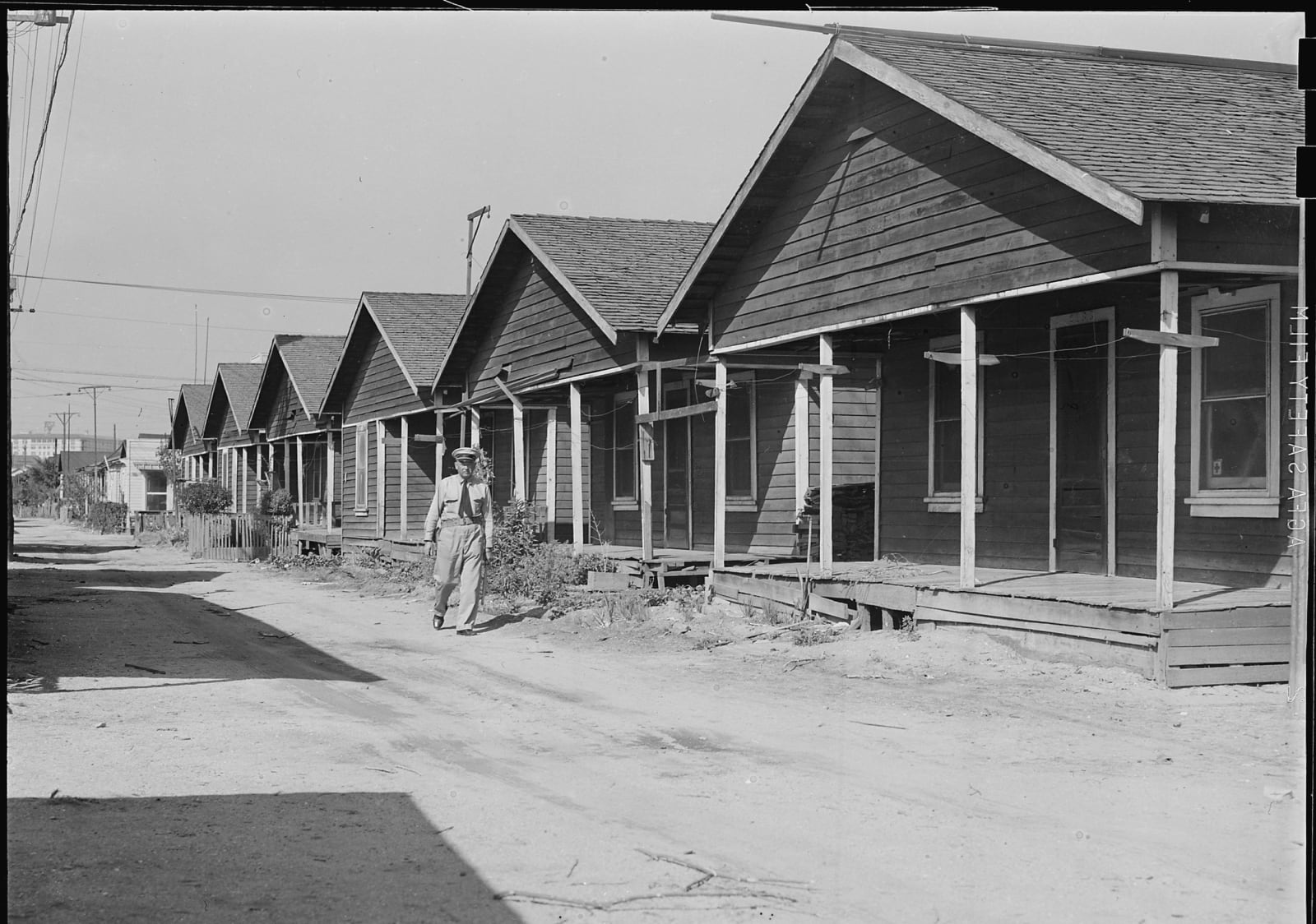
Three thousand people lived on this island before February 1942, nearly all of them Japanese American, in a village of wooden cottages the Nisei called Furusato — home village. The men fished sardine and tuna out of San Pedro Bay and pioneered the techniques that built Southern California's tuna industry. Their wives worked the canneries. The place was isolated enough to grow its own dialect, and its children remembered feeling distinct from Little Tokyo across the harbor.
The FBI took the fishermen first, in the weeks after Pearl Harbor. On February 25, 1942 the Navy gave everyone still here forty-eight hours to go. Most were sent to Manzanar. Then the village was demolished, so that no one could come back to it. Of all the Japanese American communities cleared from the West Coast, this is the one whose built world vanished almost entirely.
Two buildings survived. Nanka Shoten, a dry goods store from 1918, and A. Nakamura Co., a 1923 grocery, still stand in the 700 block of Tuna Street among the container stacks. The Port of Los Angeles proposed clearing them for more container storage. The National Trust named them to its most-endangered list in 2025, and that August the City Council made them Historic-Cultural Monuments.
The memorial at Fish Harbor was raised in 2002 by former residents and their children, on Seaside Avenue, facing the water they worked.
Visitor Info
On the Map
Nearby
The closest stops worth working into your route
Historical markers nearby
Roadside plaques and monuments within a short detour