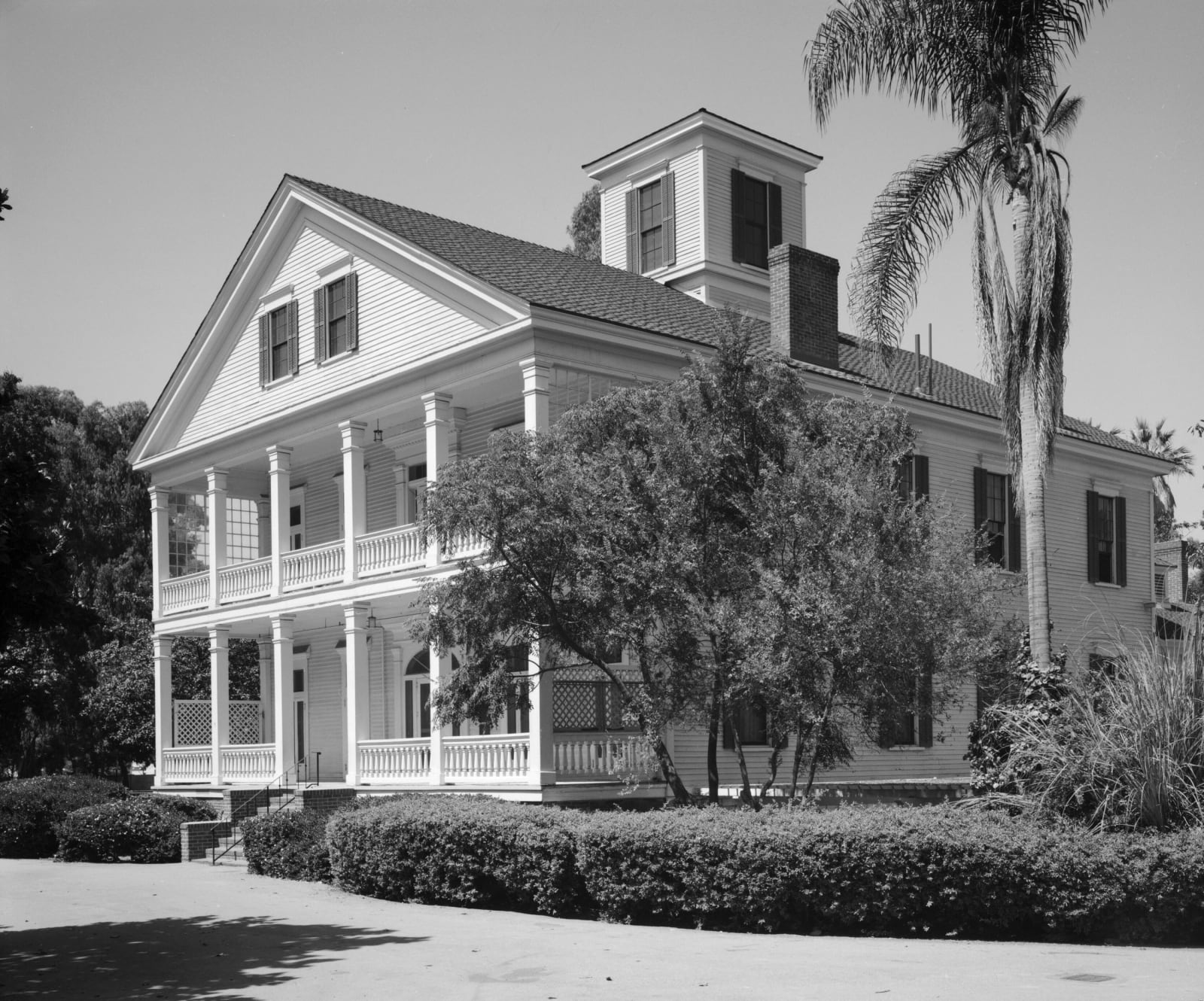
 Tavo Olmos, Historic American Buildings Survey / public domain via Wikimedia Commons
The Story
He did not build the Port of Los Angeles. He assembled the conditions under which somebody else would have to.
Phineas Banning asked the federal government for a light at Point Fermin in 1854, and it took twenty years to arrive. He put the ground for Drum Barracks into federal hands in 1861, which planted a permanent government interest in a town he had founded himself and gave Washington a standing reason to care how deep the channel ran. He lobbied for the first federal appropriations for dredging and a breakwater. His railroad, opened in 1869, cut the cost of hauling freight between the city and the water by nearly two-thirds inside six months, which made the shallowness of the harbor, rather than the distance to it, the expensive problem.
They called him the Port Admiral. He owned the wharf, the stage line, the freight and eventually the rails, and the Free Harbor Fight that finally settled the port's location was argued thirty years later over precisely that question: whether a public harbor should sit where one company controlled it.
Banning saw none of it. He died in 1885, run over by an express wagon on a San Francisco street, fourteen years before the first breakwater stone went down.
The house is his, and the cupola on top is where he watched for ships.
Visitor Info
On the Map
Nearby
The closest stops worth working into your route
Historical markers nearby
Roadside plaques and monuments within a short detour