 Shogun301 / CC BY-SA 4.0 via Wikimedia Commons
The Story
The ground was taken twice. The Nüümü farmed here with irrigation ditches off the creeks until the Army drove them out of the valley in the 1860s; settlers took the ditches, planted the orchards that gave Manzanar its name, and then Los Angeles bought the land and the water and let the town die after 1913. What was left was empty and remote, which is exactly why the government chose it.
Executive Order 9066 was signed in February 1942. The first Japanese Americans arrived the following month to build the camp that would hold them. In all, 11,070 people were incarcerated here behind barbed wire and guard towers, 10,046 at the peak, most of them United States citizens. They planted gardens, ran a hospital, taught school, made camouflage netting for the Army that imprisoned them, and buried their dead in a cemetery outside the wire.
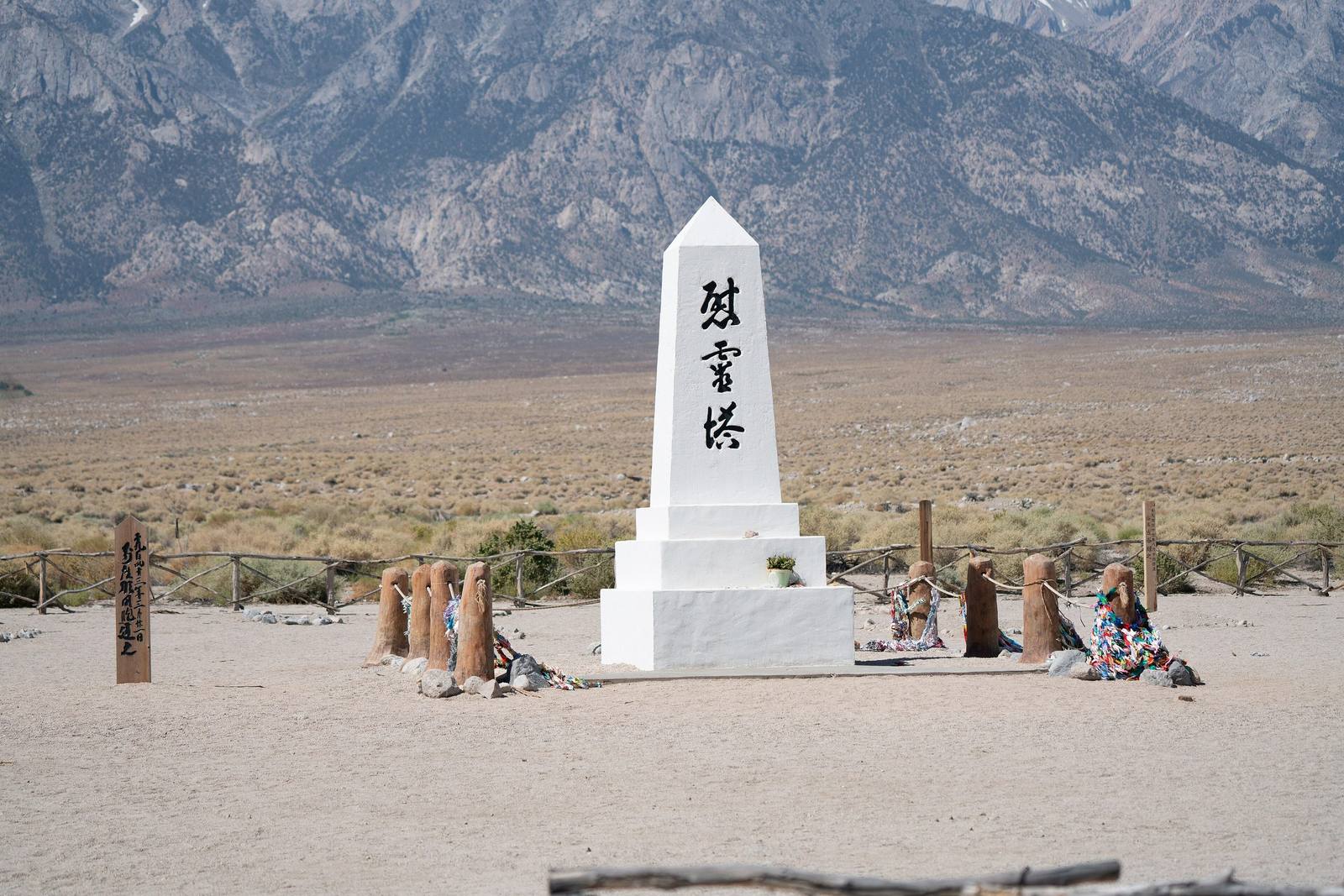
In August 1943 the people of Manzanar raised a white obelisk there. The stonemason Ryozo Kado supervised the work with Reverend Shinjo Nagatomi lettering it, paid for by fifteen-cent donations from each family in camp. The kanji reads I Rei To, soul consoling tower. It still stands, usually draped in paper cranes.
Almost everything else was hauled away after the war. A 3.2-mile auto tour runs the grid past reconstructed barracks, foundations, and the site of the Children's Village orphanage. The first pilgrimage came in 1969; they still come every April.
Visitor Info
On the Map
Nearby
The closest stops worth working into your route
Historical markers nearby
Roadside plaques and monuments within a short detour