 Andrew Balet / CC BY 3.0 via Wikimedia Commons
The Story
Ste. Genevieve was established by 1750, the first permanent European settlement in what is now Missouri, drawn by the farmland of le Grand Champ, the Big Field by the river. After the flood of 1785 the town moved to higher ground about three miles northwest, and its oldest buildings date from that rebuilding. The national historical park, established in October 2020, owns three of them.
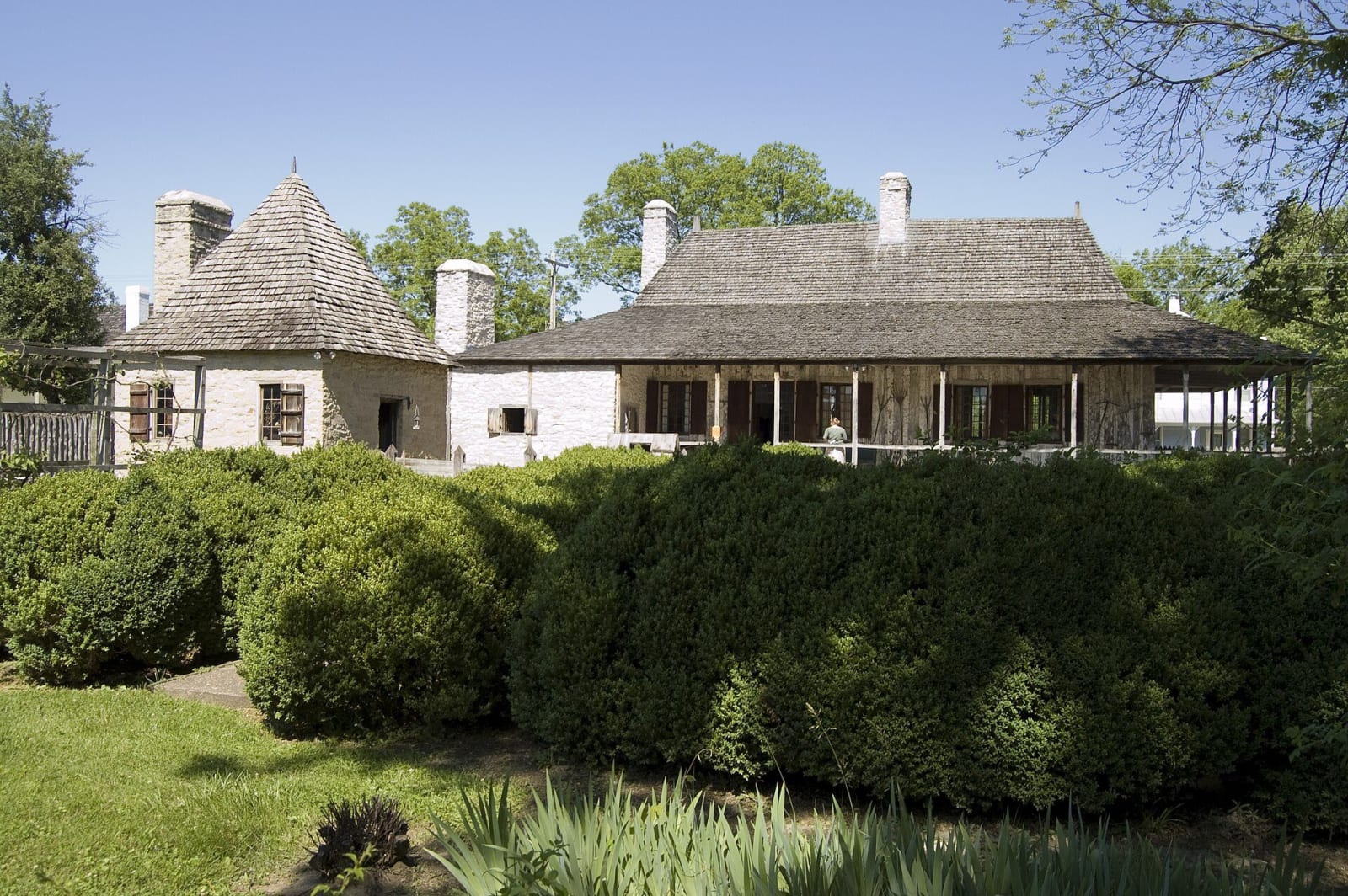
Green Tree Tavern, begun in 1790 and dated by its timbers as the oldest building in town, is poteaux-sur-sol, its upright logs set on a sill. Nicolas and Marie Janis came from Kaskaskia with fifteen enslaved people. Their son François kept an inn here. Clarisse, whom François enslaved, obtained a license of freedom in 1836 and bought her own house down St. Marys Road, now the Bequette-Ribault House. At the Jean Baptiste Vallé House of 1794, home of the town's last colonial commandant, at least twenty-nine people were enslaved, among them Marie, her son Joseph Philibert, Samson, and the twins Joe and Peter with their mother Félicité.
The Bauvais-Amoureux House of 1792 is poteaux-en-terre, its logs set straight into the ground, one of three such houses left in town. Pélagie Vital, enslaved for her first 27 years, married Benjamin Amoureux around 1830, was freed with her son Felix in 1832, and bought this house with him in 1852. Tours of all three are free, take 15 people, and are booked the same day at the Ste. Genevieve Welcome Center, 66 South Main Street.
Visitor Info
On the Map
Nearby
The closest stops worth working into your route
Historical markers nearby
Roadside plaques and monuments within a short detour