 Kbh3rd / CC BY-SA 3.0 via Wikimedia Commons
The Story
Helen Coffer Hawn, a rural Ste. Genevieve County schoolteacher who lived with her mother and brother in a rented cottage, bought 12 tracts of these hills between 1932 and 1941 to protect the landscape for the public. When she died in 1952 she left nearly 1,500 acres to the state. The park now covers 4,956 acres.
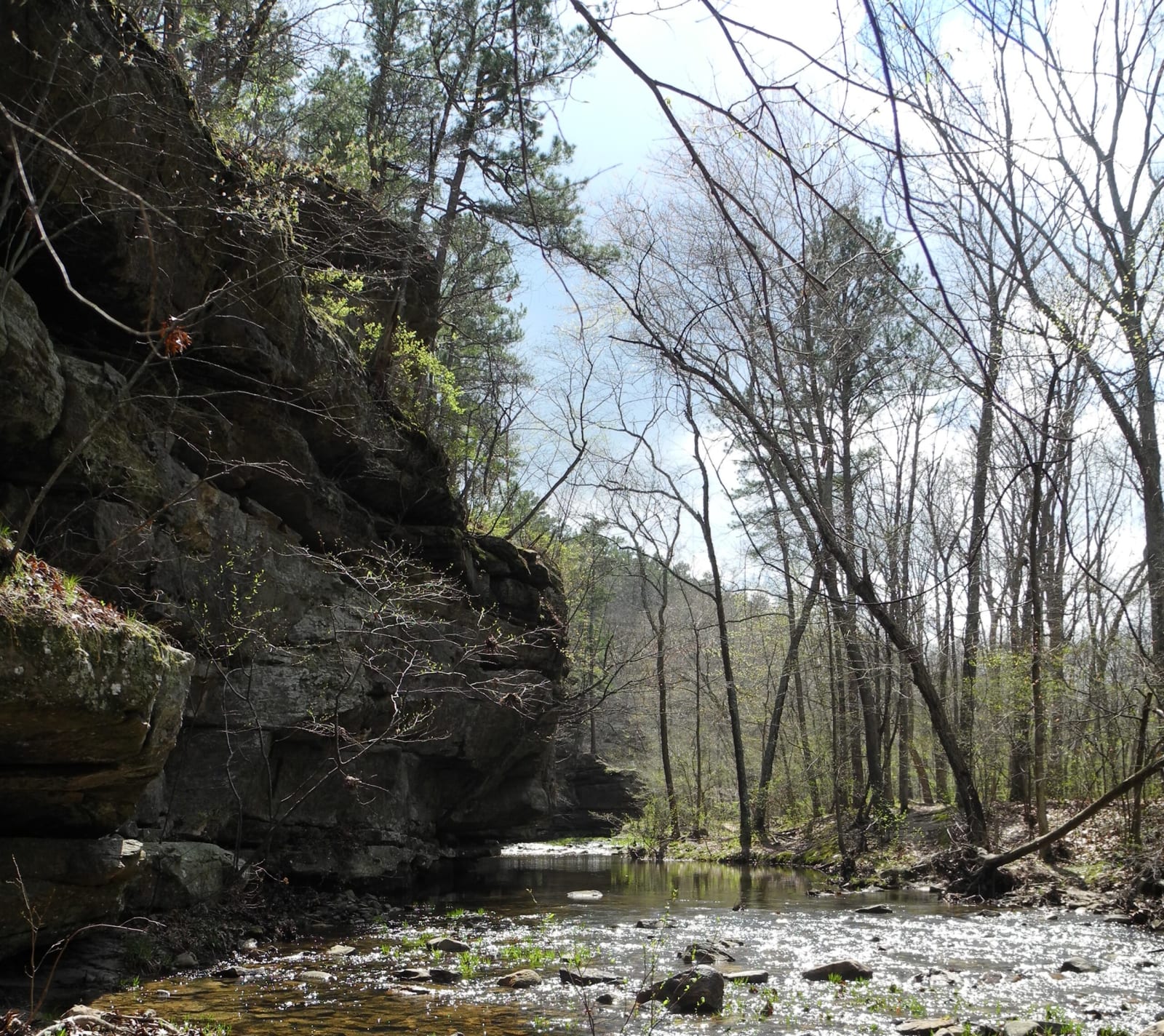
What she saved is unusual ground for Missouri. Lamotte sandstone shapes it into rounded knobs, canyon-rimmed valleys and cliffs over clear, sandy-bottomed streams, and the acid soil above it grows shortleaf pine, Missouri's only native pine, with white oak, shagbark hickory, red maple and wild azalea that blooms pink and white in spring. The sandstone holds groundwater, and in shaded overhangs along the creeks grow plants usually found in northern Missouri, such as rattlesnake orchid and hay-scented fern. Where Pickle Creek and the River Aux Vases cut down to igneous rock they form shut-ins, and in two miles Pickle Creek crosses granite, sandstone and a banded rock that some geologists take for gneiss. The National Audubon Society lists the park as an Important Bird Area.
Pickle Creek is said to be named for William Pickles, a settler from Illinois who, some historians think, paid for his land with lumber for the Plank Road, the 42-mile toll road that hauled lead, iron and marble from Iron Mountain to the port of Ste. Genevieve along the park's north edge. The Whispering Pine Trail, almost 10 miles, is counted among the best backpacking trails in the state.
Visitor Info
On the Map
Nearby
The closest stops worth working into your route
Historical markers nearby
Roadside plaques and monuments within a short detour