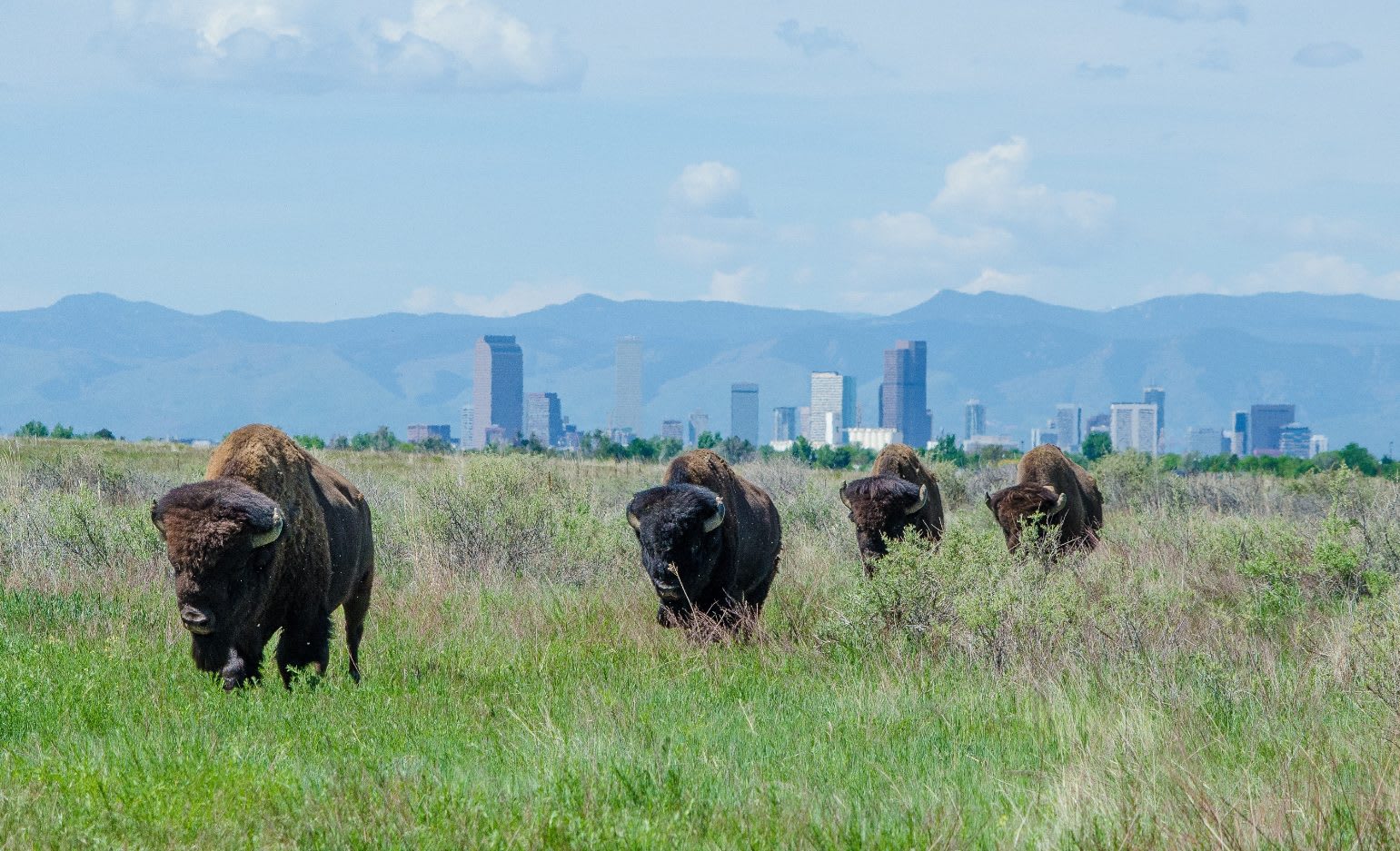
 Elisa Dahlberg/USFWS / public domain via Wikimedia Commons
The Story
In 1942 the Army took some 20,000 acres of farmland northeast of Denver and built a plant to make chemical weapons, mustard gas and lewisite among them, along with incendiary bombs. After the war it leased parts of the plant to private companies, Shell Chemical chief among them, which made pesticides there for decades, and the Army came back for the Cold War, producing the nerve agent sarin in the 1950s and later destroying weapons on the site.
The wastes went into evaporation basins and the ground beneath them. In the 1960s the Army pumped liquid waste down a well about two miles deep, and the injections set off a run of earthquakes under the Denver area; the pumping stopped in 1966. Chemical production ended in 1982, and in 1987 the Arsenal went on the federal Superfund list, the start of a cleanup that ran for more than two decades.
The turn came in 1986, when work crews found bald eagles roosting in the cottonwoods, drawn by the prairie dogs that had taken over the empty buffer land. The Fish and Wildlife Service set up an office, and in 1992 Congress designated the Arsenal a future national wildlife refuge. Bison arrived in 2007 from the National Bison Range in Montana, and black-footed ferrets were returned in 2015. The refuge now covers about 15,000 acres of restored shortgrass prairie, free from the visitor center on Gateway Road in Commerce City, with an eleven-mile wildlife drive through the bison pasture. A piece of the old ground is still held by the Army for what may remain buried in it.
Visitor Info
On the Map
Nearby
The closest stops worth working into your route
Historical markers nearby
Roadside plaques and monuments within a short detour