 Bernal Wells / public domain via Wikimedia Commons
The Story
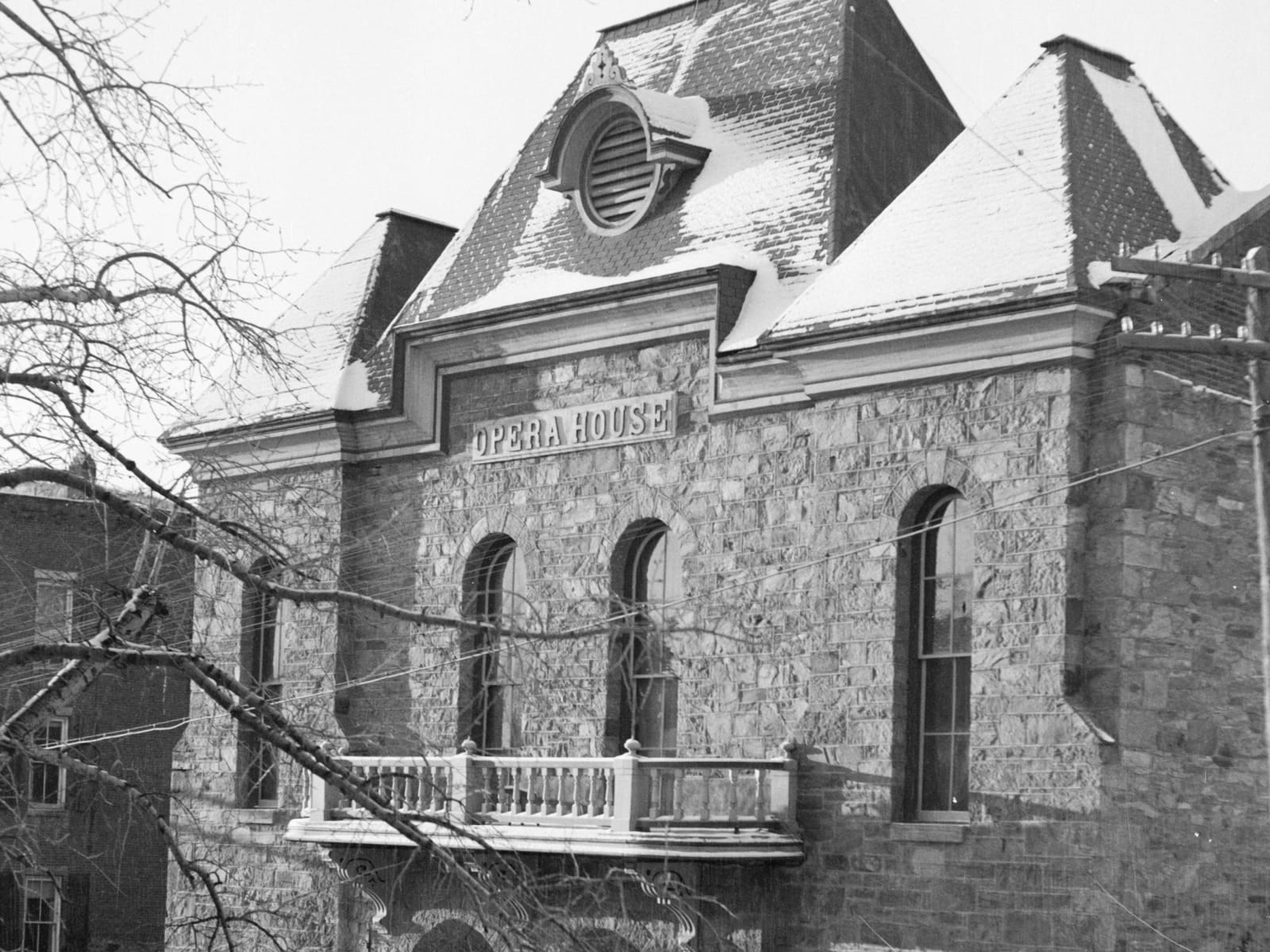
Central City grew up on the lodes found in Gregory Gulch in 1859, and the Cornish and Welsh miners who came to work them deep brought a tradition of singing with them. In 1877 the townspeople formed the Gilpin County Opera House Association to build a hall of their own. Denver architect Robert Roeschlaub designed it in stone, it cost about $23,000, and it opened in March 1878, the town's building rather than a single rich man's.
For a few years it was the cultural capital of the new state. Then Horace Tabor opened his opera house in Leadville in 1879 and the Tabor Grand in Denver in 1881, and the touring companies followed the silver money. Gold gave out in the gulches, the house filled with vaudeville and boxing and community theater, and it closed in 1927.
At the start of the 1930s three Denver women, Ida Kruse McFarlane, Edna Chappell and Anne Evans, daughter of the territorial governor John Evans, set out to restore it; the building had passed to the University of Denver, which leased it to their new association for a dollar a year. In July 1932 Lillian Gish opened the house in Camille, staged by Robert Edmond Jones, and the summer festival that began that night has run nearly every year since. The house seats about 550, it has been a National Historic Landmark since 1973, and the opera association owns more than two dozen Victorian houses in town to put up its singers. Since 1991 most of Central City's visitors have come for the casinos down the street.
Visitor Info
On the Map
Nearby
The closest stops worth working into your route
Historical markers nearby
Roadside plaques and monuments within a short detour