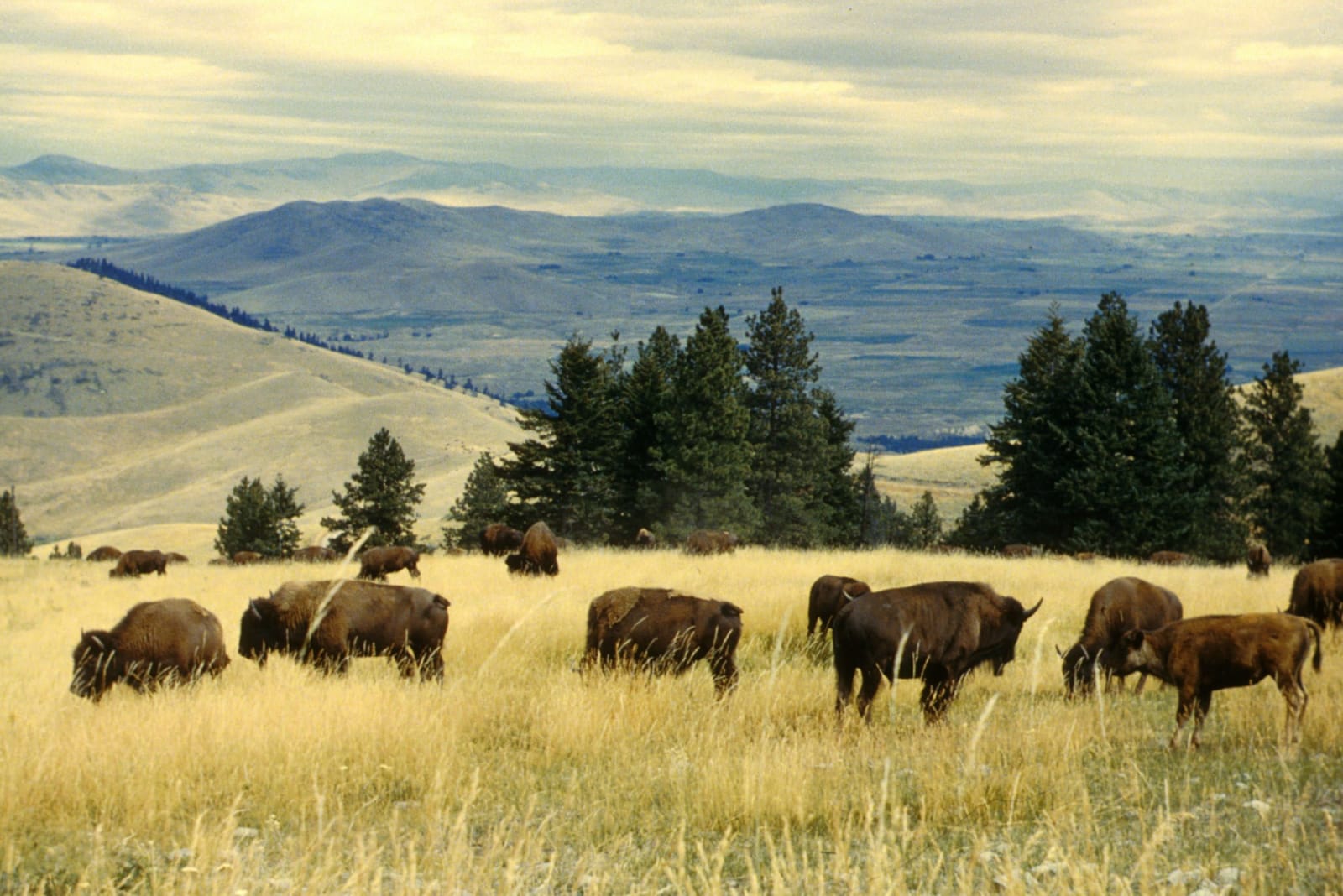
 U.S. Fish and Wildlife Service / public domain via Wikimedia Commons
The Story
The bison on this range come from a herd the Salish, Pend d'Oreille and Kootenai saved themselves. In the 1870s, with the plains herds being shot out, a few calves were brought back across the Continental Divide to the Flathead Reservation. The common telling credits Samuel Walking Coyote, a Pend d'Oreille man; the Confederated Salish and Kootenai Tribes' own account credits his stepson Łatatí, who captured and raised them, and whose stepfather sold them out from under him. In 1884 they passed to Michel Pablo and Charles Allard, ranchers married into the tribes, and ranged free along the Flathead River until they were the largest herd of bison left in the country.
Then the reservation was opened to homesteaders over the tribes' objections, the free range was gone, and the Bureau of Indian Affairs forced Pablo to sell. Washington would not buy. Canada did, in 1907, and through 1912 Pablo's riders rounded up more than seven hundred animals and shipped them by rail to Alberta. On May 23, 1908, Congress created the National Bison Range here, on 18,700 acres taken from the reservation in what the tribes count as an unlawful seizure; a federal claims award in 1971 paid them about $14 an acre.
The tribes run it now, with roughly 350 bison. Prairie Drive is open all year, and Red Sleep Mountain Drive climbs through the heart of the range from mid-May to mid-October. Stay in the car near the animals.
Visitor Info
On the Map
Nearby
The closest stops worth working into your route