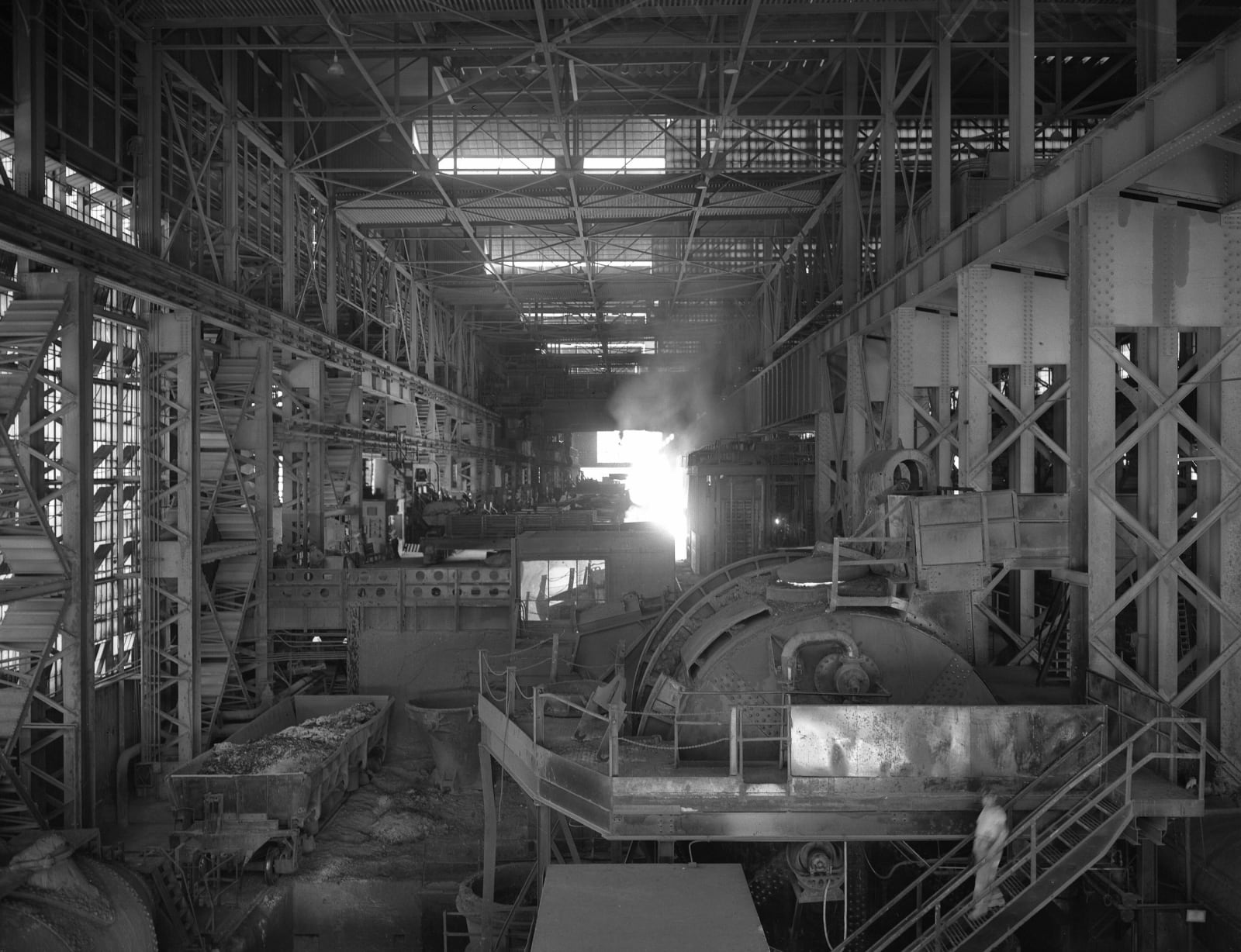
 Los Angeles Daily News / CC BY 4.0 via Wikimedia Commons
The Story
Henry Kaiser needed steel faster than the East could ship it. He had seven shipyards turning out Liberty ships and no West Coast mill to feed them, so in 1942, on federal wartime loans, he broke ground on Fontana vineyard and chicken ranch, fifty miles inland and out of range of whatever the Japanese navy might do to a coastal plant. The first blast furnace fired on December 30, 1942. He called it Big Bess, after his wife. Kaiser had made his name a decade earlier in the consortium that built Hoover Dam.
It grew into the largest steel mill west of the Mississippi, ran hard through Korea and the Cold War, and employed about ten thousand people. It also produced a hospital. Kaiser and Dr. Sidney Garfield opened fifty beds here in 1943 on a prepaid plan for millworkers and their families, and after the war they opened the plan to everyone. That is Kaiser Permanente.
The boom pulled workers west, and the town sorted them. Black families were kept north of Base Line Road. In the fall of 1945 O'Day Short bought five acres south of it and moved his family in. Vigilantes told him to get out and the Chamber of Commerce offered to buy him out; he refused and went to the FBI. On December 16 the house went up in a fireball. Helen Short and the children, Barry and Carol Ann, were dead within a day, and O'Day lived a month. The arson investigator the NAACP brought in called the fire deliberate. The county called it an accident and closed the case. Fontana renamed the neighborhood elementary school for the family in 2025.
Japanese and Korean steel undercut the mill and it shut in December 1983. California Steel Industries still rolls imported slabs on four hundred of the acres. In 1994 a Chinese crew took the rest apart and rebuilt it as a mill in China. What was left got paved in 1997 for a two-mile NASCAR oval, which ran its last race in February 2023 and is being replaced by warehouses.
There is no visitor access to any of it. You drive Cherry Avenue and look.
Visitor Info
On the Map
Nearby
The closest stops worth working into your route
Historical markers nearby
Roadside plaques and monuments within a short detour