 Josiah.r.white / CC0 via Wikimedia Commons
The Story
Riverside's first Chinatown stood on Ninth Street downtown. In 1885, with the California Southern Railway building and work starting on the Gage Canal, the city's business leaders decided they wanted it elsewhere. An ordinance campaign against wooden buildings and laundries produced forty-six citations, and the community's leaders went looking for ground outside the Mile Square. Wong Nim, Wong Gee and Gin Duey leased seven acres in the Tequesquite Arroyo that year and owned them outright by 1888.
They called it Little Gom-Benn, for the village in Toishan most of them came from. About four hundred and fifty people lived here year round, and as many as twenty-five hundred more came for the picking season. A coal stove exploded in 1893 and burned it down; they rebuilt on the same footprint immediately, which is why anything survives. The Exclusion Act had closed the door behind them in 1882, and by the 1930s the place was effectively empty.
George Wong stayed. Born Wong Ho Leun in 1900, he held the land and was the last resident when he died in 1974. In 1961 the city cut a short street beside the arroyo and asked him for the Chinese lettering on the sign. The last buildings came down in 1977.
The 1893 rebuild sealed the older layer, and fill Wong dumped over parts of the lot sealed more. A test excavation in 1984 found foundations, filled basements, a joss house and refuse pits, and lifted three tons of artifacts out of the least sensitive ground, leaving about eighty percent of the site buried on purpose. It went on the National Register in 1990. In 2008 the city approved a medical office building here; the Save Our Chinatown Committee formed, sued, and in 2012 a court threw the approval out. The developer built five blocks east instead.
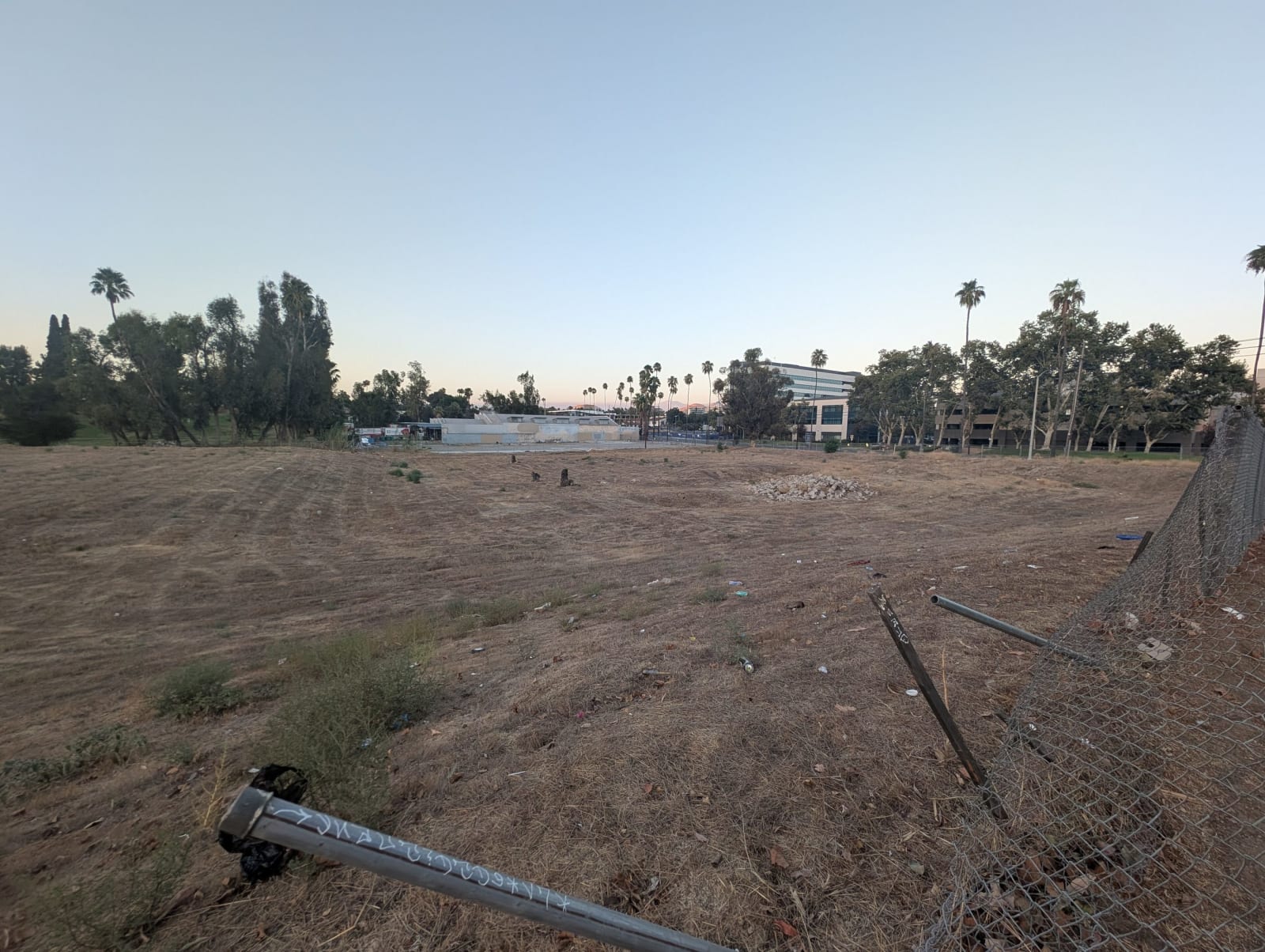
So there is an empty lot behind a fence, and that is the point. The artifacts sit with the Museum of Riverside, not on display, and a heritage park has been drawn but not funded.
Visitor Info
On the Map
Nearby
The closest stops worth working into your route
Historical markers nearby
Roadside plaques and monuments within a short detour