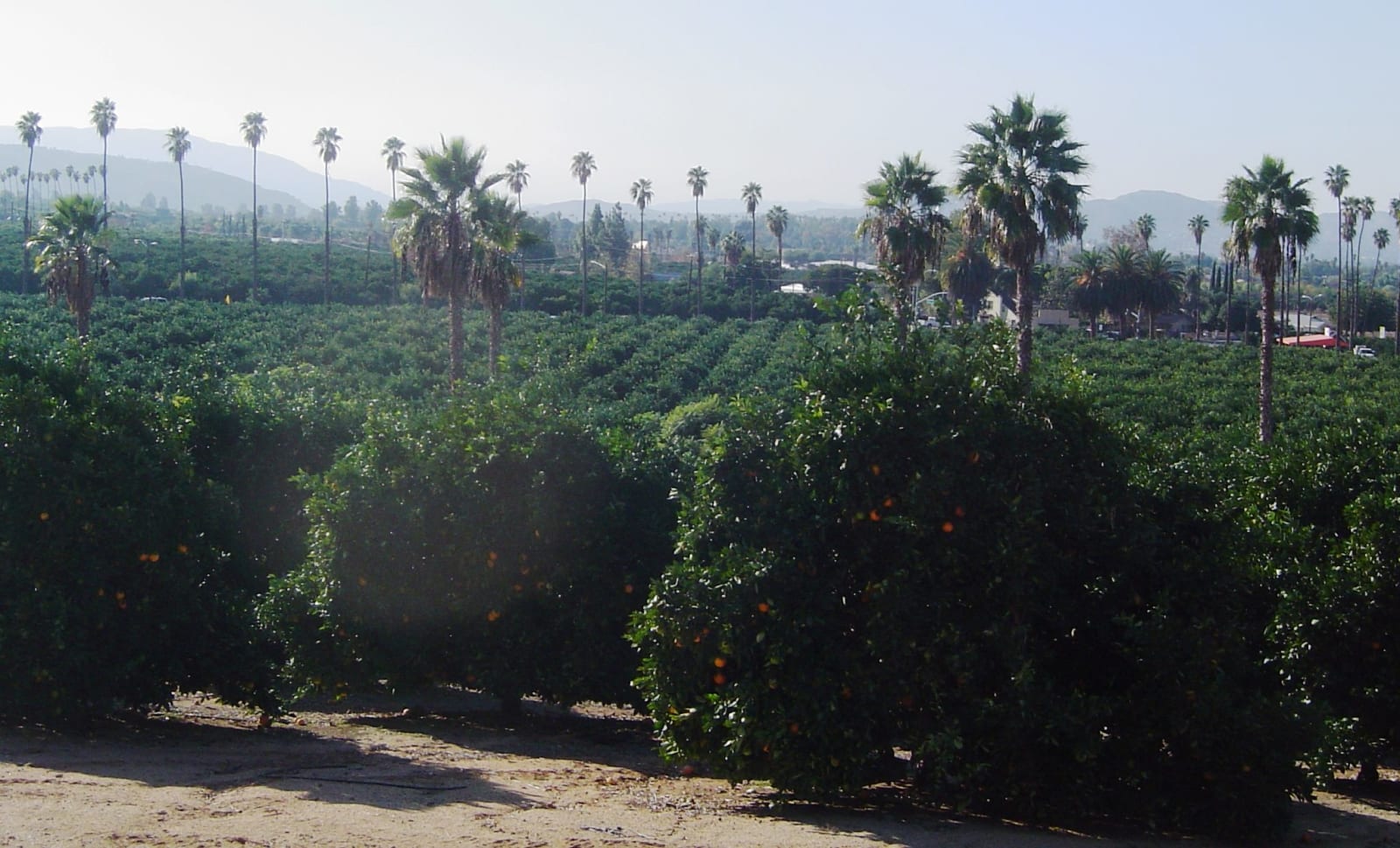
Orange groves and rows of palms on the valley floor at Arlington Heights in Riverside, with mountains behind.
Riverside2018 / CC BY-SA 4.0 via Wikimedia Commons
California · Region

Riverside & the Citrus Belt

The Citrus Belt from Chino to Redlands — Maara'yam homeland, then the valley the Washington navel rebuilt. Eliza Tibbets's parent orange tree, Riverside's Mission Inn, and the labor the groves ran on.

9 places to explore

The valley floor between the San Gabriel Mountains and the Santa Ana River is where Southern California learned to make money from fruit. They called it the Citrus Belt, and the name was literal — from Chino and Upland east through Fontana, Colton and Redlands, then south to Riverside and Corona, the whole arc was groves.

This was Maara'yam country first, the people the Spanish named Serrano. The Yuhaaviatam clan, the People of the Pines, held the mountains above and wintered down here on the floor. In 1866 a state-sanctioned militia out of San Bernardino spent thirty-two days killing Maara'yam families across the Big Bear country. Fewer than thirty of the clan survived. Their kiika', Paakuma, known to outsiders as Santos Manuel, brought those survivors down to Warm Creek on this valley floor. Their descendants took back the name Yuhaaviatam of San Manuel Nation in 2025.

The citrus arrived almost by accident. In 1873 the Department of Agriculture sent Eliza Tibbets two greenhouse-grown orange trees, budded from stock imported out of Bahia, Brazil. The fruit was seedless, it ripened at Christmas, and it survived the journey east. Within a generation the Washington navel had rebuilt the valley: canal water crossed the dry benchland, packing houses lined the Santa Fe tracks, and the fruit went out by rail.

Somebody picked all of it. The groves ran on Mexican, Chinese, Japanese, Sikh and Black labor, on Italian boarding houses, and on children the crews called ratas. In 1902 the government opened Sherman Institute in Riverside, an off-reservation Indian boarding school, where children taken from nations across the West were taught English and a trade and hired out through an outing system that sent them into these groves.

One parent tree still stands at Magnolia and Arlington behind an iron fence. Every Washington navel in California descends from it.

What to See in Riverside & the Citrus Belt

9 places across the region, grouped by what they are.

Hikes & Trails
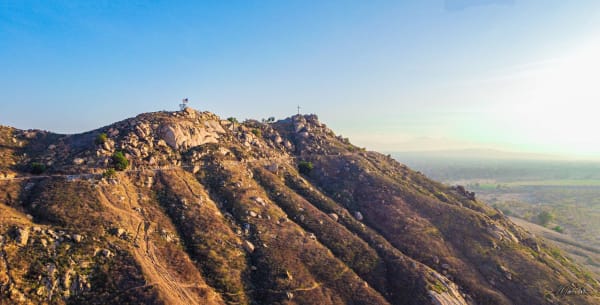
Mount Rubidoux from the air, its granite spine rising above Riverside with the valley hazy beyond.

Mount Rubidoux

Riverside

The mountain all of Riverside walks — and the half-acre at the summit the city sold rather than go to court.

View details →

Historic Sites

Ripe navel oranges on the tree in a grove at California Citrus State Historic Park, palms lining the row behind.

California Citrus State Historic Park

Riverside

A state park that is still a working orange grove — the last big piece of Riverside's citrus landscape left standing.

View details →
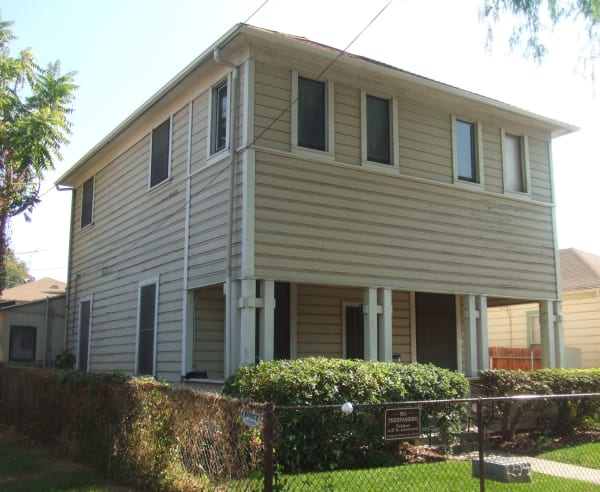
The two-storey clapboard Harada House on Lemon Street in Riverside, a hedge along the sidewalk.

Harada House

Riverside

The 1884 cottage a Japanese American family bought in their children's names, and kept in court.

View details →
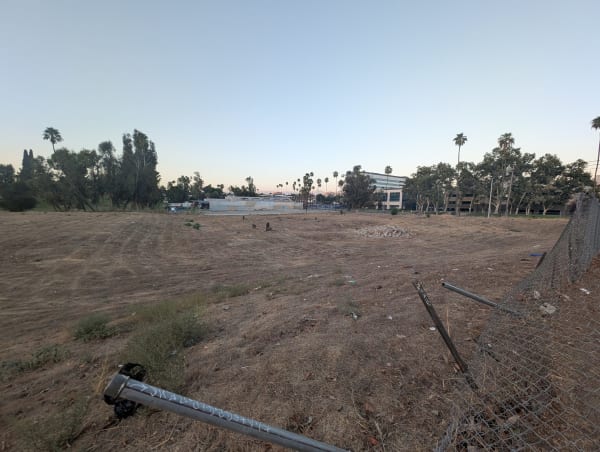
The empty fenced lot in the Tequesquite Arroyo where Riverside's second Chinatown stood, a fallen fence post in the foreground.

Riverside Chinatown Site

Riverside

Riverside's second Chinatown — an empty lot on purpose, with eighty percent of it still underground.

View details →
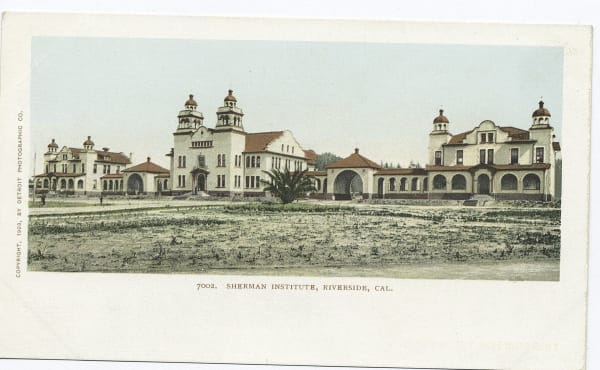
A 1903 postcard view of the Sherman Institute campus at Riverside, its buildings standing on open ground.

Sherman Institute & the Sherman Indian Museum

Riverside

The federal Indian boarding school Riverside lobbied to get — still a school today, its 1902 building now a museum.

View details →

Towns & Gateways

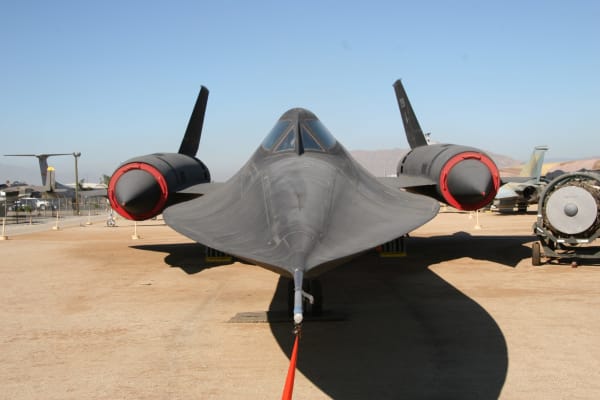
A Lockheed SR-71A Blackbird head-on on the apron at March Field Air Museum.

March Field Air Museum

Riverside

A century of the same field, still working — the museum parked outside the fence of a base that has flown since 1918.

View details →
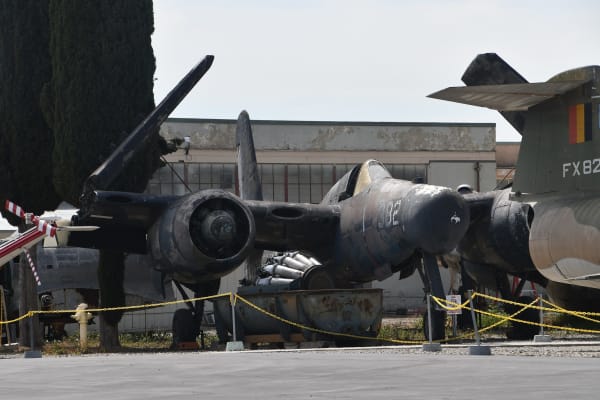
A Grumman F7F Tigercat parked nose-on among other aircraft outdoors at Planes of Fame in Chino.

Planes of Fame Air Museum

Chino

On the field where the country smelted its surplus warplanes — and about thirty of the aircraft here still fly.

View details →

Industry & Mining

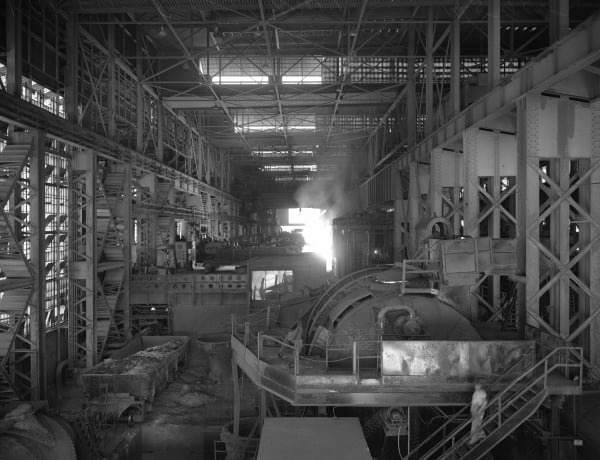
The interior of the Kaiser Steel mill at Fontana about 1949, steel framing and machinery under a high roof.

Kaiser Steel Mill Site

Fontana

The mill that made Fontana a steel town, gave the country Kaiser Permanente, and drew a color line at Base Line Road.

View details →

Food & Drink

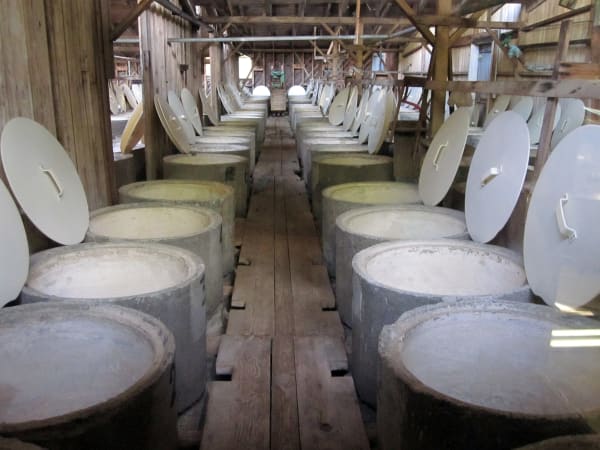
Two rows of lidded curing vats down the timber vat room at the Graber Olive House in Ontario.

Graber Olive House

Ontario

The oldest business in Ontario, a cannery of five hundred brine vats — shut since the pandemic and in foreclosure.

View details →

Stories from Riverside & the Citrus Belt

Culture

Fewer Than Thirty

In 1866 a state-sanctioned militia spent thirty-two days killing the Yuhaaviatam across the Big Bear country, and fewer than thirty of the clan came off the mountain alive — their kiika' brought those survivors down to the valley floor that was about to become the Citrus Belt, and in April 2025 their descendants took back the name the government had replaced.

6 min read

Riverside & the Citrus Belt rewards the unhurried. Pick a base, fan out, and let the country between the headline stops surprise you.

← Explore more of Open Road Guide