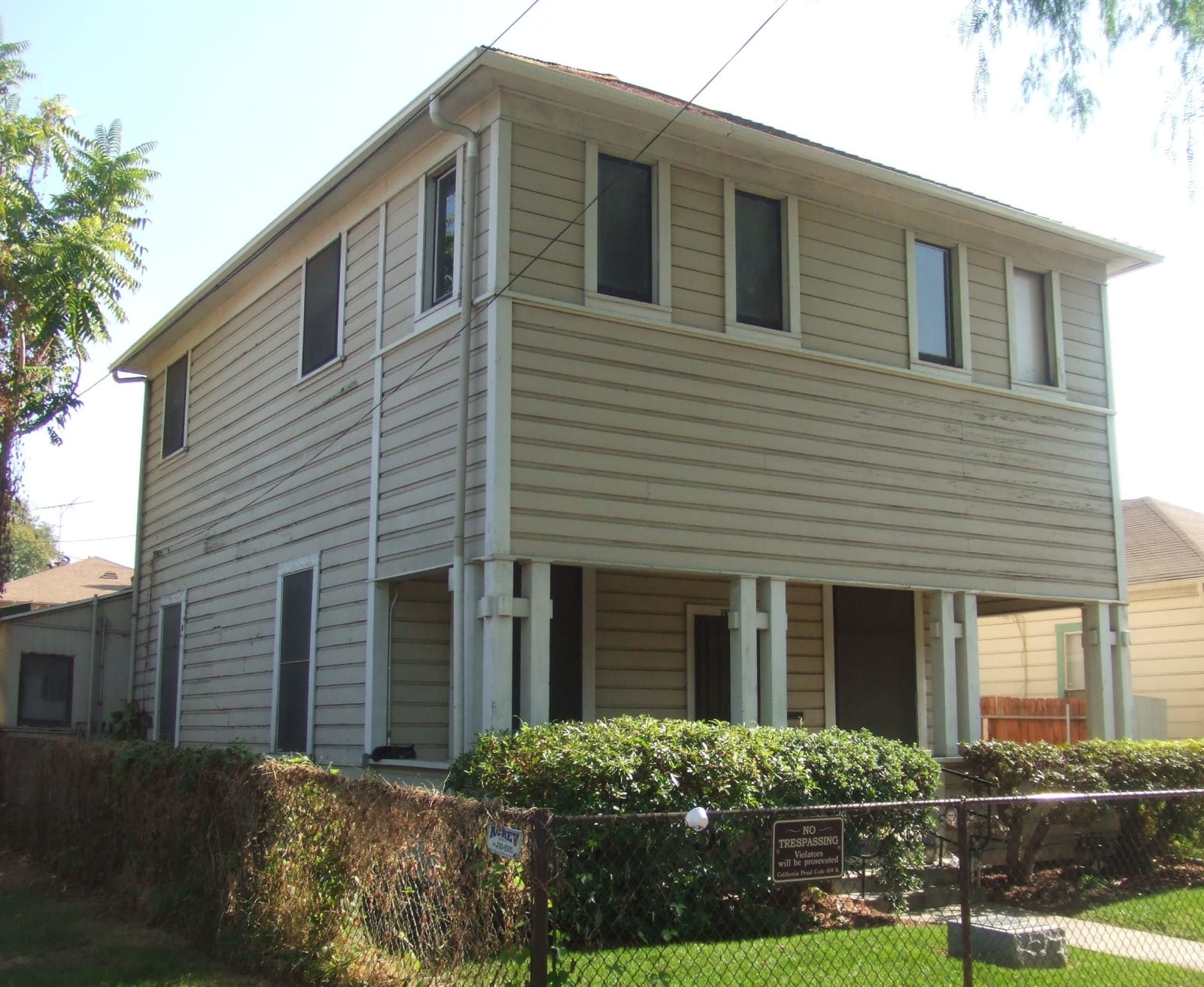
 MissionInn.Jim / public domain via Wikimedia Commons
The Story
The Haradas bought this house because their five-year-old died. Jukichi and Ken Harada ran a restaurant downtown and lived with four children in rooming houses, and after Tadao died of diphtheria in one of them they went looking for a home near the children's school. In 1915 they paid fifteen hundred dollars for an 1884 saltbox cottage on Lemon Street and put the deed in the names of Mine, Sumi and Yoshizo, who had been born here and were citizens. Their parents could not be. California's 1913 Alien Land Law barred anyone ineligible for citizenship from owning property, and no immigrant from Japan was eligible.
The neighbors offered to buy them out. When Jukichi refused, they went to the state attorney general, and California sued the family. In September 1918 Judge Hugh Craig ruled that the Fourteenth Amendment protected the children's title. It was the first real test of the Alien Land Law, and the Haradas kept the house.
They lost it anyway, for a time. Executive Order 9066 scattered them in 1942 across Tule Lake, Poston and Topaz, and three of the children petitioned to be moved so the family could be together. Jukichi and Ken both died at Topaz, in the Utah desert five hundred miles from Lemon Street. A family friend kept the house through the war, and Sumi came home in 1945 and opened it to other Japanese American families who had nothing to come back to. She stayed fifty-three years.
A National Historic Landmark since 1990, and fragile. The Museum of Riverside is restoring it, so check before you go.
Visitor Info
On the Map
Nearby
The closest stops worth working into your route
Historical markers nearby
Roadside plaques and monuments within a short detour