 Ducatipierre / CC BY-SA 4.0 via Wikimedia Commons
The Story
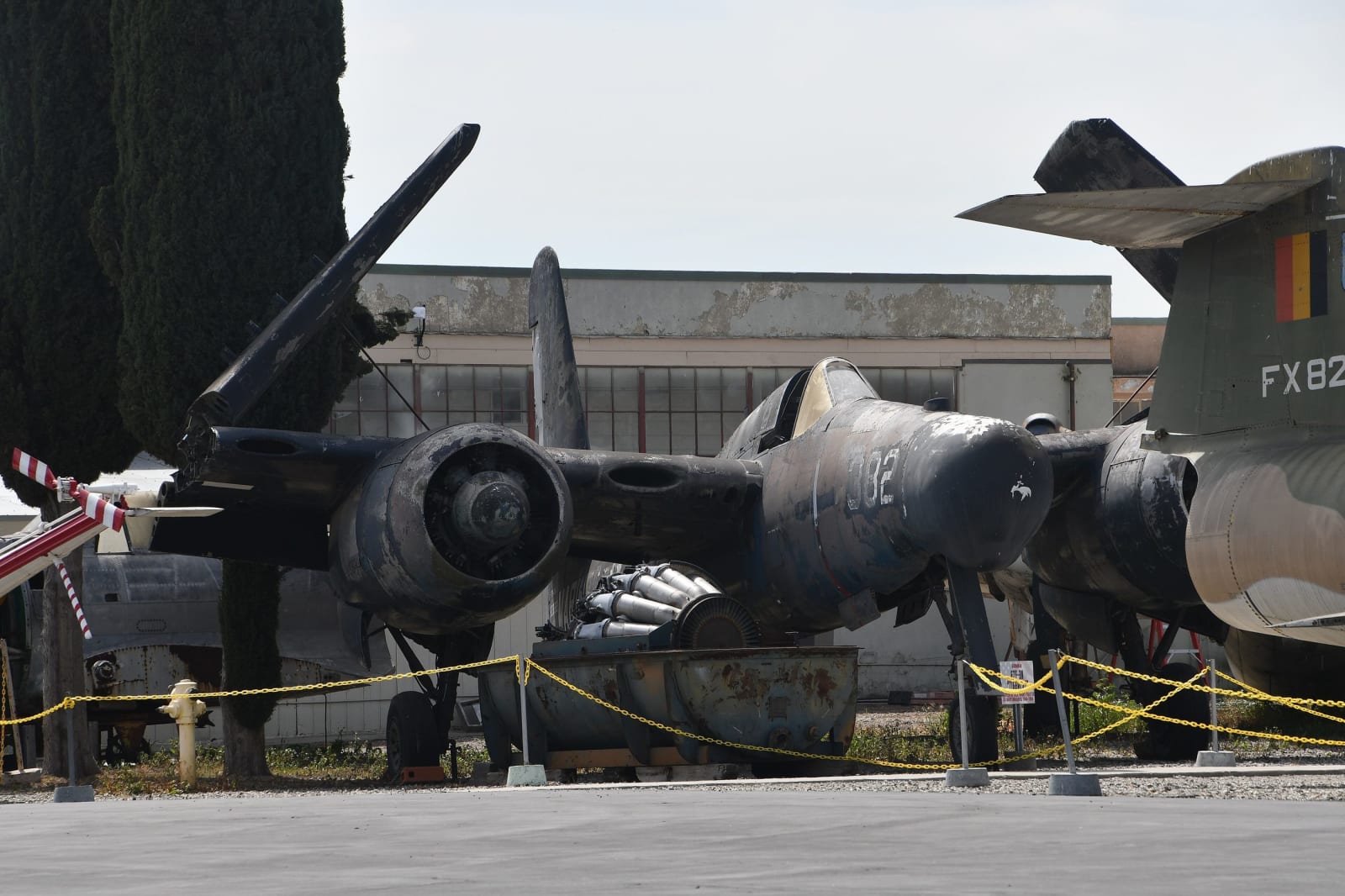
Chino Airport is where the country melted its air force. Cal-Aero Academy trained 10,365 pilots here on Stearmans and BT-13s and closed in October 1944. The next year the Reconstruction Finance Corporation took the field as a sales depot and filled the surrounding farmland with surplus warplanes. Nearly nineteen hundred came in. About five hundred were sold. The rest were cut apart and run through portable smelters into aluminum ingots.
Ed Maloney grew up nearby and watched it happen. He started collecting airframes in 1946 on the theory that today's scrap is tomorrow's history, bought a Mitsubishi Zero in 1951 when the government sold it off as scrap metal, and opened The Air Museum in Claremont on January 12, 1957, the first of its kind west of the Mississippi. It moved to Ontario, then in the 1970s to Chino, onto the same field that had done the melting.
The collection runs past a hundred and fifty aircraft and about thirty of them fly. That is the whole argument. The Zero Maloney bought for scrap was rebuilt around its original Nakajima Sakae engine and flew again on June 28, 1978, and it is still the only airworthy Zero anywhere turning the engine it was built with.
Flying them costs something. The museum's Northrop N-9M was the last of four one-third-scale testbeds built for the XB-35 flying wing, restored over thirteen years and flown at airshows from 1993. On April 22, 2019, minutes after taking off to practice for the museum's own show, it came down in the exercise yard of a state prison at Norco and burned. David Vopat, fifty-one, was killed. The NTSB could not say why. The last flying wing of its generation is gone, and the museum still flies what it has.
Check the schedule before you come. The hangars are open most days, but the reason to time a visit is a day when something starts up. Yanks Air Museum shares the field.
Visitor Info
On the Map
Nearby
The closest stops worth working into your route
Historical markers nearby
Roadside plaques and monuments within a short detour