 Adavyd / CC BY 4.0 via Wikimedia Commons
The Story
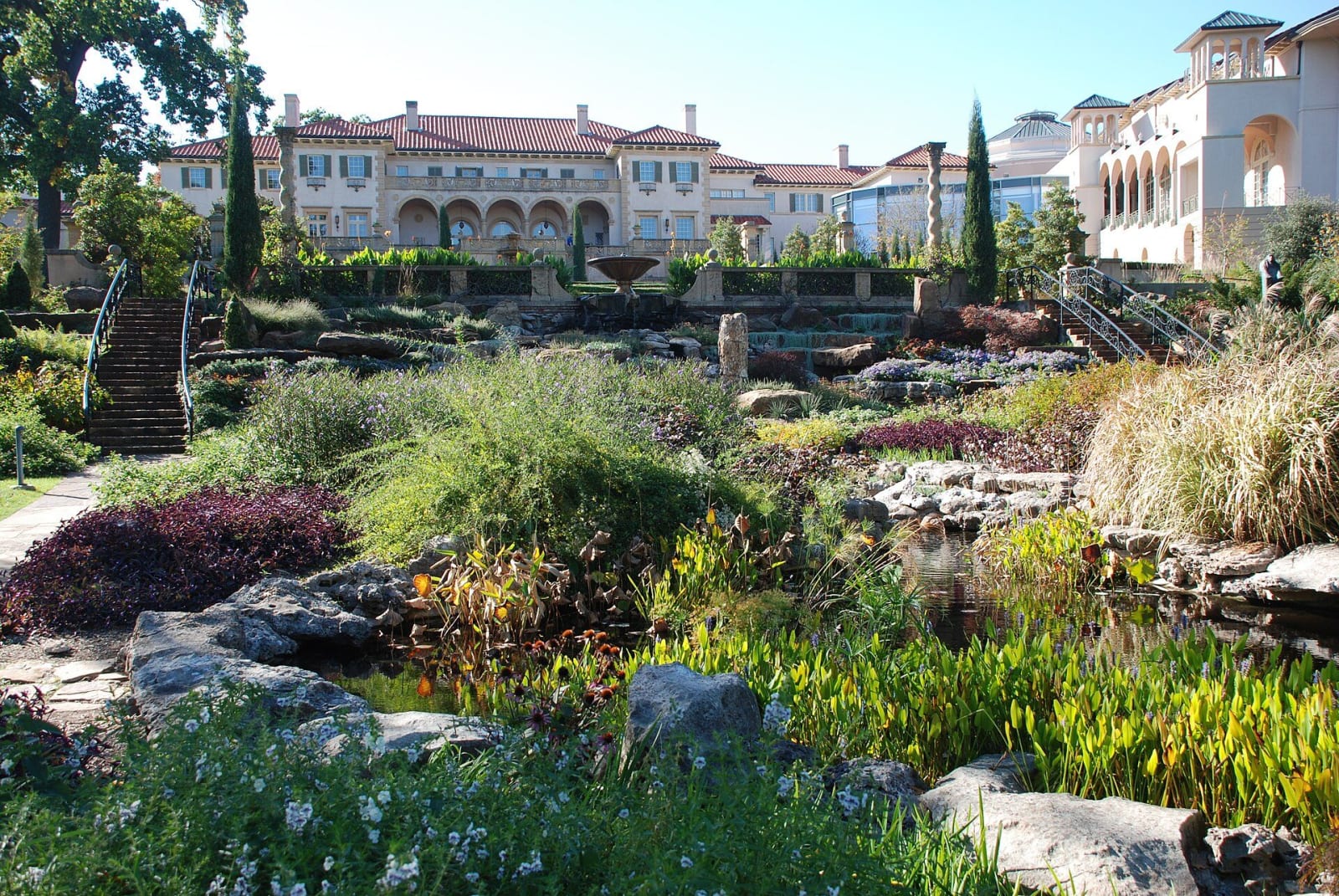
Waite Phillips came to Indian Territory in 1906, following his older brothers Frank and L. E., and made his own fortune in oil before his company merged with theirs in 1930. In 1926 he hired the Kansas City architect Edward Buehler Delk to design an Italian Renaissance villa on 25 acres south of downtown, and the house was finished in 1927. It has 72 rooms. Delk and the landscape architect S. Herbert Hare took the gardens from Villa Lante, the 1566 estate north of Rome. A formal garden steps down past a mirror pond to a small round temple, with a pastoral grove beyond.
In 1938 Waite and Genevieve Phillips gave the house and its grounds to Tulsa as an art center, and Philbrook opened on October 25, 1939. A 70,000-square-foot wing added in 1990 turned the house into a modern museum, and the gardens were renovated in 2004. The collection now numbers more than 16,000 objects, with a focus on modern and contemporary American, Native American and European art. Clark Field began giving Native pottery and basketry in 1942, and the Roberta Campbell Lawson collection came in 1947. That same year Laura Clubb gave the paintings she had hung in her husband's hotel at Kaw City.
The house rooms are left largely as they were, and the galleries open off them. Allan Houser's bronze Prayer stands on the grounds. While Gilcrease is closed until March 2027, Philbrook is the place in Tulsa to see a deep Native collection.
Visitor Info
On the Map
Nearby
The closest stops worth working into your route
Historical markers nearby
Roadside plaques and monuments within a short detour