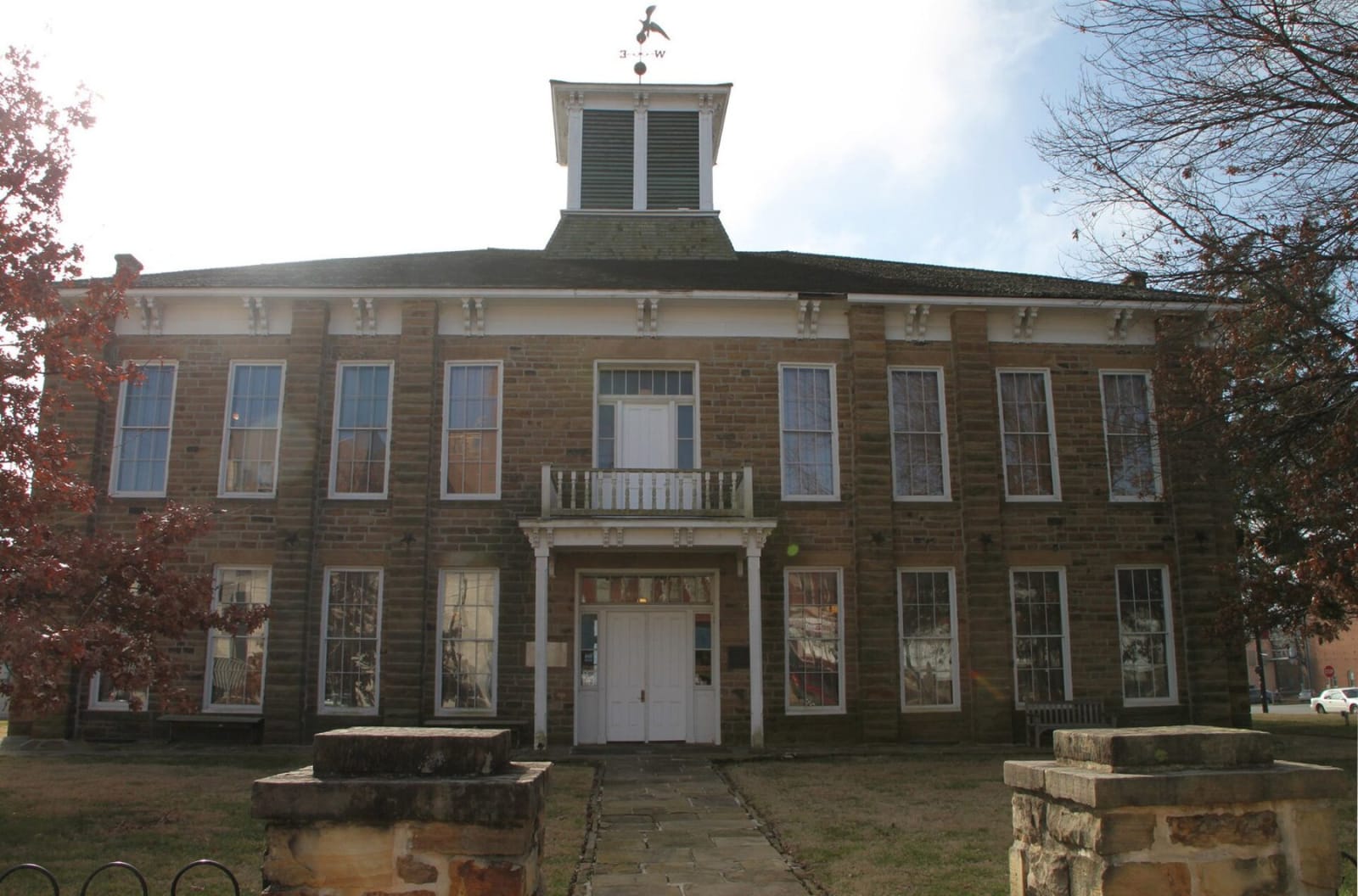
 Rdlogan05 / CC BY-SA 4.0 via Wikimedia Commons
The Story
Driven west from Alabama and Georgia in the 1830s, the Muscogee set up a new national government in Indian Territory in 1840, and the Civil War wrecked much of it. In 1867 the Nation adopted a new constitution, with a two-house legislature, and made Okmulgee its capital. A log council house went up first. On October 17, 1877, the council voted $10,000 for a capitol of stone or brick on the same ground, and Chief Ward Coachman approved it. The council met in the new building on September 23, 1878. It held the executive, the courts, and chambers for the House of Kings and the House of Warriors.
The federal Five Tribes Act of 1906 ended the Nation's self-government. After statehood in 1907 the United States leased the capitol to the new Okmulgee County as its courthouse, and in 1919 the Interior Department sold it to the city for $100,000. Plans in the 1920s to tear it down or make it a hotel ended after Will Rogers, a Cherokee citizen, came to Okmulgee and called for the building to be saved. It became a National Historic Landmark in 1961 and was restored as a museum of Muscogee history in 1992. In 2010 the Nation bought its capitol back from the city for $3.2 million.
The Nation has elected its own principal chief again since the 1970s. On July 9, 2020, in McGirt v. Oklahoma, the Supreme Court held that the land reserved for the Creek in the nineteenth century remains a reservation for purposes of federal criminal law.
Visitor Info
On the Map
Nearby
The closest stops worth working into your route
Historical markers nearby
Roadside plaques and monuments within a short detour