 Venusisastar / CC BY-SA 4.0 via Wikimedia Commons
The Story
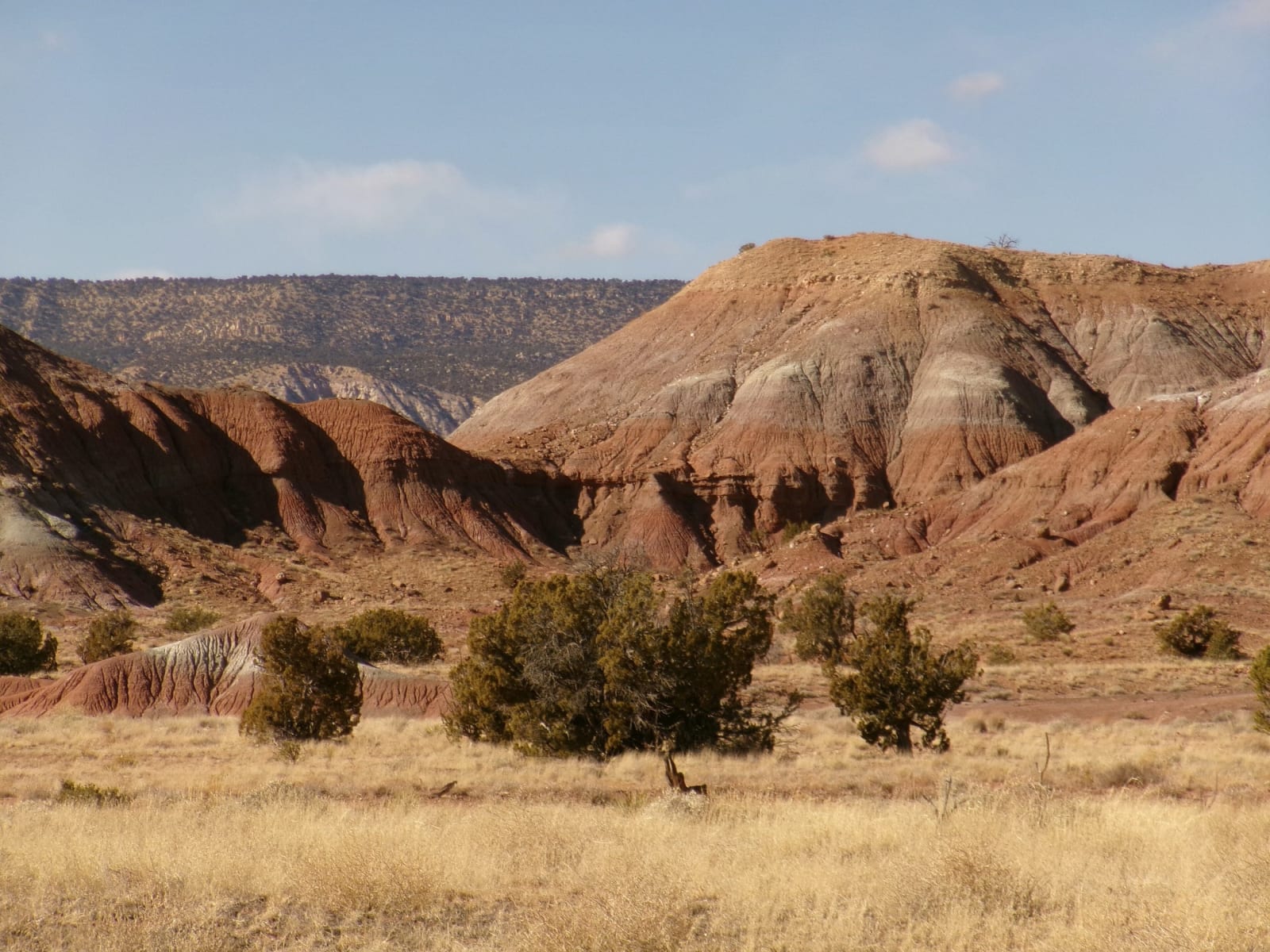
US-84 north of Abiquiú climbs into the Piedra Lumbre basin under cliffs banded red, yellow and white, and Ghost Ranch spreads below them, about 21,000 acres of mesas and arroyos. Its old name, El Rancho de los Brujos, the ranch of the witches, came with stories of a haunted canyon and of outlaws who used it as a hideout, and in English it became Ghost Ranch.
Carol Stanley ran it as a dude ranch from about 1930 and sold it in 1935 to Arthur Pack, editor of Nature Magazine. Georgia O'Keeffe came first in 1934 and began renting Pack's own house, Rancho de los Burros, for her summers; when she arrived one year to find someone else in it, she made him sell it to her, and in 1940 she owned the house and seven acres. That house is still private and closed to visitors. In 1955 Arthur and Phoebe Pack gave the rest of the ranch to the Presbyterian Church, which runs it as an education and retreat center.
The cliffs matter as much to paleontologists as to painters. In 1947 Edwin Colbert of the American Museum of Natural History opened a quarry in a layer of Triassic mudstone packed with skeletons of Coelophysis, a slender, hollow-boned dinosaur about nine feet long, much of it tail. Hundreds lay jumbled together, and why so many died in one place is still argued. Coelophysis is now New Mexico's state fossil, and the ranch's Ruth Hall Museum of Paleontology is built around an eight-ton block of the quarry rock with its bones still in it.
Day visitors pay a fee to walk the trails to Chimney Rock and Kitchen Mesa, see the paleontology and anthropology museums, and join guided tours, among them tours of the landscapes O'Keeffe painted.
Visitor Info
On the Map
Nearby
The closest stops worth working into your route